 North Carolina · Permit test
How the signs test is scored
NCDMV’s licensing rule says applicants for a regular Class C license must correctly identify 9 of 12 road signs. That means you can miss 3. The handbook says each driver license test must be passed separately.
You’ll also take the signs test again later in life. NC drivers renewing in person, and people moving here with a license from another state, take the signs and vision tests too.
Regulatory signs: orders you must follow
Red and white signs give orders, like stop and yield. Black and white rectangles set rules, like speed limits and ONE WAY. The stop sign is the only eight-sided sign, and the point-down triangle is used only for yield, so you can name both from their shape alone.
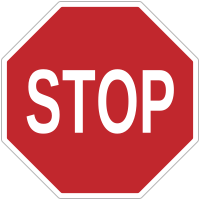 Stop at the line, or before the crossing street if there's no line
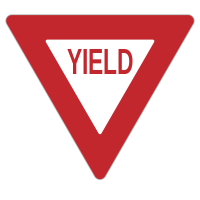 Slow down and give the right-of-way; stop if you have to
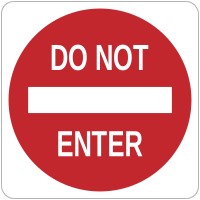 Do not enter this road from here
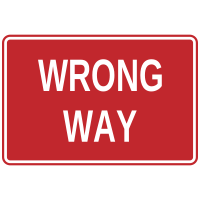 Wrong way: you're facing traffic, turn around safely
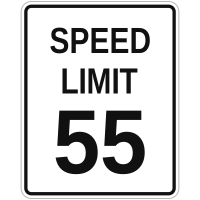 Top legal speed in good conditions
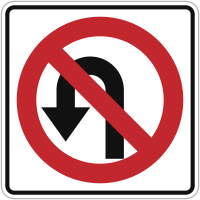 No U-turn here
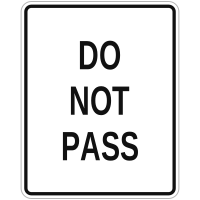 Do not pass other vehicles here
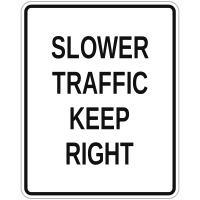 Slower traffic keeps to the right lane
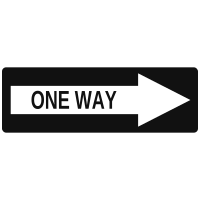 One way: traffic moves only the way of the arrow
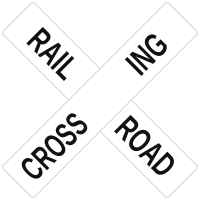 Railroad crossbuck: the tracks are here
Warning signs: what's ahead
Warning signs are mostly black on yellow diamonds and tell you about the road ahead. Two have their own shapes: the round yellow RR sign comes before a railroad crossing, and the yellow pennant on the left side of the road marks where a no-passing zone starts.
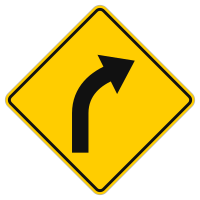 Curve ahead: slow down before it
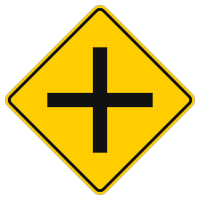 Crossroad ahead: watch for cars from both sides
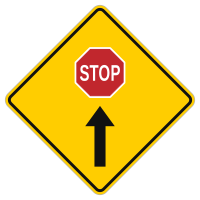 Stop sign ahead: get ready to stop
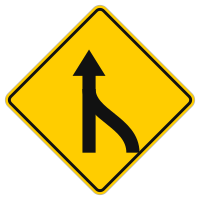 Merging traffic: let it in smoothly
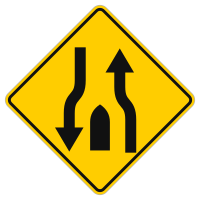 Divided highway ends: traffic will come toward you
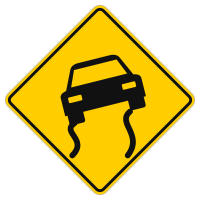 Slippery when wet: slow down in rain
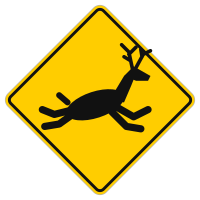 Deer crossing: slow down and watch the roadside
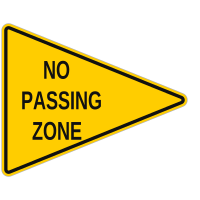 No passing zone starts here, on the left side of the road
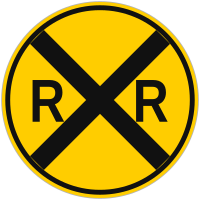 Railroad crossing ahead: slow down and be ready to stop
School and work zone signs
The five-sided sign means a school zone or school crossing, and many school zones have a lower speed limit at school times. Orange signs mean a construction or maintenance work zone. Work zones are taken seriously in North Carolina: speeding fines can be higher there when a sign at the start of the zone says so.
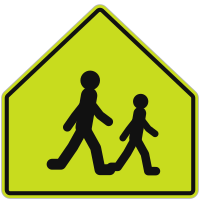 School zone: watch for children
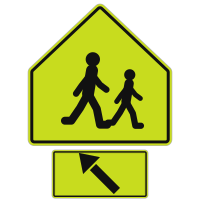 School crossing: be ready to stop for kids
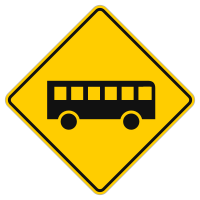 School bus stop ahead
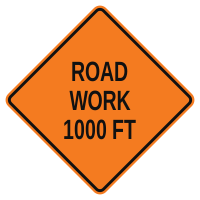 Road work ahead: slow down and stay alert
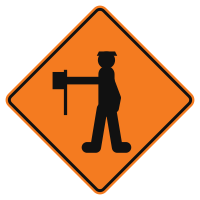 Flagger ahead: be ready to stop
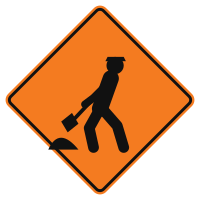 Workers on or near the road
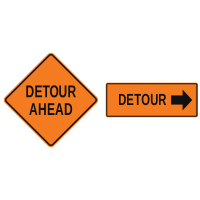 Detour: follow these signs around the closed road
Traffic signals
If the lights are dark after a storm and no officer is directing traffic, treat the intersection as if there's a stop sign on every approach.
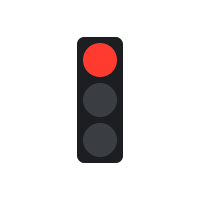 Red: stop and wait
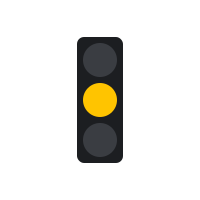 Yellow: the light is about to turn red
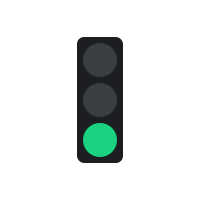 Green: go if the way is clear
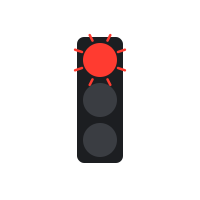 Flashing red: stop, then go when it's safe
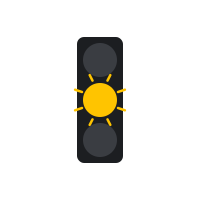 Flashing yellow: slow down and go with care
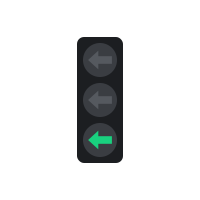 Green arrow: protected turn
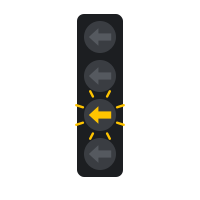 Flashing yellow arrow: turn after yielding to traffic and people
Route markers, guide signs and the blue railroad sign
Green, brown and blue rectangles give directions, distances and services. North Carolina route markers are diamond-shaped. U.S. highways use a shield, interstates use a red, white and blue shield, and NC secondary road signs are rectangles. Odd-numbered highways generally run north and south, and even-numbered ones run east and west.
Every railroad crossing in the state has a blue Emergency Notification System sign with a phone number and crossing ID. If your car stalls on the tracks, get out right away, move away from the tracks, then call the number on the blue sign.
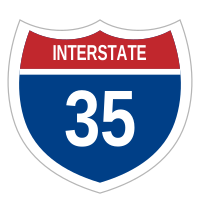 Interstate route marker
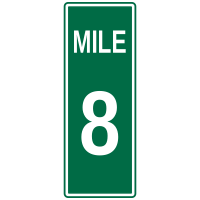 Milepost: your place on the highway
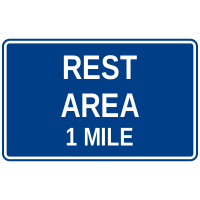 Rest area ahead
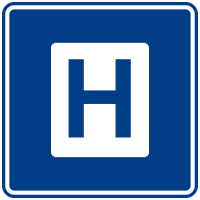 Hospital nearby
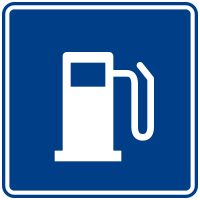 Gas nearby
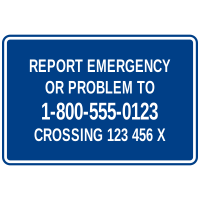 Emergency Notification sign: call this number about a problem at the crossing
See the official sign sheets
NCDMV has two short PDFs with pictures of the regulatory and warning signs. Go through them once before the test, since they show the signs exactly the way NCDMV prints them.
Explore
Everything else, in one place
Sources: North Carolina Driver Handbook (PDF), Chapters 1 and 5, NCDMV, NCDOT rules. Checked October 2026.
- North Carolina Driver Handbook (PDF), Chapters 1 and 5 ↗
- NCDMV: Driver license tests ↗
- NCDOT rules: 19A NCAC 03B .0201, Driver’s license examination (PDF) ↗
Rules and fees can change, so check the official site before your test.