 South Carolina · Permit test
Is there a road signs test in SC?
Not as its own test. SCDMV's manual lists the knowledge test as a test of traffic laws, road signs and driving safety rules, and SCDMV's road test page includes identifying road signs among the things you'll do with the examiner. SCDMV doesn't say how many sign questions the knowledge test has.
The manual's tip is to read the clues: the shape, color, symbols and words on a sign each tell you what kind of message it carries.
Regulatory signs: rules you must obey
Regulatory signs are square, rectangular or a special shape, and white with black, red or green. A red circle with a slash means the action shown is prohibited. Two shapes belong to one sign each: the eight-sided stop sign and the downward-pointing yield triangle.
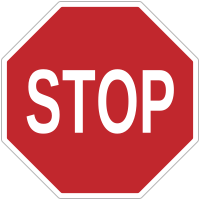 Stop: eight sides, red with white letters
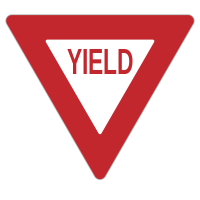 Yield: slow down and let traffic with the right-of-way go
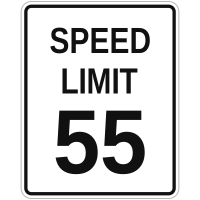 Speed limit: the top legal speed in ideal conditions
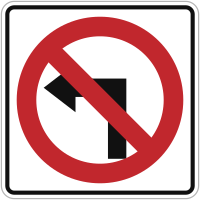 No left turn
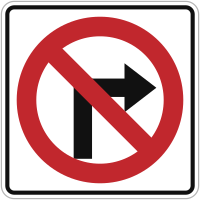 No right turn
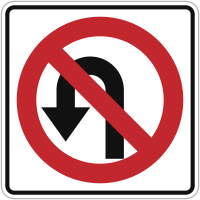 No U-turn
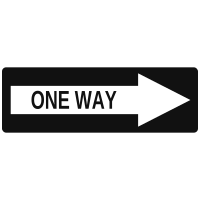 One way: traffic flows only the way of the arrow
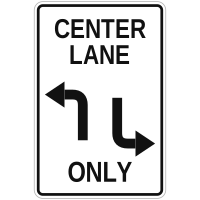 Center lane for left turns from either direction
Warning signs: what's ahead
Warning signs tell you about possible danger ahead, so you can slow down and be ready to stop. They're usually yellow with black lettering or symbols, and typically diamond shaped.
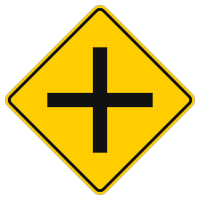 Cross road ahead
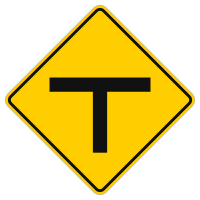 T-intersection ahead
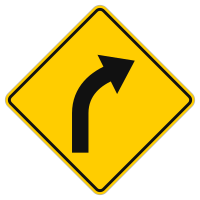 Curve to the right
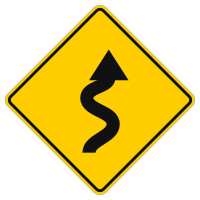 Curvy road ahead
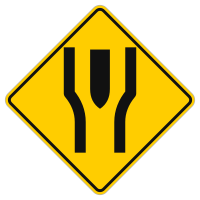 Divided highway begins
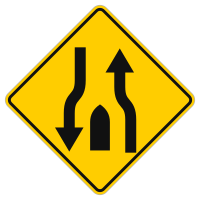 Divided highway ends
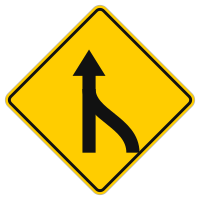 Merging traffic
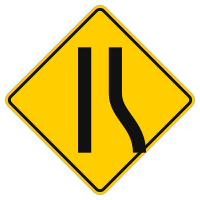 Added lane
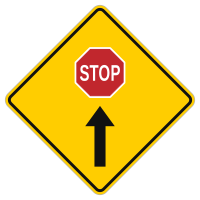 Stop sign ahead
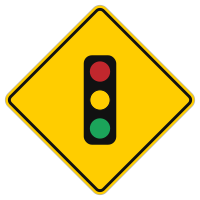 Traffic signal ahead
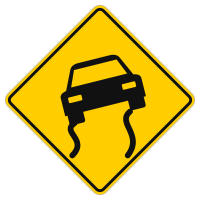 Slippery when wet
Railroad and work zone signs
The round yellow RR sign comes before a crossing, and the white X-shaped crossbuck stands at the crossing itself. When a train is coming, stop behind the stop line or before the crossing. If your vehicle ever gets stuck on the tracks, call the emergency number on the blue sign at the crossing.
Orange signs, diamond or rectangular, mean a work zone. Slow down, don't tailgate, and be ready to stop. The manual says endangering a highway worker can bring a fine and points on your record.
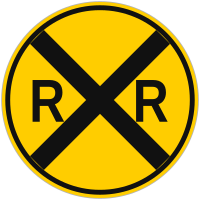 Railroad ahead: slow down, look and listen
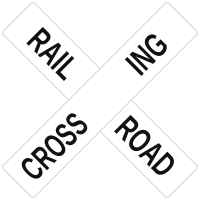 Crossbuck: stop if a train is coming
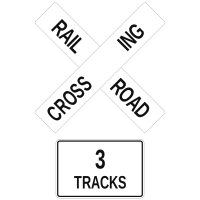 More than one track: there may be more than one train
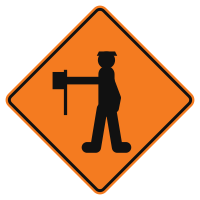 Flagger ahead: follow the flagger's directions
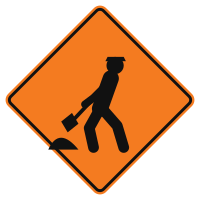 Workers on or near the road
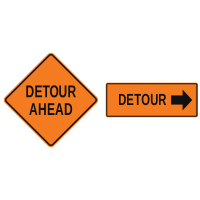 Detour: follow the signs around the closed road
School, pedestrian and slow-vehicle signs
Some warning signs, like school zones, school crossings and pedestrian crossings, can be fluorescent yellow so they stand out. In a school zone, obey the slower speed limit when the lights are flashing or children are present. The orange and red triangle on the back of farm or construction equipment means it's going under 25 mph.
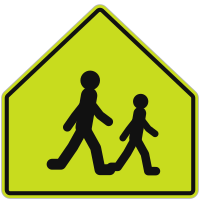 School zone ahead
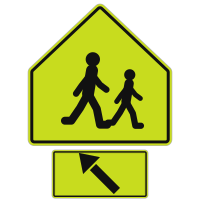 School crossing
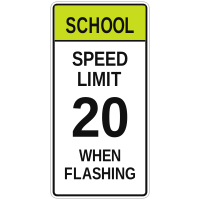 Lower school speed limit while the lights flash
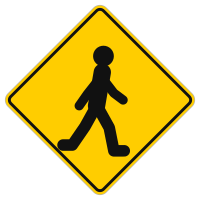 Pedestrian crossing
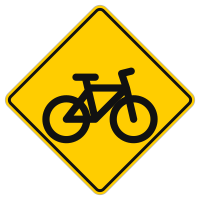 Bicycle crossing
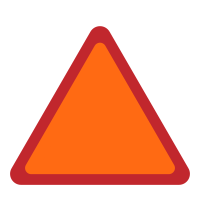 Slow-moving vehicle: under 25 mph
Traffic signals
You may turn right on a red light unless a sign says you can't. Stop first, before the crosswalk on the near side, and yield to pedestrians and other traffic. In some cities the lights are mounted sideways, with red on the left, yellow in the middle and green on the right.
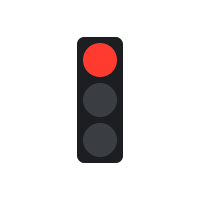 Red: stop behind the line and wait for green
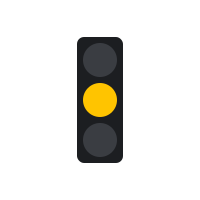 Yellow: the light is about to turn red
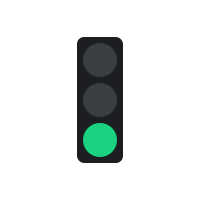 Green: go if the intersection is clear
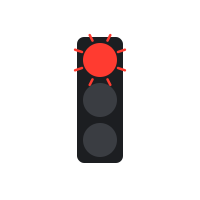 Flashing red: stop, as at a stop sign
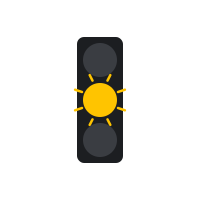 Flashing yellow: slow down and go with caution
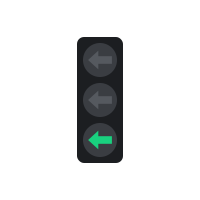 Green arrow: turn the way the arrow points
Guide signs and lines on the road
Guide signs are green, brown or blue and point you to roads, towns, hospitals, gas and places to stay. South Carolina also uses an S route marker for secondary roads: the first number is the county and the second is the road. Evacuation route signs mark the roads used if a hurricane evacuation is ordered for the coast.
Yellow lines separate traffic going opposite ways, and white lines separate lanes going the same way. A dashed line on your side means you may pass when it's safe; a solid line on your side means you may not.
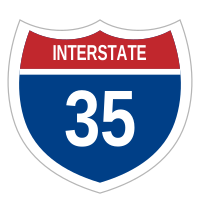 Interstate route marker
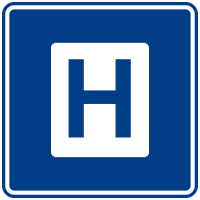 Hospital
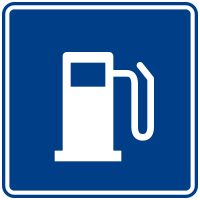 Gas
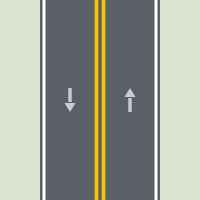 No passing in either direction
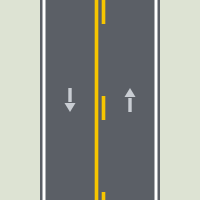 Passing allowed from your side only
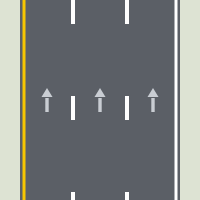 Lanes going the same way: passing allowed
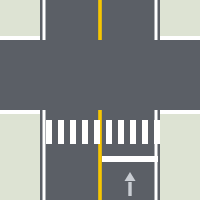 Stop behind the stop line or crosswalk
Explore
Everything else, in one place
Sources: SCDMV and 1 more. Checked October 2026.
Rules and fees can change, so check the official site before your test.