 Indiana · Permit test
What do the colors mean on the Indiana road signs test?
The manual names seven colors, and each one tells you what kind of message you're reading:
- Red: a rule you must act on right away, like Wrong Way or Stop.
- Yellow: road conditions and hazards ahead. Fluorescent yellow-green: schools, pedestrians, bicycles, playgrounds and school bus routes.
- White: rules you must obey, like speed limits and No Turn on Red, and route markers.
- Orange: temporary conditions such as road work.
- Green: directions, exits and distances.
- Blue: services like gas, food and rest areas.
- Brown: parks and recreation or cultural sites.
Shapes, the way Indiana's manual explains them
Learn the circle and the pennant well. In Indiana's manual, round signs mean railroad crossings and pennants mean no passing, and the BMV's practice exam asks about both.
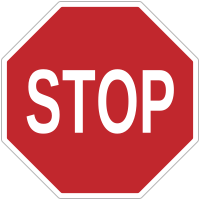 Eight sides: stop, and yield the right-of-way as the intersection requires
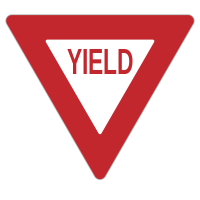 Triangle: slow down and be ready to stop for drivers or pedestrians
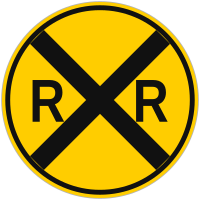 Circle: a railroad crossing is ahead
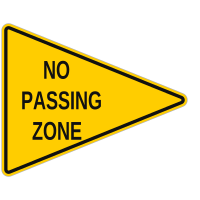 Pennant: no passing, posted on the left side of a two-way road
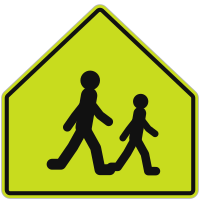 Five sides: a school area where children may cross
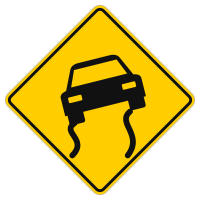 Diamond: a warning of road conditions or hazards ahead
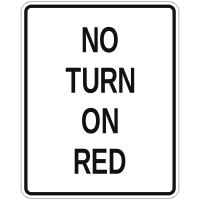 Rectangle: a rule, information or, with a warning sign, an advisory speed
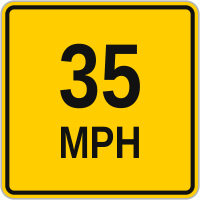 Advisory speed: a rectangle often posted with a diamond warning sign, for a curve's safe speed
Warning signs
Warning signs prepare you for road conditions and hazards ahead. Indiana's list in Chapter 6 also has buggy, golf cart, farm machinery and cattle warnings.
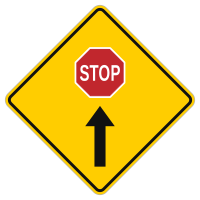 Stop ahead
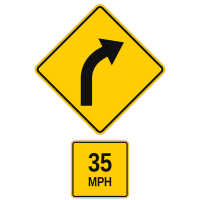 Curve ahead with an advisory speed
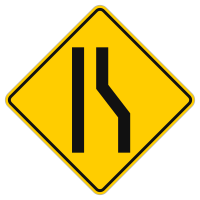 Lane ends
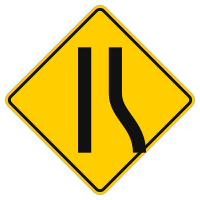 Added lane
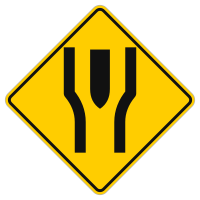 Divided highway begins
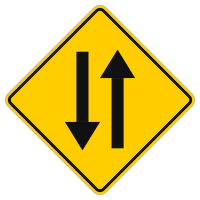 Two-way traffic
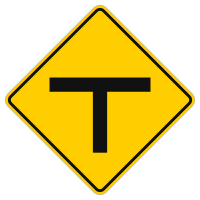 T intersection
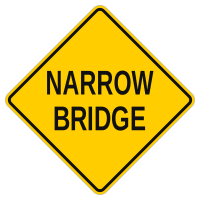 Narrow bridge: be ready to stop for other vehicles
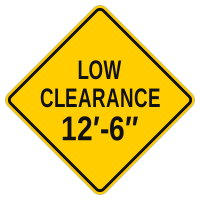 Low clearance
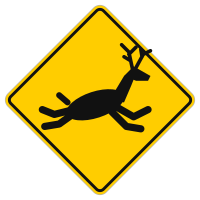 Deer
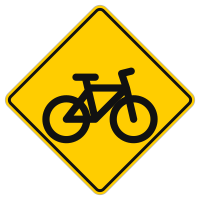 Bicycle
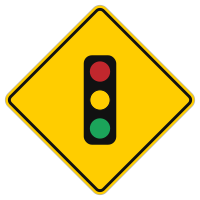 Traffic signal ahead
Regulatory signs
These set the rules for speeds, turns, lanes and parking. White signs give rules you must obey, and red ones need action right away.
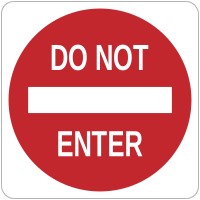 Do not enter
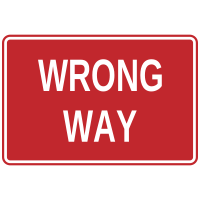 Wrong way
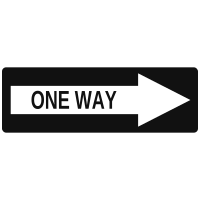 One way
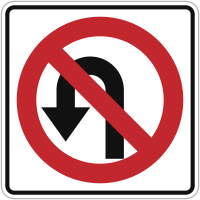 No U-turn
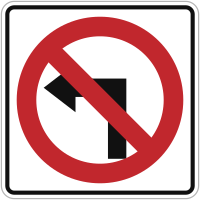 No left turn
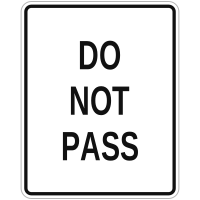 Do not pass, posted on the right side of the road
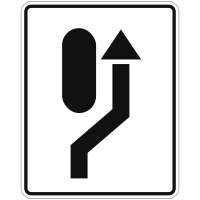 Keep right
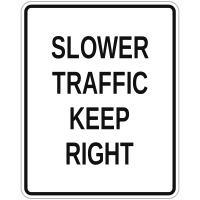 Slower traffic keep right
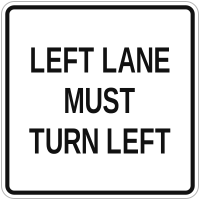 Left lane must turn left
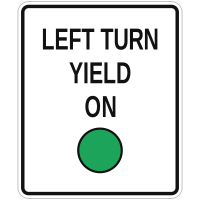 Left turn yield on green
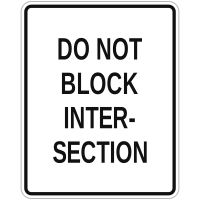 Do not block intersection
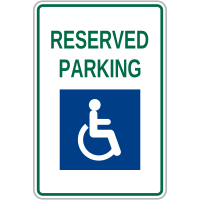 Reserved parking for people with disabilities
Work zone, school and railroad signs
Work zone speed limits are always at least 10 mph below the road's normal limit. A crossbuck with a stop sign means a full stop, and flashing lights or a lowered gate mean you wait until the warning ends.
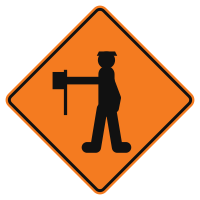 Flagger ahead
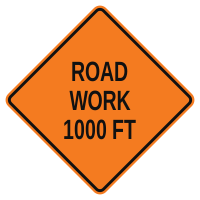 Road work ahead
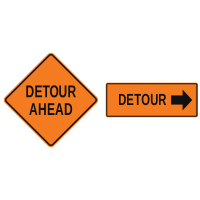 Detour
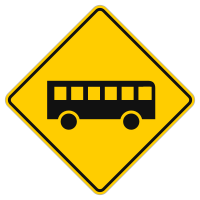 School bus stop ahead
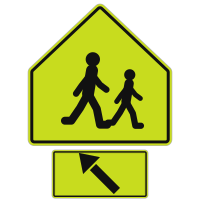 School crossing
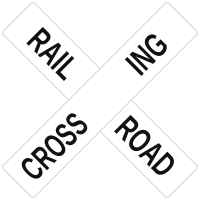 Crossbuck: on its own, treat it as a yield sign, and stop for a train
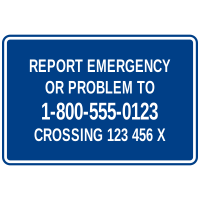 Emergency notification sign: the number to call about a blocked crossing
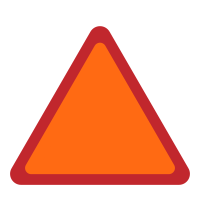 Slow-moving vehicle: can't go faster than 25 mph
Signals and lights
You may turn left on red only from a one-way street onto another one-way street, after a full stop. It's the first traffic question in the BMV's practice exam.
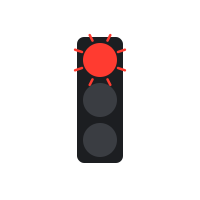 Flashing red: the same as a stop sign
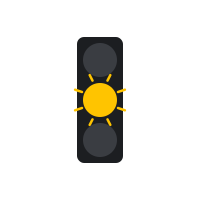 Flashing yellow: slow down and go through with caution
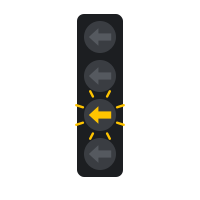 Flashing yellow arrow: turn only after yielding to pedestrians and oncoming traffic
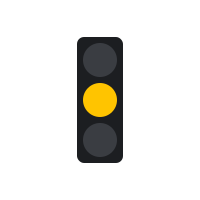 Steady yellow: your right-of-way is ending
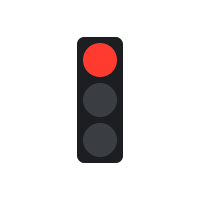 Steady red: stop and wait for green and a clear intersection
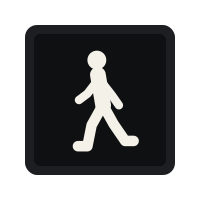 Walk signal: pedestrians may cross, so turning drivers yield to them
Sources: Indiana Driver's Manual, Chapter 6 · Indiana Driver's Manual, Chapter 7 · Indiana BMV and 1 more. Checked October 2026.
- Indiana Driver's Manual, Chapter 6: Traffic Signs and Signals (PDF) ↗
- Indiana Driver's Manual, Chapter 7: Safe Vehicle Operation (PDF) ↗
- Indiana BMV: Practice Knowledge Examination (PDF) ↗
- Indiana BMV: Knowledge exam ↗
Rules and fees can change, so check the official site before your test.