Indiana · Permit test

Indiana permit test

You pass one computer-based knowledge exam at a BMV branch to get your learner's permit. The Indiana permit test has two parts, road signs and traffic rules, and you need 80% or higher on each part, not just overall. It's multiple choice, it comes from the Indiana Driver's Manual, and you don't need an appointment. You can walk in from age 15 if you're enrolled in driver education, or from 16 without it.

  • 2Sections: road signs and traffic rules
  • 80%Needed on each section to pass
  • $9Learner's permit fee (as of October 2026)
  • 180 daysHow long a pass stays valid

Key facts

At a glance

Format
Multiple choice on a computer, in two parts: road signs and traffic rules. The BMV doesn't publish the question count
Minimum age
15 if enrolled in driver education, otherwise 16
Where
Any BMV branch, walk-in. Arrive 30 minutes before closing
Languages
English plus 19 others, and ASL by appointment

How it works

How the Indiana permit test works: two parts, 80% on each

  1. The knowledge exam is a multiple-choice test on a computer at a BMV branch, based on the Indiana Driver's Manual.
  2. The BMV doesn't publish how many questions are on the exam.
  3. You don't need an appointment. Get to the branch at least 30 minutes before it closes to test that day.
  4. You need an appointment only if you want the exam read aloud, or if you're deaf or hard of hearing and need an ASL interpreter.
  5. Besides English, the exam comes in 19 languages, from Arabic and Burmese to Spanish and Vietnamese.
  6. If you fail, you can try again on the next business day. A passing result is good for 180 days.
  7. You also pass a vision screening at the same visit.

Topics

What’s on the test

01

Permits, supervised driving and probationary rules

Who can get an Indiana learner's permit at 15 or 16, who may sit beside you while you practice, and the limits on a probationary license until you turn 21.

Key points (4)
  • At 15 you need proof of enrollment in a BMV-licensed behind-the-wheel course. At 16 you can get a permit without driver education.
  • Under 18 and not in driver education, your supervisor is a licensed driver 25 or older who is related to you, or your licensed spouse who is 21 or older.
  • You hold the permit at least 180 days and log 50 supervised hours, 10 of them at night, before the license.
  • For the first 180 days on a probationary license, no passengers unless an allowed adult sits in front, and no driving from 10 p.m. to 5 a.m.
02

Traffic sign colors and shapes

Chapter 6 of the manual sorts signs by seven colors and seven shapes, and the sign half of the knowledge exam asks about them.

Key points (4)
  • Red means act now, yellow warns of hazards, fluorescent yellow-green marks schools, pedestrians and bikes, and orange marks temporary work zones.
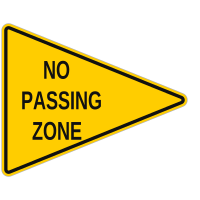
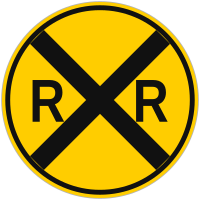
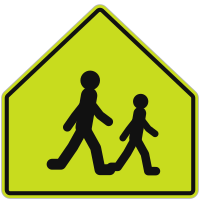
  • Round signs warn of a railroad crossing, a pennant warns of a no-passing zone, and a five-sided sign marks a school area.
  • Green guide signs give directions, blue ones show services, and brown ones point to parks and recreation.
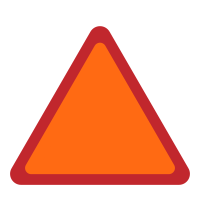
  • The orange-and-red slow-moving vehicle emblem means a vehicle that can't go faster than 25 mph.
03

Signals, right-of-way and intersections

What each light and arrow means, when you may turn on red, and who goes first at all-way stops, dark signals and roundabouts.

Key points (4)
  • A flashing red light means stop, like a stop sign. A flashing yellow arrow lets you turn after yielding to pedestrians and oncoming traffic.
  • You may turn left on red only from a one-way street onto another one-way street, after a full stop and when no sign forbids it.
  • At an all-way stop, if two drivers arrive together, the one on the left yields.
  • An officer's command overrides a signal or sign. Traffic entering a roundabout yields to traffic already in it.
04

Lane markings, passing and turning

What yellow and white lines allow, where passing is illegal, and which lane to turn from.

Key points (4)
  • Yellow lines split traffic going opposite ways. You may cross a broken yellow line to pass when it's safe, but not a solid one except to turn.
  • Get back to the right side at least 100 feet before any oncoming vehicle.
  • No passing on curves, near a hilltop, or within 100 feet of an intersection, railroad crossing, bridge, viaduct or tunnel.
  • Turn from the lane nearest the direction you're turning, and never make a U-turn on an interstate.
05

Speed limits, following distance and headlights

Indiana's default speed limits, how far behind to stay, and when your headlights and low beams have to be on.

Key points (4)
  • Unless posted otherwise: 70 mph on rural interstates, 60 on rural divided state highways, 55 on urban interstates and county roads, 30 in most urban residential areas and 15 in alleys.
  • Work zone limits are always at least 10 mph below the normal limit for the road.
  • Stay at least two to three seconds behind the vehicle ahead.
  • Use headlights from sunset to sunrise and whenever you can't see 500 feet. Dim to low beams within 500 feet of an oncoming car or 200 feet behind one.
06

Weather, rural roads and work zones

How to handle skids, rain, fog, floods and winter roads, plus the gravel, crops and narrow bridges of rural Indiana and the flaggers in work zones.

Key points (4)
  • In a skid, ease off the gas. With anti-lock brakes, keep firm, steady pressure on the pedal and don't pump.
  • Use low beams in fog, and never drive into water over the road.
  • On gravel, slow down earlier. Tall crops like corn can hide cars at rural intersections.
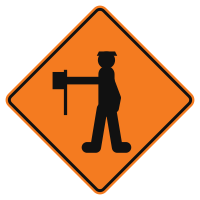
  • Stop when a flagger holds the flag out level across your lane, and go slowly only when waved on.
07

Sharing the road

Room for trucks, motorcycles, bikes, school buses and stopped emergency vehicles, under Indiana's Move Over law and the manual's rules.

Key points (4)
  • A loaded tractor-trailer with hot brakes may need more than 400 feet to stop at 55 mph.
  • For an emergency vehicle with flashing lights, change lanes away from it, or slow to 10 mph under the limit if you can't.
  • Stop for a school bus with red lights flashing and its stop arm out. On a road split by a barrier or unimproved median, only traffic going the bus's way stops.
  • Give a cyclist at least three feet when passing, and stay three or four seconds behind a motorcycle.
08

Crashes, emergencies, alcohol and points

What the law asks after a crash, how to handle a blowout or a car in water, and how points, insurance and drunk driving affect your license.

Key points (4)
  • Stop at or near the scene, move off the traveled road unless someone is hurt or hazardous materials are involved, and share your name, address, registration and license.
  • In a blowout, hold the wheel firmly, keep straight, take your foot off the gas and don't brake.
  • The legal limit is .08 BAC. Failing a chemical test means a 180-day suspension, and refusing one means a year.
  • You must carry at least 25/50/25 liability insurance. Points stay active on your record for two years.

Road signs

Signs from Chapter 6 of the Indiana Driver's Manual

The sign part of the knowledge exam comes from Chapter 6 of the manual, and the BMV's own practice questions on it mostly ask what a sign's shape means. Indiana's manual has its own shape rules worth learning early: a round sign warns of a railroad crossing, and a pennant on the left side of the road marks a no-passing zone.

  • Red octagon with white border and the word STOP in whiteStop: eight sides, and you stop at the white line, the crosswalk or the intersection
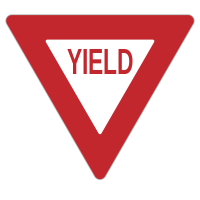
  • Downward-pointing red triangle with white center and the word YIELD in redYield: a triangle, so slow down and be ready to stop for anyone with the right-of-way
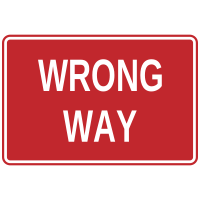
  • Red rectangle with white border reading WRONG WAYWrong way: a red sign asking for action right now
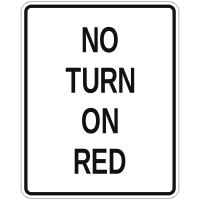
  • White sign reading NO TURN ON REDNo turn on red: white signs give rules you must obey
  • Yellow pennant pointing right reading NO PASSING ZONENo passing zone: a pennant on the left side of a two-way road
  • Round yellow sign with a black X and two letters RRailroad crossing ahead: Indiana's manual says round signs warn of railroad crossings
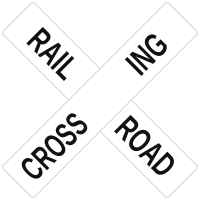
  • White X-shaped crossbuck reading RAILROAD CROSSINGCrossbuck: on its own, treat it like a yield sign and stop for a train
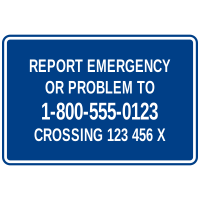
  • Blue rectangle: REPORT EMERGENCY OR PROBLEM TO 1-800 number, CROSSING numberEmergency notification sign: call this number about a stalled car or a blocked crossing
  • Fluorescent yellow-green pentagon with two children walkingSchool: five sides mean children may be crossing
  • Orange diamond with a black flagger symbol holding a flagFlagger ahead: orange signs mark temporary work zones
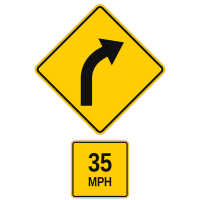
  • Yellow curve warning diamond above a yellow plaque reading 35 MPHCurve with an advisory speed: don't go faster than the posted number
  • Fluorescent orange triangle with a red reflective borderSlow-moving vehicle: it can't go faster than 25 mph

Test day

What to bring to the BMV branch

  • One identity document, such as a U.S. passport or a certified birth certificate
  • One proof of lawful status and one proof of your Social Security number
  • Two proofs of Indiana residency. If you don't have them, an adult who lives with you can sign a residency affidavit
  • At 15: a Certificate of Driver Education enrollment from your behind-the-wheel school
  • Under 18: a parent, guardian or other adult to sign for financial liability, with their own ID
  • Your glasses or contacts, if you wear them to drive

Before you go

  1. Read the Indiana Driver's Manual, especially Chapters 6, 7 and 8, where the exam's signs and traffic rules come from.
  2. Try the BMV's Practice Knowledge Examination, which has 6 sign questions and 10 traffic questions with an answer key.
  3. Watch the BMV's knowledge exam videos on its YouTube channel if you'd rather listen than read.
  4. At 15, enroll in a BMV-licensed behind-the-wheel course first. The enrollment certificate can't be dated more than three weeks before class starts.
  5. Check your documents against the BMV's learner's permit checklist.
Indiana BMV: Knowledge examThe knowledge exam is walk-in at any BMV branch. For an ASL interpreter, call 888-692-6841 or schedule at a branch, and you can't test the same day you book.

Study options

Where to study

The Indiana Driver's Manual is free from the BMV, as a full PDF in 11 languages or chapter by chapter in English. The BMV also posts a Practice Knowledge Examination with an answer key and a set of exam videos on YouTube. The table compares Indiana-specific apps, national practice sites and BMV-licensed driving schools, with their prices and what's free.

OptionPriceFree to useLinks
Official and free
Indiana Driver's ManualOfficial · PDFThe BMV's source for the knowledge exam. Download it whole or one chapter at a time in English. The sign questions come from Chapter 6, and the traffic questions from Chapters 6, 7 and 8. The BMV says printed copies can be out of date, so use the online version.
FreeThe whole manual, in 11 languages
BMV Practice Knowledge ExaminationOfficial · PDFSix sign questions and ten traffic questions, split into the same two parts as the real exam. It's the same set as Chapter 9 of the manual. Short, but the questions are the BMV's own.
FreeAll 16 questions and the answer key
Motorcycle and CDL manualsOfficial · PDFThe Motorcycle Operator's Manual for the motorcycle permit exam, and the Commercial Driver's License Manual (September 9, 2022) with the Indiana Specific CDL Manual for the CLP exams.
FreeEvery manual in full
Apps and websites
Driving-Tests.org and DMV GenieWeb and app · all statesDriving-Tests.org also makes the DMV Genie app. Its Indiana section also has topic tests on fines and limits, distracted driving and drinking and driving, plus a 50-question exam simulator. The 50 is the site's choice, not a BMV figure. DMV Genie is rated 4.8 on the App Store, from about 184,000 ratings for all states.
Indiana tests free on the website. App Premium starts at $9.99About 20 Indiana tests, including five Indiana permit practice tests and road sign tests
ZutobiApp and web · all statesShort lessons and quizzes that play like a game. The Indiana page claims more than 600 Indiana questions. It also gives a question count and a pass score for the real exam. The BMV publishes neither of those, only the rule of 80% on each part. On the App Store it's rated 4.7, from about 239,000 ratings covering every state.
Free start, then paid plans (App Store purchases from $4.99)Some free lessons. Most of the course needs a paid plan
Indiana BMV Permit Practice (S Mehta)App · iPhoneAn Indiana-named app with car, motorcycle and CDL sections, a signs test, fines and limits, a marathon mode and stats. 4.7 stars from about 1,100 ratings, last updated August 2025. The developer is S Mehta, not the BMV.
Free with ads. Premium $3.99 a week, $8.99 for 30 days, $12.99 a year or $17.99 for lifePractice and sign tests, with ads
Video
BMV knowledge exam videosOfficial · YouTubeThe BMV's own videos, made to go with the Driver's Manual. Chapter 9 of the manual points to them. Handy if you'd rather watch than read, or want a second pass before the branch.
FreeThe whole playlist
In person
BMV-licensed driver training schoolsLocalWhere you take driver education: 30 hours of classroom or online theory and 6 hours behind the wheel. Enrolling lets you get a permit at 15, and finishing lets you get a license at 16. Schools in the BMV's skills test program can also give the driving test.
Set by each school

Prices and ratings checked October 2026.

FAQ

Common questions

How many questions are on the Indiana permit test?

The BMV doesn't publish a number, as of October 2026. What it does publish is the structure: one section on road signs and one on traffic rules, and you need 80% or higher on each section to pass. The 25-question figure in the manual's Chapter 9 is for the for-hire and motor driven cycle exams, not the car permit test. The 50 you'll see on some practice sites is their own choice, not a BMV figure.

Can I take the Indiana permit test online?

No. The knowledge exam is taken on a computer at a BMV branch, and the BMV doesn't offer it from home. Studying is the part you can do from home, with the free manual, the Practice Knowledge Examination and the BMV's videos. The online test page explains what is and isn't online.

What happens if I fail the BMV written test in Indiana?

You wait until the next business day, then you can take it again at any branch. Before you go back, reread the chapters for the part that felt harder: Chapter 6 for signs, Chapters 6, 7 and 8 for traffic rules. A pass stays valid for 180 days, so you don't have to get the permit the same day.

Is the Indiana written driving test the same as the driving test?

No. The written driving test is the knowledge exam you pass for your permit. The driving skills test comes later, after at least 180 days on the permit, and you book it at a branch or take it with a participating driving school.

Can I take the Indiana BMV knowledge test in another language?

Yes. Besides English, the BMV lists Arabic, Burmese, Chin, Croatian, French, German, Haitian Creole, Hindi, Japanese, Korean, Mandarin, Polish, Punjabi, Russian, Serbian, Spanish, Swahili, Tagalog and Vietnamese. An ASL-interpreted exam needs an appointment. The manual itself comes in 11 languages.

Do I need an appointment for the BMV Indiana test?

Not for the knowledge exam. Walk in to any branch at least 30 minutes before it closes. You need an appointment only if you want the exam read aloud or with an ASL interpreter. The driving skills test is different: that one you schedule.

Sources: Indiana BMV · Indiana Driver's Manual, Chapter 1 · Indiana Driver's Manual, Chapter 9 and 4 more. Checked October 2026.

Rules and fees can change, so check the official site before your test.