Alaska · Permit test

Alaska DMV permit test

In Alaska you can get an instruction permit at 14. You pass a written knowledge test, at a DMV office or online at home, and a vision test, then pay $15. This guide covers what the test asks about, what to bring and how the day works. There's a free 20-question practice test further down.

  • 14Minimum age for an instruction permit
  • $15Instruction permit fee (as of October 2026)
  • 20/40Vision needed, with glasses or contacts if you use them
  • Next dayWhen you can retake a failed written test

Key facts

At a glance

Questions
Multiple choice. The DMV doesn’t publish the count
To pass
The DMV doesn’t publish the pass mark
Where
DMV office, or online at home from age 16 ($11.50 a try)
Vision
20/40, with glasses if you need them

How it works

One written test on Alaska driving laws, plus an eye test

  1. To get an instruction permit you pass a written knowledge test and a vision test.
  2. The written test covers only what's in the Alaska Driver Manual: traffic laws, safe driving and road signs.
  3. As of October 2026, the DMV doesn't publish how many questions the car test has or what score you need to pass.
  4. You can take the test at a DMV office, or online at home through the DMV's online knowledge test system.
  5. The online system's own FAQ says you must be at least 16 to take the car test online, it costs $11.50 per attempt and has a 25-minute time limit.
  6. If you can understand English but have trouble reading, you can bring someone to read the questions to you. You must answer on your own.
  7. If you fail the written test, you can take it again the next day.

Topics

What’s on the test

01

Permits, licenses and insurance

How Alaska's permit and provisional license work, how points add up, and what the insurance and crash-reporting laws ask of you.

Key points (4)
  • You can get an instruction permit at 14. It's valid for two years and can be renewed once.
  • A permit driver must have a licensed driver at least 21, with a year's experience in that type of vehicle, in the seat beside them.
  • At 16 or 17 you need the permit for 6 months and 40 hours of practice, 10 of them in harder conditions, before a provisional license.
  • Minimum liability insurance is $50,000/$100,000 for injury or death and $25,000 for property damage. After a crash with injury or over $501 of damage, send proof of insurance to the DMV within 15 days.
02

Alcohol, drugs and DUI

How alcohol and drugs affect driving, Alaska's DUI limits, and what happens if you're arrested or under 21.

Key points (4)
  • At 0.08 or more, an adult driver is presumed to be under the influence. A DUI adds 10 points to your record.
  • Under 21, driving after drinking any amount of alcohol is illegal. A first offense means a 30-day revocation.
  • By driving in Alaska you agree to a breath test after a lawful DUI arrest. Refusing is a separate crime.
  • Only time sobers you up: about one hour per drink.
03

Speed, following and signaling

Alaska's default speed limits, the four-second rule, and how and when to signal.

Key points (4)
  • Without signs: 15 mph in alleys, 20 mph in business districts and school zones, 25 mph in residential districts and 55 mph elsewhere.
  • The manual recommends four seconds behind the vehicle ahead, and six or more when towing or on wet roads. The legal minimum is two seconds.
  • Signal for at least the last 100 feet before you turn, and cancel the signal afterward.
  • On a two-lane road outside town, pull over safely when five or more vehicles are lined up behind you.
04

Intersections and right-of-way

Who goes first at uncontrolled intersections, in roundabouts and when you leave a driveway.

Key points (4)
  • At an uncontrolled intersection, the driver on the left yields to the driver on the right.
  • In a roundabout, drive counterclockwise and yield to traffic already in the circle.
  • Coming out of a driveway, alley or building, stop and yield to all traffic and pedestrians.
  • When the light turns green, still yield to pedestrians and vehicles caught in the intersection.
05

Signs and signals

What sign colors tell you, and what flashing and steady lights mean.

Key points (4)
  • Regulatory signs are black or red on white. Warning signs are black on yellow. Guide signs are white on green. Work zone signs are black on orange.
  • At a stop sign, stop behind the crosswalk or stop line, then yield.
  • A flashing red light means stop, then go when it's safe. A flashing yellow light means slow down and take care.
  • Follow a police officer or flag person's directions, even if signs or signals say otherwise.
06

School buses, emergency vehicles and trains

When you must stop for a school bus, how to make way for emergency vehicles, and staying safe at railroad crossings.

Key points (4)
  • Stop for a school bus with red lights flashing, from either direction, unless it's on the other side of a highway with separated roadways and two or more lanes each way.
  • For an emergency vehicle with flashing lights, pull to the right edge, clear of intersections, and stop.
  • Don't follow a responding emergency vehicle closer than 500 feet.
  • Never drive around crossing gates. If you're stuck on the tracks, get out and move away.
07

Night, weather and wildlife

Using your headlights, driving on ice and snow, handling skids, and avoiding moose.

Key points (4)
  • Headlights go on from half an hour after sunset to half an hour before sunrise, and whenever you can't see 1,000 feet.
  • Dim to low beams 500 feet from an oncoming vehicle, and 300 feet behind one you're following.
  • Bridges and shaded spots freeze first. In a skid, turn the front wheels in the direction of the skid and don't brake suddenly.
  • If an animal runs in front of you, brake firmly but don't swerve. Most moose crashes happen at dawn and dusk.
08

Parking

Where you can't park, and how to park safely on hills and beside the road.

Key points (4)
  • Don't park within 15 feet of a fire hydrant, 20 feet of a crosswalk or intersection, 30 feet of a stop sign or 50 feet of a railroad crossing.
  • Downhill, turn the front wheels toward the curb. Uphill, turn them away from it.
  • When parallel parking, your wheels must be within 12 inches of the curb.
  • Outside city limits, get all four wheels off the pavement if you can.

Road signs

Learn the shape first, then the words

The Alaska Driver Manual teaches signs by shape first, then the words on them. Alaska roads have plenty of warnings for animals, curves and slick surfaces, so know the yellow signs well.

  • Red octagon with white border and the word STOP in whiteStop: full stop, then go when it's clear
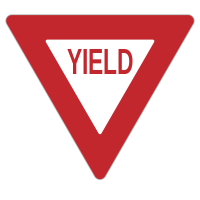
  • Downward-pointing red triangle with white center and the word YIELD in redYield: slow down and let others go first
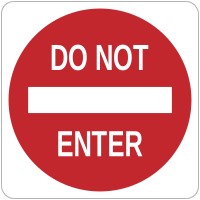
  • Red circle with a white horizontal bar on a white square, reading DO NOT ENTERDo not enter: you'd be going the wrong way
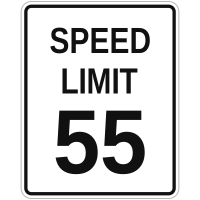
  • White rectangular sign reading SPEED LIMIT 55Speed limit: the most you may drive
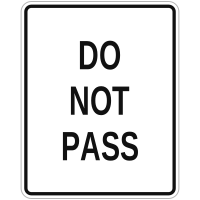
  • White sign reading DO NOT PASSDo not pass on this stretch
  • Yellow diamond with a black arrow curving to the rightBlack on yellow: curve ahead, slow down
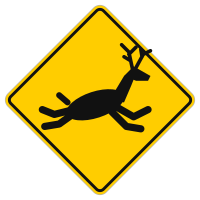
  • Yellow diamond with a black leaping deerAnimal crossing: slow down and watch the roadside
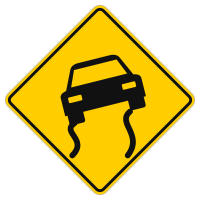
  • Yellow diamond with a car and two S-shaped skid marksSlippery when wet: ease off, brake gently
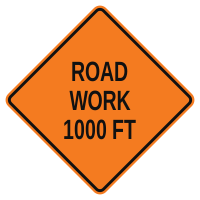
  • Orange diamond reading ROAD WORK 1000 FTBlack on orange: road work ahead
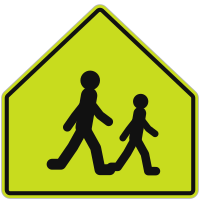
  • Fluorescent yellow-green pentagon with two children walkingSchool: watch for children
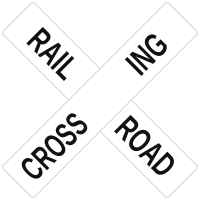
  • White X-shaped crossbuck reading RAILROAD CROSSINGRailroad crossbuck: yield to trains
  • Traffic signal with the yellow light lit and flash marks around itFlashing yellow: slow down and go with care

Free practice test

Try 20 questions in the same style

As of October 2026, the Alaska DMV doesn’t say how many questions the car test has or what score you need. Here are 20 questions from the Alaska Driver Manual, scored at 80%, the pass mark the DMV uses for its commercial knowledge tests, so 16 right is a pass. After each answer you can ask the tutor to explain it another way, or why a different answer is wrong. Anything you miss comes back at the end.

Question 1 of 20

What is the youngest age at which you can get an Alaska instruction permit for a car?

Sample of the knowledge test: same format, 20 questions.

Test day

What to bring to the DMV

  • A completed Application for Alaska Driver License, Permit or Identification Card (Form D1).
  • One primary document showing your legal name, date of birth and lawful presence, such as a certified U.S. birth certificate or a U.S. passport.
  • One proof of your Alaska street address, such as a utility bill, pay stub, bank statement or school record. A P.O. box doesn't count.
  • Your Social Security number. You don't need the card, but the number must match Social Security's records.
  • Under 18: a parent or guardian to sign the consent, or a notarized Form 433, plus proof of your relationship such as a birth certificate.
  • Your glasses or contacts if you wear them, and the $15 fee.

Before you go

  1. Read the Alaska Driver Manual. The written test is based only on it.
  2. Try the DMV's free practice knowledge test so you know which topics need work.
  3. Decide where to test. Online needs a desktop or laptop with a webcam, and you must be 16 or older for the car test.
  4. Print Form D1 and fill it in ahead of time.
  5. Under 18: check who can sign your consent. Step-parents and foster parents can't.
  6. Want a REAL ID? Bring two proofs of address instead of one, and expect to pay $20 more on your license later.
  7. Check opening hours. Most state DMV offices close from 8:30 to 9:30 a.m. on the first Tuesday of each month.
Alaska DMV: Online knowledge testRegister and take the written test at home. To test in person instead, find an office on the DMV's locations page at dmv.alaska.gov/locations/state-dmv-office-locations/.

Study options

Where to study

The written test covers only what’s in the free Alaska Driver Manual, and the DMV has a free practice test online. Want more practice? We’ve compared the apps, websites and other options people use.

OptionPriceFree to useLinks
Official and free
Alaska Driver ManualOfficial · PDFThe written test covers only what’s in here: traffic laws, safe driving and road signs. The current edition is dated October 2025 and runs to about 95 pages. You can’t use it during the test.
FreeThe whole manual
Alaska DMV practice knowledge testOfficial · webThe DMV’s own practice test, linked from its permit and first-license pages. The site was down when we tried it in October 2026, so we couldn’t check how many questions it has. Try again later if it doesn’t load.
FreePractice test
Alaska motorcycle and CDL manualsOfficial · PDFSeparate manuals for the motorcycle knowledge test and the commercial knowledge tests. The CDL manual says you need 80% to pass each commercial test.
FreeBoth manuals
Apps and websites
ZutobiApp and web · all statesGame-style practice with a short version of the handbook. Its Alaska page says it has 600+ Alaska questions. Very well rated: 4.7 stars from about 238,000 ratings on the App Store.
Paid upgradeSome free practice tests
Driving-Tests.org and DMV GenieWeb and app · all statesThese two are the same company. The website has free Alaska car tests, plus separate motorcycle and CDL sections, and you can read or listen to the handbook. Premium adds more questions. The DMV Genie app has 4.8 stars from about 184,000 ratings.
Free with ads, paid PremiumSeveral Alaska practice tests, no sign-up needed
DMV-Permit-Test.comWeb · all statesLots of free tests, in English and Spanish. A printable Alaska cheat sheet costs $15.99 one-time. You don’t need it to use the free tests.
Free with ads, paid extras20 Alaska practice tests of 20 questions each
Alaska DMV Written Test (Nilu Rathod)App · iPhoneAlaska-only app with car, motorcycle and CDL practice, based on the state manuals. 4.9 stars, but from only 22 ratings. Updated in 2025. The same developer has a separate Alaska CDL permit app.
FreePractice questions
Alaska DMV - AK Permit test (Driver Start)App · iPhoneWorks offline, with flashcards and a list of all questions. 4.2 stars from 49 ratings. It hasn’t been updated since 2017, so check anything surprising against the current manual.
FreePractice questions and flashcards
Alaska DMV Drive Test ReviewerApp · iPhoneCovers the car, motorcycle and CDL tests, and links to the official handbook. 4.8 stars from 36 ratings. Last updated in 2022.
FreePractice questions
Video
Permit test walk-throughs on YouTubeVideo · freeSeveral channels go through Alaska permit questions out loud. Good if you learn better by listening. They’re unofficial, so check anything surprising against the manual.
Free (ads)Everything
In person
Driving schools and third-party testersLocalAlaska doesn’t require drivers ed, but a DMV-approved school can get you a class IE permit from 14 and often gives road tests in its own car. The DMV lists schools and test providers by region.
Set by each school-

Prices and ratings checked October 2026.

FAQ

Common questions

How many questions are on the Alaska permit test?

The DMV doesn’t say. As of October 2026, neither its website nor the Alaska Driver Manual gives the number of questions or the pass mark for the car test. Practice sites often quote 20 questions and 80%, but we couldn’t find that on an official page. What the DMV does say is that the test covers only what’s in the manual, so study all of it.

Is the learner’s permit test the same as the driver’s license test?

Yes, it’s the same written knowledge test. Alaska calls the learner’s permit an instruction permit. If you’re 18 or older and new to driving, you take the same test, and your result counts toward your first driver’s license for one year. The driving test, or road test, comes later and is separate.

Can I take the Alaska permit test online?

Yes, if you’re 16 or older. The DMV’s online knowledge test system runs on a desktop or laptop with a webcam, costs $11.50 per attempt and gives you 25 minutes. If you’re 14 or 15, take it at a DMV office. Either way, you still visit an office to get the permit itself.

How old do you have to be to drive in Alaska?

You can get an instruction permit at 14 and drive with a licensed adult aged 21 or older beside you. At 16 you can get a provisional license, once you’ve held the permit for six months and logged 40 hours of practice. The teen limits come off after six clean months, or at 18.

What do I need to bring to the DMV for my permit?

Bring Form D1, one document proving your name, date of birth and lawful presence (like a birth certificate or passport), one proof of your Alaska street address, and your Social Security number. If you’re under 18, a parent or guardian signs your consent. Bring your glasses if you wear them, and the $15 fee.

What happens if I fail the written test?

At a DMV office you can take it again the next day. Online, the test system lets you retry the same day up to four more times. Fail five times online, though, and you have to wait a year before you can test online again.

All 20 practice questions with answersA printable list of the practice test above
  1. What is the youngest age at which you can get an Alaska instruction permit for a car?

    14 In Alaska you can get a non-commercial instruction permit at 14. It's valid for two years and can be renewed once.

  2. You're driving a car on an instruction permit. Who must be with you?

    A licensed driver at least 21, with a year of experience in that kind of vehicle, in the seat beside you The supervising driver must be licensed, at least 21, and have at least one year of driving experience in the same type of vehicle. In a car, they must sit in the seat beside you.

  3. You're in a crash that injures someone. How long do you have to give the DMV proof of insurance?

    15 days After a crash with injury, death or more than $501 of property damage, every driver involved must send proof of insurance to the DMV within 15 days. This applies even if the crash wasn't your fault.

  4. You're under 21. How much alcohol can you have in your body and still drive legally in Alaska?

    None at all It's illegal for anyone under 21 to drive after consuming alcohol in any amount. A breath test showing any alcohol, or refusing the test, means the DMV revokes your license.

  5. At what blood or breath alcohol level is an adult driver presumed to be driving under the influence in Alaska?

    0.08 If you drive with a breath or blood alcohol concentration of 0.08 or more, Alaska law presumes you're under the influence. A test result of 0.08 or more after a DUI arrest also leads to the DMV revoking your license.

  6. You've had a few drinks. What is the only thing that will sober you up?

    Time Your liver removes alcohol from your body at its own pace, so only time works. The manual says it takes about an hour to cancel the effects of one drink.

  7. What following distance does the Alaska Driver Manual recommend in normal conditions?

    At least 4 seconds behind the vehicle ahead The manual recommends the four-second rule, and six seconds or more when towing or when the road is wet or slippery. Alaska regulations set two seconds as the bare minimum.

  8. There's no speed limit sign. What is the maximum speed in a residential district in Alaska?

    25 mph Where no other limit is posted, Alaska sets 25 mph in residential districts. It's 20 mph in business districts and school zones, 15 mph in alleys, and 55 mph on other roads.

  9. How far before a turn must you start signaling?

    At least 100 feet Alaska requires you to signal continuously for the last 100 feet before you turn. At higher speeds or in heavy traffic it's smart to signal even earlier.

  10. You and another car reach an uncontrolled intersection at the same time. The other car is on your right. Who goes first?

    The other car. The driver on the left yields to the driver on the right At an uncontrolled intersection, when two vehicles arrive at about the same time, the driver on the left must yield to the driver on the right. Even the driver on the right should slow down and not assume they have the right of way.

  11. You're about to enter a roundabout. Who must you yield to?

    Traffic already in the circle, plus pedestrians and bicyclists Traffic entering a roundabout yields to traffic already in the circle. You also yield to pedestrians and bicyclists, including those at the marked crosswalks.

  12. You're driving out of a driveway onto a street. What must you do?

    Stop, and yield to all traffic and pedestrians When you enter a street or highway from an alley, driveway or building, you must stop and yield to traffic. That includes people on the sidewalk you cross.
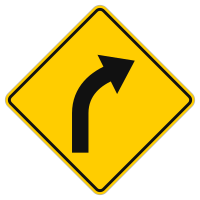
  13. Yellow diamond with a black arrow curving to the right

    What kind of sign is this?

    A warning sign about conditions ahead Warning signs are black on yellow. This one warns of a curve. They tell you about conditions ahead that could be dangerous, and most of them mean you should slow down.
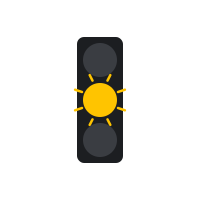
  14. Traffic signal with the yellow light lit and flash marks around it

    What does it mean when this light is flashing?

    Slow down and go with caution, yielding to anyone in the intersection A flashing yellow ball means reduce speed and take care. You yield to pedestrians and vehicles already in the intersection, but you don't have to stop if it's clear.

  15. You're on a highway with separated roadways and two lanes each way. A school bus on the other side has stopped with red lights flashing. What must you do?

    You don't have to stop, but watch carefully On a highway with separated roadways and two or more lanes in each direction, you don't need to stop for a school bus headed the other way. On other roads, traffic in both directions must stop when the red lights flash and the stop arm is out.

  16. An ambulance with flashing lights is coming toward you on a two-lane road. What should you do?

    Pull to the right edge of the road, clear of any intersection, and stop When an emergency vehicle with flashing red or blue lights approaches from any direction, you slow down, pull to the right-hand edge of the road, clear of intersections, and stop until it has passed. This applies whether or not the siren is on.

  17. A fire truck is answering an emergency call. How close may you follow it?

    No closer than 500 feet You may not follow an emergency vehicle that's responding to an emergency closer than 500 feet. You also may not park within 500 feet of a stopped fire truck that has its flashing lights on.

  18. A moose suddenly runs onto the road in front of you. What does the manual tell you to do?

    Brake firmly, but don't swerve If an animal runs in front of you, brake firmly but don't swerve. Swerving can send you into another vehicle, a pedestrian, or a tree or pole.

  19. You're driving at night with high beams on. When must you switch to low beams for an oncoming vehicle?

    When it's within 500 feet of you Alaska law says you dim to low beams when you're 500 feet or more from an oncoming vehicle. For a vehicle ahead of you going the same way, dim at 300 feet or more.

  20. You park facing downhill next to a curb. Which way should you turn your front wheels?

    Toward the curb When parking downhill, turn your front wheels toward the curb. On an uphill with a curb, turn them away from it. That way, if the car rolls, the curb stops it.