Virginia · Permit test

Virginia DMV permit test

To get a Virginia learner's permit you pass the DMV's two-part knowledge exam. Part one is 10 road sign questions, and you have to get all 10 right. Part two is 30 multiple-choice questions on driving laws, and you need 24 of them. You can apply from 15 and a half, and the exam is offered in 26 languages. Below is a free 20-question practice test.

  • 10Road sign questions in part one, all must be right
  • 24 of 30General knowledge questions needed to pass part two
  • 26Languages the exam is offered in, including ASL
  • 15 daysWait before a retake if you're under 18

Key facts

At a glance

To pass
All 10 signs, and 24 of 30 (80%) on part two
Minimum age
15 years and 6 months for a learner's permit
Where
On a computer at a DMV customer service center, or at a high school with remote testing
Permit fee
$3 plus the license fee of $4 a year, as of October 2026
Languages
26, including Spanish and ASL, plus an audio or oral version

How it works

Two parts: 10 sign questions you can't miss, then 30 on the rules

You need 16 of 20 right overall. You also need all 4 road-sign questions right, whatever your total.
  1. The knowledge exam is taken on a computer at a DMV customer service center, or in class at a high school that takes part in DMV's remote testing.
  2. Part one has 10 road sign questions, and you must answer all 10 correctly before you can start part two.
  3. Part two has 30 multiple-choice questions on traffic laws and safe driving. You need 24 right, which is 80%.
  4. The questions come from the Virginia Driver's Manual. An audio version and an oral exam are available, and the exam comes in 26 languages.
  5. You also take a vision screening at the same visit.
  6. If you fail and you're under 18, you wait a full 15 days. At 18 or older you can retest once a day. After three fails, you must finish a driver education classroom course, or for some people an 8-hour manual course, before a fourth try.
  7. If you pass, the permit is mailed to your address. A pass is good for one year.

Topics

What’s on the test

01

Signs, signals and pavement markings

Part one of the real exam is 10 sign questions, and you must get every one right. This chapter covers the colors, shapes, lane signals and road lines the manual teaches.

Key points (4)
  • All 10 sign questions in part one must be answered correctly before you can move on to part two.
  • Yellow and black signs warn. Black and white signs give rules. Orange means construction, and pink means an incident area.
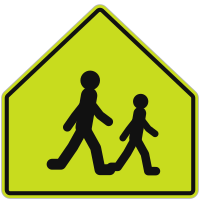
  • A five-sided sign marks a school zone or school crossing.
  • In a shared center turn lane you may turn left, but you may not travel more than 150 feet in it.
02

Permits and Virginia's teen driver rules

Who can get a permit and when, who can sit beside you, and the limits that apply until you turn 18.

Key points (4)
  • You can apply for a learner's permit at 15 years and 6 months.
  • Your supervising driver must be licensed and at least 21, or 18 if they're your legal guardian or a sibling.
  • Under 18, you hold the permit at least nine months, finish driver education and log 45 hours, 15 after sunset.
  • Under 18, no driving from midnight to 4 a.m. and no phone use at all, even hands-free, except in an emergency.
03

Right-of-way, school buses and emergency vehicles

Who goes first at intersections and roundabouts, and what Virginia law asks when you meet buses, emergency vehicles and stopped cars.

Key points (4)
  • At an intersection with no signs, if two cars arrive together the driver on the left yields to the driver on the right.
  • Stop for a school bus with flashing red lights from any direction, unless a median or barrier separates you.
  • Never follow an emergency vehicle with flashing lights closer than 500 feet.
  • Change lanes when passing a stopped vehicle with hazard lights, flares or caution signs.
04

Speed limits, following distance and lights

Virginia's default speed limits, the reckless driving thresholds, how much space to leave and when to use your headlights.

Key points (4)
  • Unless posted, limits are 25 mph in school, business and residential areas, 35 on unpaved roads and 55 elsewhere.
  • Driving 20 mph or more over the limit, or over 85 mph, can be charged as reckless driving.
  • Leave 2 seconds under 35 mph, 3 seconds at 35-45 mph and 4 seconds at 46-70 mph, and more in bad conditions.
  • Use headlights when your wipers are on because of the weather, and dim high beams within 500 feet of oncoming traffic.
05

Seat belts, child seats, phones and alcohol

The safety laws on belts, child seats, handheld phones and drinking, including the stricter rules for drivers under 21.

Key points (4)
  • The driver and all passengers, front and back, must wear seat belts.
  • Children under 8 ride in a child safety seat or booster, and rear facing until at least age 2.
  • No driver may hold a phone while driving, except in an emergency or when lawfully parked or stopped.
  • Under 21, a BAC from 0.02% can mean a one-year suspension and a $500 minimum fine or 50 hours of community service.
06

Sharing the road, parking and crashes

How to give room to cyclists, trucks and animals, where you can't park, and what to do after a crash.

Key points (4)
  • Give cyclists at least three feet when you pass.
  • No parking within 15 feet of a hydrant, 20 feet of an intersection or 50 feet of a railroad crossing.
  • If hitting a deer can't be avoided, brake firmly and stay in your lane rather than swerving.
  • After a crash, stop, help anyone injured, report it to the police and exchange information.

Road signs

Signs, signals and road lines from the Virginia Driver's Manual

Virginia is strict about signs. The first part of the knowledge exam is 10 sign questions, and a single wrong answer means you don't get to part two. Learn the colors and shapes first, because they tell you what a sign means even before you can read it.

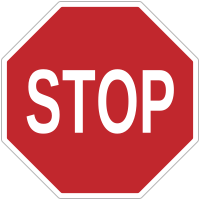
  • Red octagon with white border and the word STOP in whiteStop: always come to a full stop
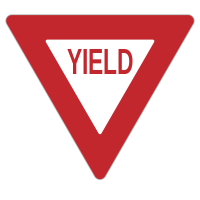
  • Downward-pointing red triangle with white center and the word YIELD in redYield: slow down and be ready to stop
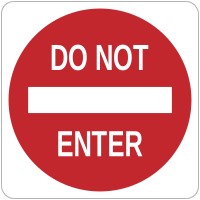
  • Red circle with a white horizontal bar on a white square, reading DO NOT ENTERDo not enter: you'd be going the wrong way
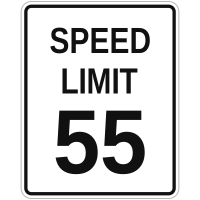
  • White rectangular sign reading SPEED LIMIT 55Speed limit: the most you may drive
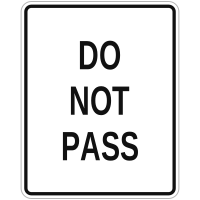
  • White sign reading DO NOT PASSDo not pass on this stretch
  • Yellow diamond with a car and two S-shaped skid marksSlippery when wet: slow down in rain
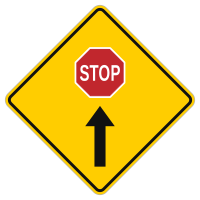
  • Yellow diamond with a red octagon and a black arrow pointing up toward itStop sign ahead: get ready to stop
  • Fluorescent yellow-green pentagon with two children walkingSchool zone or crossing: watch for children
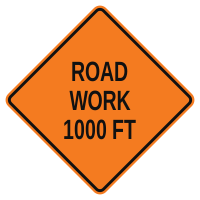
  • Orange diamond reading ROAD WORK 1000 FTWork zone ahead: slow down and watch for workers
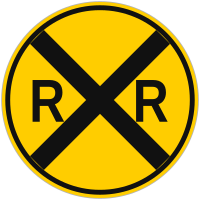
  • Round yellow sign with a black X and two letters RRailroad crossing ahead: look and listen
  • Three lane-use signals: red X, yellow X and green downward arrowLane signals: red X never use, yellow X get out, green arrow use
  • Center lane bordered by solid yellow outer lines and broken yellow inner lines, with opposing left-turn arrowsShared center lane: left turns only, 150 feet at most

Free practice test

20 practice questions on Virginia's own rules

These 20 questions come from the Virginia Driver's Manual and the DMV's teen driver pages. Like the real exam, the 4 sign questions here are all-or-nothing, and you need 80% overall, so 16 right is a pass. The real test is longer: 10 signs, then 30 questions where you need 24. After each answer, the tutor can explain it another way or tell you why the other choices are wrong.

Question 1 of 20
Fluorescent yellow-green pentagon with two children walking

You see this sign by the road. What does it tell you?

Sample of the knowledge exam: same format, 20 questions.

Test day

What to bring to the DMV for your learner's permit

  • A completed Application for a Virginia Driver's License (DL 1P), signed by a parent or guardian if you're under 18
  • One proof of identity and one proof of legal presence, such as a U.S. birth certificate or passport
  • Two proofs of Virginia residency. Under 19, a parent can certify your address by coming with you and bringing their own ID and two proofs
  • Your Social Security number. If you know it, DMV can usually check it electronically
  • The $3 permit fee plus the license fee, which is $4 a year, as of October 2026
  • Your glasses or contacts, for the vision screening

Before you go

  1. Read the Virginia Driver's Manual, or use the DMV's free online study guide in English or Spanish.
  2. Try the DMV's online sample knowledge exam, then the 20 questions on this page.
  3. Know your signs cold. One wrong answer in part one ends the test.
  4. Check your documents with the DMV's online Document Guide. Originals only, no photocopies.
  5. Ask your high school whether it offers the knowledge test in class through remote testing.
  6. Book an appointment, or walk in and arrive by 4:30 p.m. on weekdays or 11:30 a.m. on Saturdays to test the same day.
Virginia DMV: Reserve your spotAppointments run Monday to Friday and can be booked up to 90 days ahead. Walk-ins are also welcome, and you can join an office's line by text with an e-ticket.

Study options

Where to study

The Virginia Driver's Manual is free from the DMV, as a PDF or as an interactive study guide with practice questions, in English and Spanish. Its section 2 on signs is the one to learn best, since part one of the exam doesn't forgive mistakes. For more practice, we've compared the apps, websites and driving schools Virginia learners use.

OptionPriceFree to useLinks
Official and free
Virginia Driver's Manual (DMV 39)Official · PDFEvery knowledge exam question comes from here. The current PDF dates from April 2026. You can download it whole or one section at a time, which helps on a phone: section 2 is the signs, and section 3 is the long one on safe driving.
FreeThe whole manual, in English and Spanish
DMV interactive study guide and sample examOfficial · webThe DMV's own online version of the manual, with questions after each section, in English or Spanish. There's a matching guide for the motorcycle manual. The manual's section 8 also has a 10-question sample exam with answers.
FreeEvery section, with practice questions
Parents in the Driver Seat (DMV 16)Official · PDFA short DMV guide for parents of teen drivers. It sums up the permit age, the 45-hour certification, curfews and passenger limits, and explains the Department of Education's 45-Hour Parent/Teen Driving Guide, which holds the driving log.
FreeThe whole guide
Motorcycle and CDL manualsOfficial · PDFThe Motorcycle Operator Manual (DMV 2) for the 25-question motorcycle exam, and the Commercial Driver's Manual (DMV 60A) with its Virginia supplement (DMV 60V) for the CDL knowledge exams.
FreeAll three manuals in full
Apps and websites
DMV-Permit-Test.comWeb · all statesEach test opens with 10 sign questions and then 30 general ones, which mirrors the layout of the real Virginia exam. It also has a Spanish version, a motorcycle test and CDL tests by section, including hazmat and air brakes.
Free with ads, paid Premium, and a $15.99 Virginia cheat sheet20 Virginia car practice tests
Driving-Tests.org and DMV GenieWeb and app · all statesOne company runs both. The Virginia section lists 19 tests, including several road sign sets and topic tests on fines, distracted driving and drinking and driving, but most sit behind Premium. The DMV Genie app has 4.8 stars from about 184,000 ratings.
Free tests, Premium from $9.99 on the App StoreVirginia permit practice tests 1 to 3 and a diagnostic quiz
ZutobiApp and web · all statesGame-style lessons built around each state's manual. Its Virginia page claims more than 600 Virginia questions. Its description of the real exam's pass mark doesn't match the DMV's, so check the format on the DMV site. The app has 4.7 stars from about 239,000 ratings across all states.
Free start, then Zutobi PLUS (App Store prices from $4.99)A free start, with the rest behind the subscription
In person
DMV-approved driver training schoolsLocal and onlineTeens under 18 need driver education here or at school: 36 classroom sessions plus 7 driving and 7 observation sessions, ending in the road skills test. The classroom part can be done online. Schools also run the 8-hour manual course for people who fail the knowledge exam three times.
Set by each school-
High school driver education and remote testingSchoolMany Virginia high schools teach driver education, and some run the DMV knowledge exam in a school computer lab through DMV's remote testing program. Ask your school counselor or driver education teacher what yours offers.
Set by each school divisionRemote knowledge testing is free for schools to join

Prices and ratings checked October 2026.

FAQ

Common questions

How many questions are on the Virginia DMV knowledge test, and what do you need to pass?

There are two parts. Part one has 10 road sign questions, and you must answer all 10 correctly before you can move on. Part two has 30 general knowledge questions, and you need 24 right (80%). That's 40 questions in all, as of October 2026.

How do I get a Virginia learner's permit?

You must be at least 15 years and 6 months old. Fill in the DL 1P application (a parent or guardian signs if you're under 18), bring proof of identity, legal presence, two proofs of Virginia residency and your Social Security number, and pay $3 plus the license fee. Then pass a vision screening and the two-part knowledge exam. Your permit is mailed to you.

Can I take the Virginia permit test online?

Not from home. The DMV gives the knowledge exam on a computer at its customer service centers. Some high schools take part in the DMV's remote testing program, where students take the same exam in a school computer lab with a staff proctor. The DMV's online study guide and sample exam are only for practice.

What happens if I fail the permit test 3 times in Virginia?

Whatever your age, you can't take it a fourth time until you finish the classroom part of a Virginia driver education course, completed after your third fail. If you're 18 or older, an 8-hour course based on the Driver's Manual also works. Under 18, you must wait 15 full days between tries.

What do I need for a Virginia driver's license after the permit?

Under 18, you need to be at least 16 years and 3 months old, hold your permit for nine months, finish driver education (which includes the road skills test) and have a parent certify 45 hours of practice, 15 after sunset. Adults have shorter routes, and the rules for 18 to 20 year olds change on January 1, 2027.

Is the Virginia DMV road skills test the same as the knowledge test?

No. The knowledge test is the written exam for your permit. The road skills test is the driving test you take later, in your own car. Teens take it at the end of driver education. Adults who skip driver education take it at the DMV after holding their permit 60 days.

Can I take the Virginia DMV test in Spanish or another language?

Yes. The car, motorcycle and CDL knowledge exams come in 26 languages, including Spanish, Arabic, Chinese, Korean, Vietnamese, Urdu and ASL. The Driver's Manual and online study guide are in English and Spanish. Translators can't help on the knowledge exam, because the languages are built in.

Is there a free Virginia DMV practice test?

Yes. The DMV's online study guide has sample questions for each section of the manual, and section 8 of the manual has a short sample exam with answers. The 20 questions on this page are free too, with an explanation for every answer.

All 20 practice questions with answersA printable list of the practice test above
  1. Fluorescent yellow-green pentagon with two children walking

    You see this sign by the road. What does it tell you?

    A school zone or school crossing In Virginia's manual, the pentagon is kept for school zones and school crossings. Slow down and watch for children, because the speed limit can drop at school times.
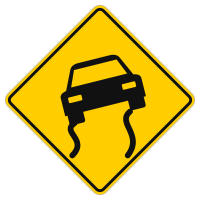
  2. Yellow diamond with a car and two S-shaped skid marks

    What does a yellow sign like this one usually mean?

    A warning about a hazard or change ahead Yellow with black is the color code for a warning, such as a curve, a stop ahead or a road that's slippery when wet. Slow down and be ready for what the sign describes.
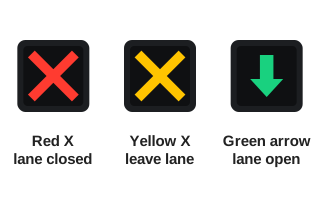
  3. Three lane-use signals: red X, yellow X and green downward arrow

    Signals like these hang over the lanes on some Virginia roads. If the red X is lit above your lane, what should you do?

    Never drive in that lane A red X is a lane use signal that means the lane is closed to you. You must not drive in a lane marked with a red X. A green arrow means you may use the lane.
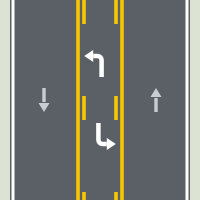
  4. Center lane bordered by solid yellow outer lines and broken yellow inner lines, with opposing left-turn arrows

    The center lane of the road has these markings. How can you use it?

    For left turns, traveling no more than 150 feet in it This is a shared center turn lane. Drivers going either way may use it to turn left, but Virginia's manual says you may not travel more than 150 feet in it.

  5. What is the youngest age you can apply for a Virginia learner's permit?

    15 years and 6 months You must be at least 15 years and six months old to apply for a Virginia learner's permit. You also pass a vision screening and the two-part knowledge exam.

  6. You're 16 and you fail the knowledge exam. When is the earliest you can take it again?

    After a full 15 days By law, if you're under 18 you must wait a full 15 days before retaking the knowledge exam. Fail on January 1 and the earliest retest is January 17. Adults can test once a day.

  7. Before a driver under 18 can get a license, a parent must certify how much supervised driving?

    At least 45 hours, with 15 after sunset A parent or guardian signs the driver education completion certificate to confirm at least 45 hours of driving, 15 of them after sunset. This applies to drivers under 18.

  8. If you're under 18, when are you not allowed to drive (unless an exception applies)?

    From midnight to 4 a.m. Drivers under 18 may not drive between midnight and 4 a.m. Exceptions include driving to or from work or a supervised school, civic or religious activity, emergencies, and driving with a licensed parent or adult in the front seat.

  9. Two cars reach an intersection with no signs or signals at the same time. Who goes first?

    The driver on the right When vehicles from different directions arrive at the same time and there are no signs or signals, the driver on the left must let the driver on the right go first. The same rule applies at all-way stops and at dead traffic lights.

  10. A school bus is stopped with red lights flashing on an undivided road. You're coming toward it from the other direction. What must you do?

    Stop and stay stopped until everyone is clear and the bus moves You must stop for a stopped school bus with flashing red lights and its stop sign out, from any direction. Stay stopped until all children are clear and the bus moves again. Only a median or barrier between you and the bus lets oncoming traffic keep going.

  11. An ambulance with its lights flashing is ahead of you, going the same way. How close may you follow it?

    No closer than 500 feet Never follow an emergency vehicle closer than 500 feet when its lights are flashing. If one comes up behind you with lights or a siren, pull to the right edge of the road and stop until it passes.

  12. You pass a stopped vehicle on the highway that has its hazard flashers on. What does Virginia law require?

    Change lanes and go by with caution When you pass a stopped vehicle showing hazard flashers, caution signs or lit flares, you're required to change lanes and proceed with caution. For emergency vehicles and tow trucks, if you can't safely change lanes, slow down and pass carefully.

  13. Unless a sign says otherwise, what is the speed limit in a Virginia residential area?

    25 mph With no posted sign, the limit for cars and motorcycles is 25 mph in school, business and residential areas, 35 mph on unpaved roads, and 55 mph on all other roads.

  14. In Virginia, at what speed can you be charged with reckless driving, whatever the posted limit?

    20 mph or more over the limit, or over 85 mph Driving 20 mph or more over the limit, or faster than 85 mph, can bring a reckless driving charge. That's a misdemeanor criminal offense, with possible fines, suspension and jail.

  15. You're driving at night on a highway with your high beams on. When must you switch to low beams?

    When an oncoming vehicle is within 500 feet, or you're within 200 feet of a car ahead Dim your high beams when an oncoming vehicle is within 500 feet. When following, use low beams whenever you're within 200 feet of the vehicle ahead, so you don't blind the driver through their mirrors.

  16. Under Virginia law, until what age must a child ride in a child safety seat or booster seat?

    Until age 8 All children under 8 must be secured in a child safety seat or booster seat. Children should ride rear facing until at least age 2, or as long as the seat maker allows.

  17. When may a Virginia driver hold a cell phone while the car is moving?

    In a driver emergency Virginia law bans holding a phone or other wireless device while driving, except in a driver emergency or when the vehicle is lawfully parked or stopped. A phone can be used for navigation if you aren't holding it or typing.

  18. A driver under 21 can be convicted of illegally drinking alcohol with a blood alcohol content (BAC) of at least:

    0.02% Virginia has a zero tolerance law for underage drinking. Under 21, a BAC of at least 0.02% but under 0.08% can bring a conviction, a one-year license suspension and a $500 minimum fine or 50 hours of community service.

  19. How close to a fire hydrant may you park?

    No closer than 15 feet You may not park within 15 feet of a fire hydrant. The manual also bans parking within 20 feet of an intersection and within 50 feet of a railroad crossing.

  20. A deer runs into the road and you can't avoid hitting it. What does the manual tell you to do?

    Brake firmly, stay in your lane and come to a controlled stop If a crash with a deer or other large animal can't be avoided, don't swerve. Brake firmly, stay in your lane and come to a controlled stop. Then report it to law enforcement.