 Virginia · Permit test
How the signs part is scored
It's all or nothing. The DMV says you must correctly answer all ten traffic sign questions in part one before you can take part two. Part two, the 30 general knowledge questions, is scored separately at 80%.
If you fail on signs, the usual retake rules apply: a 15-day wait if you're under 18, or once a day if you're 18 or older.
Regulatory signs: rules set by law
Red and white signs tell you to stop, yield or stay out, and the red circle and slash means 'no'. Black and white signs give a rule set by law, like a speed limit or no turns. Most rules are on vertical rectangles, while horizontal rectangles carry directions and information.
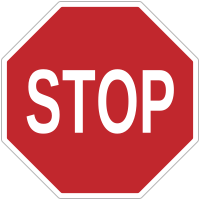 Always stop. At an all-way stop, if you arrive together, the driver on the left yields
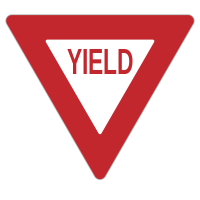 Slow down, be ready to stop, and let others go first
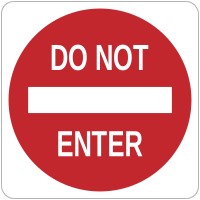 Do not enter this road from here
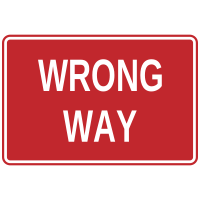 Wrong way: you're facing traffic, get out safely
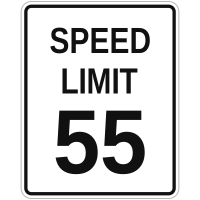 The most you may drive on this road
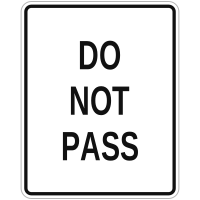 Do not pass other vehicles here
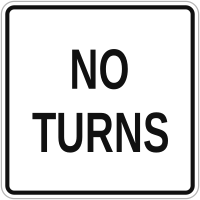 No turns of any kind here
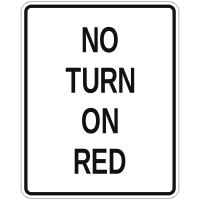 No turn while the light is red
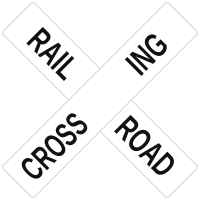 Railroad crossbuck: the crossing itself, yield to trains
Warning signs
Yellow with black means a warning about special conditions or hazards ahead. Most warnings are diamonds. Two use their own shapes: the round yellow railroad sign and the pennant that marks a no-passing zone.
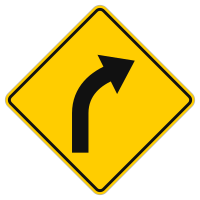 Curve ahead: slow down before it
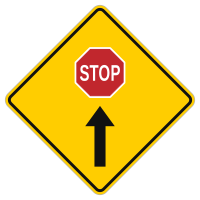 Stop sign ahead: get ready to stop
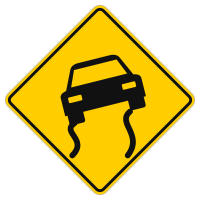 Slippery when wet: slow down in rain
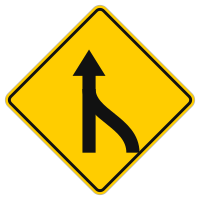 Merging traffic: make room or adjust speed
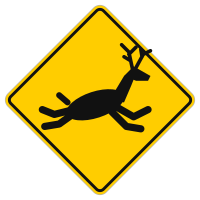 Deer crossing: watch the roadside, especially at dusk
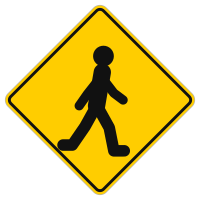 Pedestrian crossing: be ready to stop for people
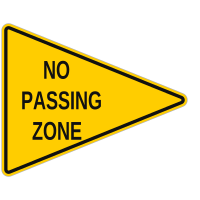 No passing zone starts here
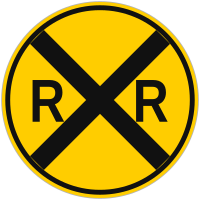 Railroad crossing ahead: slow down, look and listen
School, work zone and incident signs
The pentagon is kept for school zones and school crossings, and yellow-green also marks pedestrian and bicycle signs. Orange with black means a construction or work zone. Virginia also uses pink signs with black letters for an incident area, such as a crash scene.
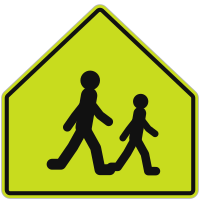 School zone or school crossing: watch for children
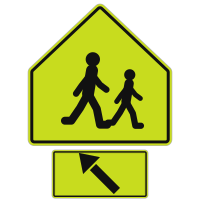 School crossing here: be ready to stop
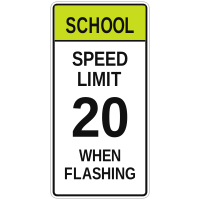 Lower school speed limit while the lights flash
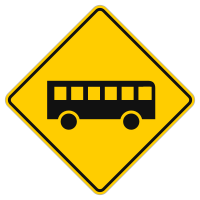 School bus stop ahead
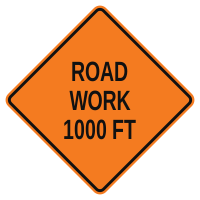 Road work ahead: slow down
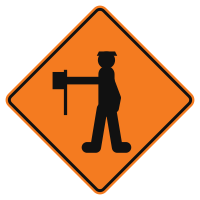 Flagger ahead: be ready to stop
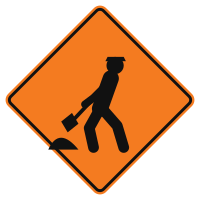 Workers on or near the road
Guide and service signs
Green signs give directions to cities and routes, blue signs point to motorist services, and brown signs lead to historic and cultural sites.
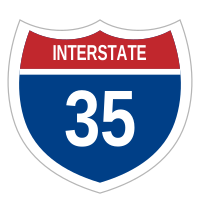 Interstate route marker
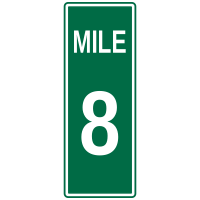 Milepost: your place along the highway
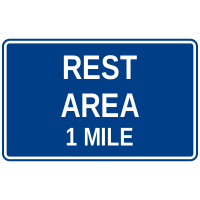 Rest area ahead
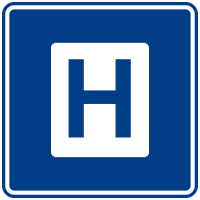 Hospital nearby
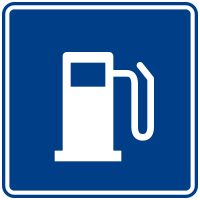 Gas nearby
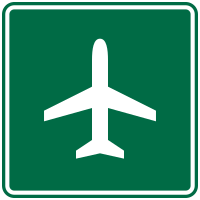 Airport this way
Signals and lines that come up too
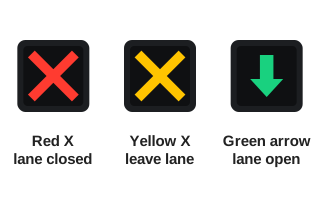 Red X: never drive in the lane. Yellow X: move out. Green arrow: use it
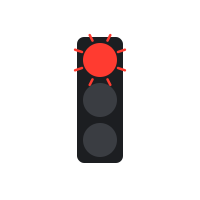 Flashing red: treat it like a stop sign
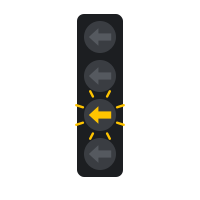 Flashing yellow arrow: turn after yielding to traffic and people
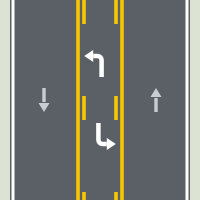 Shared center lane: left turns only, no more than 150 feet in it
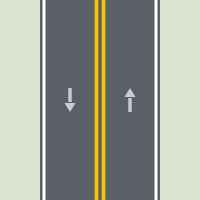 Double solid yellow: no passing either way
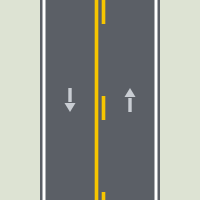 Broken line on your side: you may pass when it's safe
- At a railroad crossing with flashing red lights, you stop even if you don't see a train.
- If signals are dark because of a power cut, treat the intersection as an all-way stop.
How to practice the signs
The DMV's interactive study guide has a section on signals, signs and pavement markings with its own practice questions, and section 8 of the manual has a short sample exam that opens with sign questions. The 4 sign questions in our practice test follow the same all-or-nothing rule, so treat a single miss as a fail and go back to section 2.
Explore
Everything else, in one place
Sources: Virginia DMV and 1 more. Checked October 2026.
Rules and fees can change, so check the official site before your test.