 Newfoundland and Labrador · Learner’s test
What do road signs in NL look like?
The handbook’s signs chapter opens with seven shapes:
- Octagon: stop
- Horizontal rectangle: directions and distances
- Vertical rectangle or square: regulations
- Crossbuck: a railway crossing
- Upside-down triangle: yield the right of way
- Pentagon: school children may be near, on a blue or fluorescent yellow sign
- Diamond: a hazard ahead
Green signs with white letters give distances and directions to places and highway routes.
Regulatory signs: rules you must obey
Regulatory signs are rectangles or squares, white with black or other coloured lettering. They set out the law on speed, parking, turning and passing. A green circle means what’s shown is allowed or required, and a red circle with a red stroke means it isn’t allowed.
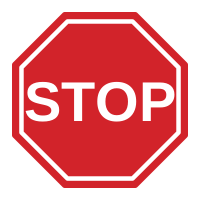 Stop: come to a full stop at the stop line or crosswalk, and go when the way is clear
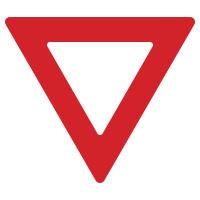 Yield: slow down, be ready to stop and give the right of way to oncoming traffic
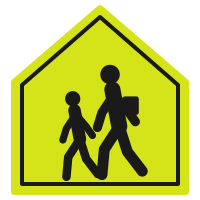 School zone: slow down, take extra care and watch for children
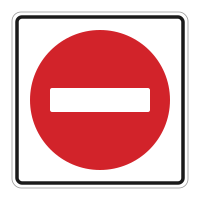 Do not enter this street
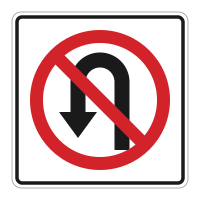 Do not make a U-turn
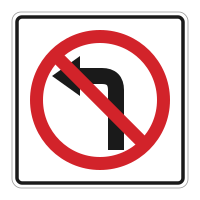 No left turn at this intersection
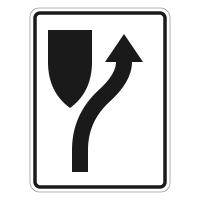 Keep to the right of the island
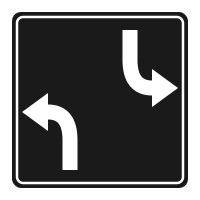 The centre lane is a shared left turn lane
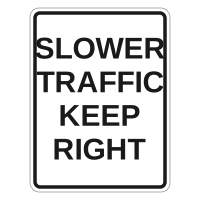 Keep to the right lane except to pass
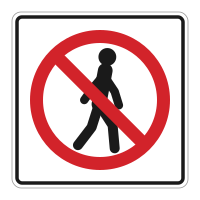 Pedestrians not permitted on the highway
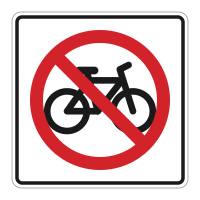 Bicycles not permitted on the highway
Warning signs: what’s on the road ahead
Warning signs are diamonds, and each one tells you about a change in the road ahead. The handbook also has one for moose, on stretches where they cross the road regularly: slow down and drive with caution.
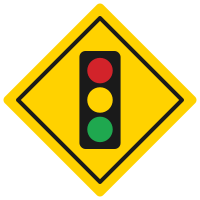 Traffic lights ahead
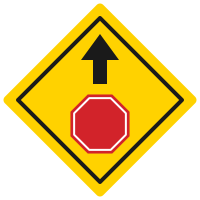 Stop sign ahead: be prepared to stop
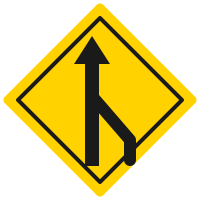 Two lanes of traffic merge ahead
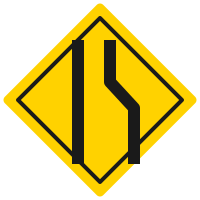 Right lane is ending
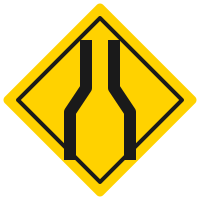 The road ahead is narrower than the one you’re on
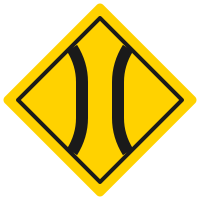 Narrow bridge or underpass ahead
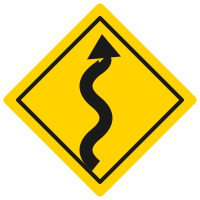 Winding road ahead
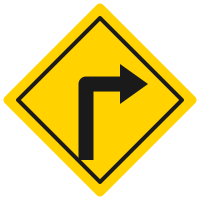 Sharp turn ahead, in the direction shown
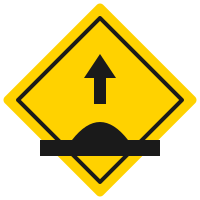 Bump or rough road ahead
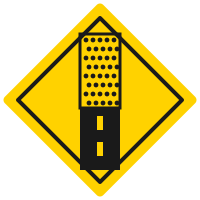 Pavement ends, with a gravel road ahead
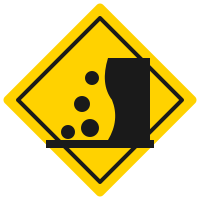 Falling rocks
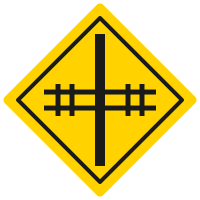 Railway crossing ahead
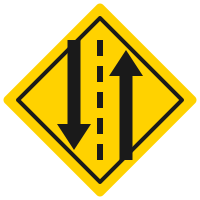 Two-way traffic ahead: share the road with drivers going the other way
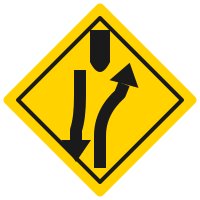 Divided highway ahead: keep to the right
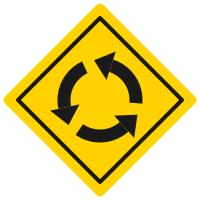 Roundabout ahead: slow down
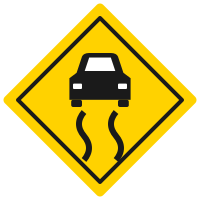 Road surface is slippery when wet
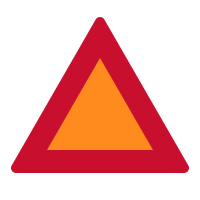 Slow-moving vehicle: required on the back of the vehicle on the highway
Traffic lights
The handbook teaches traffic lights in the same chapter. On a solid red you may turn right after a complete stop, yielding to pedestrians and traffic, unless a sign says no. A police officer’s directions come before any light.
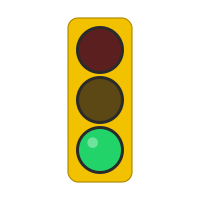 Solid green: go straight or turn right. Turn left only after yielding to pedestrians and oncoming traffic
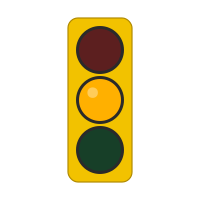 Solid amber: red is coming. Stop if you can do it safely, otherwise go through with caution
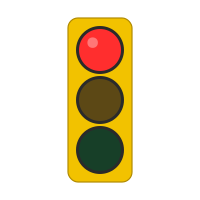 Solid red: stop and wait for green
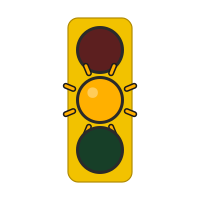 Flashing amber: slow down and go with caution
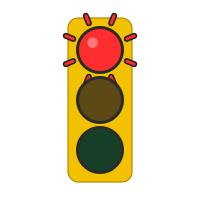 Flashing red: come to a complete stop, and go only when it’s safe
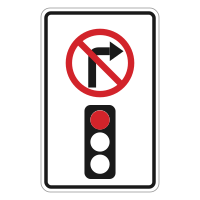 No right turn on a red light
Construction signs and road markings
Road construction signs warn you of construction, road crews, survey crews and a flag person who may stop you. Zipper merge signs tell you to use both lanes up to the merge point.
Lines painted on the road follow these rules:
- Yellow lines separate traffic going opposite ways
- White lines separate traffic going the same way
- A solid line on your left means it isn’t safe to pass
- A broken yellow line on your left means you may pass if the way is clear
- Arrows near an intersection show which way traffic in that lane must go
- Two solid yellow lines around diagonal yellow lines mark a painted island. Don’t drive over it or use it to pass
Sources: Government of Newfoundland and Labrador and 2 more. Checked November 2026.
- Government of Newfoundland and Labrador: Driver’s Handbook (PDF) ↗
- Government of Newfoundland and Labrador: Motor Registration, Licence Application Process ↗
- Government of Newfoundland and Labrador: Motor Registration, Graduated Driver Licencing Program ↗
Rules and fees can change, so check the official site before your test.
Explore