District of Columbia · Permit test

DC learner’s permit and knowledge test

You need to be at least 16, pass a vision screening and pass the knowledge test to get a DC learner’s permit. Drivers 16 to 20 take the GRAD version of the test, which DC DMV’s testing partner lists at 35 questions in 75 minutes, and drivers 21 or older take 30 questions in 60 minutes. You can walk in to a DC DMV service center, book a seat at the Test Proctoring Center, or take it from home on a webcam. The permit then lets you drive from 6 a.m. to 9 p.m. with a licensed driver 21 or older beside you.

  • 35Questions on the GRAD test, ages 16 to 20
  • 75 minutesTime limit on the GRAD test
  • 24Languages you can take it in
  • 16Youngest age for a learner permit

Key facts

At a glance

Who runs it
The DC Department of Motor Vehicles (DC DMV)
Questions and time
GRAD test (16 to 20): 35 questions in 75 minutes. Standard test (21 and older): 30 in 60 minutes
Pass mark
Not stated on DC DMV’s knowledge test page or in its testing partner’s FAQ
Where you take it
A DC DMV service center, no appointment, or by appointment at the Test Proctoring Center or online
Test fee
$10 at a service center, $39.95 at the Test Proctoring Center, $49.95 online

How it works

How the DC knowledge test works: walk in, book a proctor, or test from home

  1. The knowledge test checks traffic laws, road signs and safe driving, including how to share the road with people on foot and on bikes.
  2. At a service center you just turn up, because testing there is first come, first served. DC DMV closed its Georgetown center after a water main break on February 5, and its locations page shows whether it has reopened.
  3. The Test Proctoring Center is the Brainseed Testing Center at 205 S Whiting St, Suite 505, Alexandria, Virginia. It’s open Monday to Saturday from 9:30 a.m. to 4 p.m., by appointment only.
  4. Only the people taking the test may be in the testing area. Phones, smartwatches, smart glasses and study notes aren’t allowed.
  5. You also pass a vision screening: at least 20/40 in your better eye, or 20/70 with a field of vision of at least 140 degrees. A new photo is taken too.
  6. Once everything is done at the service center, you get a paper permit that’s valid for 45 days. The card comes by mail within 10 business days, and DC DMV doesn’t mail to PO boxes.

Topics

What’s on the test

01

Learner permits and the GRAD program

DC law sets three stages for drivers under 21: a learner permit, a provisional license and a full license with conditions.

Key points (4)
  • You can get a learner permit from age 16. For US citizens it lasts 2 years and can’t be renewed.
  • On a learner permit you drive only from 6 a.m. to 9 p.m., with a licensed driver 21 or older in the seat beside you.
  • A provisional license needs age 16 and a half, 6 months on the permit, 40 certified hours of driving and a road test.
  • A full license with conditions needs age 17, 6 months on the provisional license and 10 hours of night driving.
02

Signs, signals and lane controls

DC uses the national sign rules, the Manual on Uniform Traffic Control Devices (MUTCD), with a few local exceptions in the DC Municipal Regulations.

Key points (4)
  • At a steady red light you may turn right after a full stop, unless a sign says no turn on red. Yield to people in the crosswalk.
  • A flashing red light works like a stop sign. A flashing yellow means go ahead with caution.
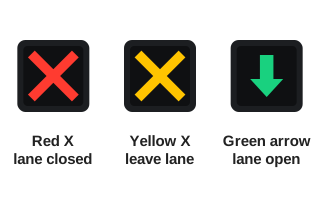
  • A red X over a lane means you must not drive in it. A yellow X means move out of that lane.
  • At DC’s pre-timed signals, the pedestrian countdown runs during the WALK phase.
03

Speed limits and right-of-way

The DC Municipal Regulations set the default speed limits and say who goes first at intersections and traffic circles.

Key points (4)
  • Unless a sign says otherwise, the speed limit on DC streets is 20 mph, and 15 mph in alleys.
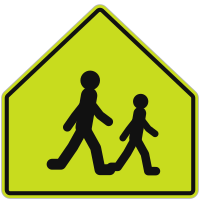
  • School zones are 15 mph from 6 a.m. to 7 p.m. unless signs say otherwise.
  • When two cars reach an intersection at about the same time, the driver on the left yields to the driver on the right.
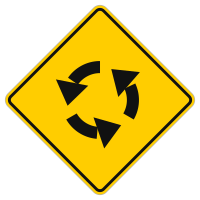
  • At a traffic circle, yield to traffic already in the circle. On a freeway ramp, yield to freeway traffic.
04

Pedestrians, bikes and school buses

DC law puts people on foot and on bikes first at crosswalks, and every driver stops for a school bus with its lights flashing.

Key points (4)
  • Stop and stay stopped for a pedestrian in a crosswalk who is in your lane or one lane away from it.
  • If a car is stopped at a marked crosswalk with no signal, you must stop too before passing it.
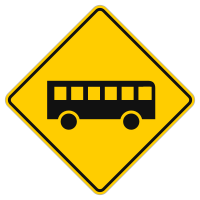
  • Stop at least 15 feet from a school bus with flashing lights or its stop arm out, and wait until they’re off.
  • Drivers coming the other way don’t stop for the bus if a median divides the street.
05

Railroad crossings and emergency vehicles

The DC Municipal Regulations cover what you do for emergency vehicles, crashes on the road and trains.

Key points (4)
  • When a train is coming, stop within 50 feet but no closer than 15 feet from the nearest rail.
  • When an emergency vehicle comes with lights and siren, pull to the right curb, clear of the intersection, and stop.
  • Passing a stopped emergency vehicle with its lights on, move out of the lane next to it if you safely can.
  • Stay at least 500 feet behind a fire truck going to an alarm.
06

Phones, alcohol and reckless driving

DC law covers hands-free phone use, the alcohol limits and reckless driving.

Key points (4)
  • You may not hold a phone while driving. Calls need a hands-free accessory, except to 911 and other emergency numbers.
  • Headphones over both ears, or earbuds in both, aren’t allowed while driving.
  • The alcohol limit is 0.08 at 21 or older. Under 21, any measurable amount counts as intoxicated.
  • Driving 20 mph or more over the limit is reckless driving. 30 mph or more over is aggravated reckless driving.

Road signs

DC road signs: national designs, a few local rules

DC follows the national sign standard, the Manual on Uniform Traffic Control Devices, with a few local exceptions written into the DC Municipal Regulations. One you’ll notice on foot and at the wheel: at DC’s pre-timed signals, the walk signal’s countdown runs while WALK is showing.

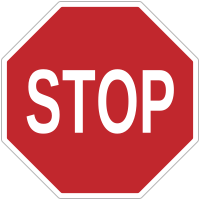
  • Red octagon with white border and the word STOP in whiteStop at the stop line, or before the crosswalk if there’s no line
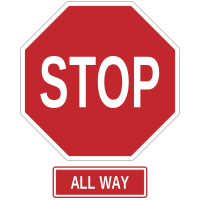
  • STOP sign with a red ALL WAY plaque beneath itAll-way stop: if two cars arrive together, the one on the left yields
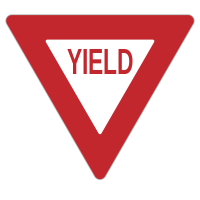
  • Downward-pointing red triangle with white center and the word YIELD in redYield: slow down, stop if you must, and let traffic and people go first
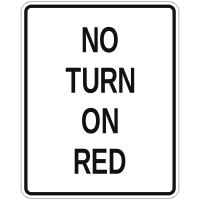
  • White sign reading NO TURN ON REDNo turn on red: wait for the green, even to turn right
  • Yellow diamond with three black arrows forming a counter-clockwise circleTraffic circle ahead: yield to cars already in the circle
  • Three lane-use signals: red X, yellow X and green downward arrowLane signals: green arrow use it, yellow X leave it, red X never drive in it
  • Fluorescent yellow-green pentagon with two children walkingSchool zone: 15 mph from 6 a.m. to 7 p.m. unless signs say otherwise
  • Yellow diamond with a black school busSchool bus stop ahead: stop at least 15 feet away when its lights flash
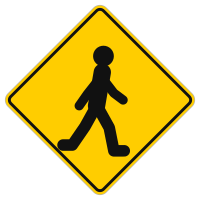
  • Yellow diamond with a black walking personPedestrian crossing: stop for anyone in your lane or the next one
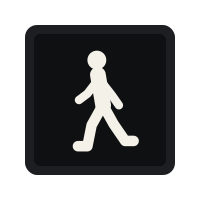
  • Pedestrian signal showing a white walking personWALK: start crossing. At DC’s pre-timed signals, the countdown runs during WALK
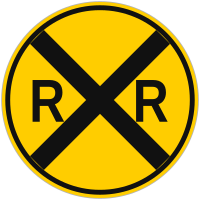
  • Round yellow sign with a black X and two letters RRailroad crossing ahead: slow down and look both ways
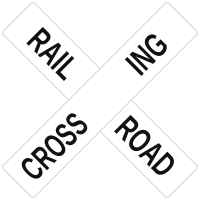
  • White X-shaped crossbuck reading RAILROAD CROSSINGCrossbuck: when a train is coming, stop 15 to 50 feet from the rail

Test day

What to bring for your DC learner’s permit

  • The completed Driver License or Identification Card Application
  • One proof of identity and date of birth, such as a US passport or US birth certificate
  • Two proofs of a DC address from different sources, such as a utility bill and a lease
  • Your Social Security number, or a letter from Social Security saying you can’t get one
  • Under 18: the Parental Consent Form, signed by a parent or legal guardian
  • Your glasses or contacts, if you wear them, for the vision screening

Before you go

  1. Download and study the DC DMV Automobile Driver Manual. Printed copies are no longer handed out, and you can’t use it during the test.
  2. Use DC DMV’s online Document Verification Guide to check which documents you need.
  3. Bring originals. DC DMV doesn’t take photocopies, notarized copies or screenshots of bills, though a printed copy of an online bill is fine.
  4. Pay off any debts to the District, such as unpaid tickets, first. They can stop you getting a permit.
  5. If you have a learner permit from another state, you still take the DC knowledge test to get a DC permit.
  6. Check opening hours on DC DMV’s locations page before you go.
Book a virtual or proctored test with DC DMV’s testing partnerAppointments are only for the virtual test and the Test Proctoring Center. Service centers take walk-ins for the knowledge test.

Study options

Where to study

DC DMV tells you to study its whole Automobile Driver Manual before the test, and it’s free online in seven languages. DC DMV also links its own online practice knowledge test, which uses sample questions rather than real ones, though it was paused when this page was last checked. Apps and websites add more practice, and driving schools still teach the DC DMV-approved driver education course, which isn’t required.

OptionPriceFree to useLinks
Official and free
DC DMV Automobile Driver ManualOfficial · online flipbookDC DMV’s manual for the car knowledge test, on a page dated January 22, 2024, in English, Spanish, French, Amharic, Vietnamese, Chinese and Korean. DC DMV says to study all of it. Printed copies are no longer handed out, and you can’t use it during the test.
FreeThe whole manual, in 7 languages
DC DMV Practice Knowledge TestsOfficial · webDC DMV’s own practice test, hosted on ProProfs in English, Spanish, French, Vietnamese and Amharic, with Chinese and Korean listed as unavailable. DC DMV says it’s for information only and has no questions from the real test. In October 2026 all five linked versions said access was temporarily paused.
Free25 sample questions in 60 minutes, paused in October 2026
DC DMV Teen Driver websiteOfficial · webDC DMV’s site for teen drivers sets out the three GRAD stages and driving hours, and links the parental consent form, the 40-hour and 10-hour certification forms and the manuals.
FreeGRAD rules, forms and tips
Apps and websites
ZutobiWeb and app · all statesSays it has 600+ DC questions set out as short, game-style lessons with videos, and that its course follows the District of Columbia Driver Manual. The app has 4.7 stars from about 239,000 App Store ratings.
Free start, then Zutobi PLUS (App Store prices from $4.99)A free start on the DC course
DMV GenieApp · all statesSays it has 500+ questions for each state, based on that state’s manual, with car, motorcycle and CDL tests in one app. Pick DC when you start. It has 4.8 stars from about 184,000 App Store ratings.
Free to download, Premium in the app from $15.99 for 7 days (App Store listing)Practice tests; some features need Premium
DMV-Permit-Test.comWeb · all statesHas numbered DC car practice tests, a Spanish version, motorcycle tests and CDL tests by endorsement. It describes the real test as 25 questions with 18 to pass, which isn’t what DC DMV’s testing partner lists (35 questions for ages 16 to 20, 30 for 21 and older). DC DMV’s knowledge test page and its testing partner’s FAQ don’t state a pass mark.
Free tests; a $15.99 one-time cheat sheetDC car, motorcycle and CDL practice tests
In person
DC DMV-approved driver education schoolsDriver educationNot required in DC, but DC DMV encourages it. Schools certified before 2016 teach the approved course of 30 classroom hours and 8 hours behind the wheel. DC DMV lists five schools in the District, plus some in Maryland and Virginia, and marks the ones that teach in other languages.
Set by each schoolNot listed

Prices and ratings checked October 2026.

FAQ

Common questions

How many questions are on the DC permit test, and what do you need to pass?

It depends on your age. DC DMV’s authorized testing partner lists the GRAD test, for ages 16 to 20, at 35 questions in 1 hour 15 minutes, and the standard test, for 21 and older, at 30 questions in 1 hour. DC DMV sets the same time limits, and going over them is a fail. DC DMV’s knowledge test page and its testing partner’s FAQ don’t state a pass mark or the number of right answers you need. The French version of DC DMV’s practice test on ProProfs mentions 80%, but DC DMV’s main pages don’t confirm it.

Can I take the DC DMV knowledge test online?

Yes, for the car test. DC DMV’s virtual test runs on a desktop or laptop with a webcam and microphone, using Chrome, with a live proctor. You book it at takemydrivingtest.com/dc, and it costs $49.95 whether you pass or fail. You can cancel or move it free up to 24 hours ahead; after that, or if you miss it, you pay the full fee. Chromebooks and phones aren’t supported, and motorcycle and CDL tests can’t be taken online. A representative tells you your result right away, and you then have 14 business days to take your documents to a service center.

What happens if I fail the knowledge test?

You wait three full calendar days and can test again on the fourth, so a fail on Tuesday means Saturday at the earliest. After six fails in 12 months, you can’t test again until 12 months after your first fail. If the test is failed for cheating, such as using a phone or smartwatch, the wait is 60 days. A virtual or proctored retest needs a new appointment.

What can I do with a DC learner’s permit?

You can drive a passenger car, not for pay, between 6 a.m. and 9 p.m., with a licensed driver 21 or older in the seat beside you and wearing a seat belt. For US citizens the permit lasts 2 years and can’t be renewed. For others, DC DMV sets the length by the approved length of stay. Breaking a permit rule brings a 30-day suspension the first time, 60 days the second and 90 days after that, and the suspension is added to the time you must hold the permit.

Do I need driver’s ed to get a permit in DC?

No. DC law (§ 50-1401.01(h)) says DC DMV can’t require a driver education course unless it’s free for public school students and low-income applicants, and DC DMV says its planned requirement is suspended indefinitely. A course rule is still printed in the regulations (18 DCMR § 103.11), but DC DMV only encourages new drivers to take one. The 30-hour classroom and 8-hour driving course is offered by schools DC DMV certified before 2016.

Can I take the DC knowledge test in Spanish or another language?

Yes. DC DMV offers it in English, Amharic, Arabic, Cantonese, Danish, Dutch, Farsi, Finnish, French, German, Hungarian, Indonesian, Italian, Japanese, Korean, Mandarin, Portuguese, Russian, Spanish, Swedish, Tagalog, Thai, Turkish and Vietnamese. Audio-assisted tests help if reading is hard, and a free phone interpreter covers 240 languages at the service centers. For a sign language interpreter during the test, use DC DMV’s Sign Language Interpreter Request Form.

How old do you have to be to drive in DC?

16 for a learner permit, 16 and a half for a provisional license and 17 for a full license with conditions. The driving-hour and passenger limits end at 18, and you leave the GRAD program at 21. Each stage’s rules are on the DC driver’s license requirements page.

Is the DC DMV the same as the MVA?

No. The District’s licensing agency is the Department of Motor Vehicles, at dmv.dc.gov, and it gives the DC knowledge test at its own service centers or through its authorized testing partner. A DC permit is only for District residents, which is why you bring two proofs of a DC address. If you live in Maryland or Virginia, you apply in your own state.

Sources: DC DMV · TakeMyDrivingTest.com, DC DMV’s authorized testing partner · DC Council and 14 more. Checked October 2026.

Rules and fees can change, so check the official site before your test.