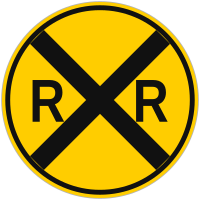
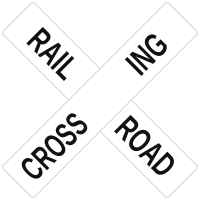
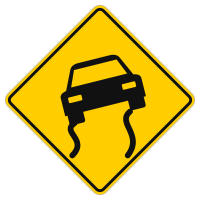
You’re 15 and hold an instruction permit. Who may supervise you when you drive?
A licensed adult with a year of driving, beside you On an instruction permit, the adult who supervises you must be a parent, legal guardian or other adult with a valid driver’s license and at least one year of driving experience. That adult must sit in the seat beside you.
You hold a Restricted Minor’s Permit. When may you drive alone after 10 p.m.?
On the most direct route to or from work Between 10 p.m. and 6 a.m., a Restricted Minor’s Permit holder needs a parent or legal guardian in the seat beside them. The exceptions are trips on the most direct route to or from school or a school event, church or a church event, work, or farm work.
Before a long trip, how often does the manual suggest you plan to stop?
About every 100 miles or 2 hours Fatigue can affect your vision and slow your decisions. Among its tips before a trip, the manual says to plan to stop about every 100 miles or 2 hours.
You hold an instruction permit. When may you use a cell phone while you drive?
Not at all while you’re driving Instruction permit and Restricted Minor’s Permit holders may not use any type of wireless communication device while driving on public roads. That covers phones, text messaging devices and even laptops.
Under South Dakota’s implied consent law, what can happen if you refuse a police officer’s request for a blood alcohol concentration (BAC) test?
You can lose your license for one year Under the implied consent law, getting a license means you’ve agreed to a lawfully requested test of your blood, breath, urine or other bodily substance if you’re suspected of impaired driving. The manual says you can lose your license for one year if you refuse.
You push a penny, Lincoln’s head first, into the deepest groove of your tire and can see all of his head. What does that tell you?
The tires are too worn to drive on The manual’s penny test: hold the penny so Lincoln’s head goes in first, in the deepest-looking groove. If you can see all of his head, the tires are too worn, so don’t drive on them and get them replaced.
Who must wear a seatbelt or other safety restraint while a passenger vehicle is moving in South Dakota?
The driver, front passengers and riders under 18 South Dakota law requires the driver, front-seat passengers and children under 18 to wear safety restraints while the vehicle is moving. Small children should ride in the back seat.
Where does the manual tell you to place your hands on the steering wheel?
At the 9 and 3 o’clock positions Place both hands on the outside of the wheel on opposite sides, at the 9 and 3 o’clock positions. The manual says the 10 and 2 position can be dangerous in a vehicle with air bags.
You’re pulling out of a private driveway onto a public road. Who has the right-of-way?
Drivers already on the public road When you enter a public highway from a driveway or a private road, you yield the right-of-way to drivers on that highway. The manual adds that no one should assume they automatically have the right-of-way.
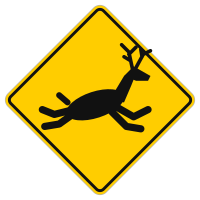
You see this sign on a rural highway near dusk. What does the manual tell you to do?
Slow down and watch for more than one deer This sign warns of a deer crossing. Deer are most active at dusk and dawn, so scan the sides of the road, slow down if you see the reflection of your headlights in their eyes, and always watch for more than one deer.
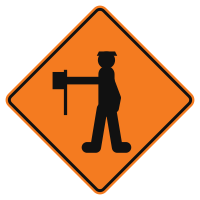
You pass this sign on a highway. What must you do in the stretch ahead?
Follow the directions of the person ahead This sign warns of a flagger ahead. In a work zone, a person with a sign or flag may tell you which way to go, to slow down or to stop, and you must follow their instructions.
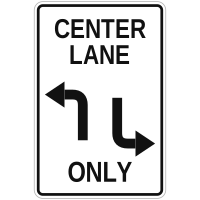
A lane in the middle of the road is marked with this sign. What is that lane for?
Left turns by traffic from either direction Shared center lanes are reserved for left turns, or U-turns where they’re permitted, by vehicles traveling in either direction. Enter the lane only when it’s safe.
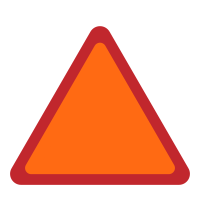
You see this on the back of a tractor on the road ahead. What does it tell you?
It’s traveling at less than 25 mph This emblem on the rear of a vehicle means it is traveling at less than 25 mph. You may see it on farm vehicles, construction equipment and horse-drawn wagons, so approach with caution and pass only when it’s safe.
You’re about to enter a roundabout. Which traffic do you yield to?
Traffic on your left already inside it The manual’s steps for a roundabout start with slowing down, yielding to pedestrians and bicyclists, and yielding to traffic on your left already in the roundabout. You enter when there’s a safe gap and keep your speed low inside.
A school bus ahead on a two-lane road has its red lights flashing and its stop arm out. When may you go on?
When the lights stop and the arm is gone You must stop for a school bus with its red lights flashing or its stop arm out, unless a physical barrier separates the roadway. Once the red lights stop flashing and you can’t see the stop arm, go on slowly, watching for children.
You park facing uphill on a street with a curb. Which way should you turn your front wheels?
Sharply to the left Facing uphill with a curb, turn the wheels sharply to the left; downhill, or with no curb, turn them sharply to the right. That way, if the car starts to roll, it rolls away from traffic.
What is the shortest following distance the manual tells you to keep behind the vehicle ahead?
At least 4 seconds The manual says to always try to keep a following distance of at least 4 seconds. Count from when the vehicle ahead passes a fixed point, such as a sign or pole, until you reach it.
A front tire blows out while you’re driving. What should you do first?
Hold the wheel firmly and ease off the gas If a tire blows out, grip the steering wheel firmly, keep the car going straight and take your foot off the accelerator. Don’t brake: let the car slow by itself, or brake gently if you need to, then pull off the road somewhere safe.
A truck ahead is signaling a right turn but swinging out to the left first. What should you do?
Wait behind it until it has turned A truck or bus making a right turn sometimes swings wide to the left to clear the corner. If you try to get between it and the curb, you could be squeezed into a serious crash, so don’t turn until it has finished its turn.
On a road posted 35 mph or more, a snowplow ahead has its amber lights on. How far behind it must you stay?
At least 200 feet On roads with a posted speed limit of 35 mph or more, the law requires drivers to stay at least 200 feet behind a snowplow when its red or amber lights are on. Plows are wide and can throw up clouds of snow that affect your view.
 South Dakota · Knowledge test