What is the youngest age at which you can get a Minnesota instruction permit?
15 The manual says you must be at least 15 to get an instruction permit. Under 18, you also need to have started an approved driver education course before you can take the written test.
You're 16 and driving on your instruction permit. Who must be with you?
A licensed driver aged 21 or older Under 18, a permit holder must be supervised by a licensed driver aged 21 or older. If you're 18 or older, the supervising driver only has to be 18 or older.
Your parents don't take the parent class. How much supervised driving must your log show before you can get a provisional license?
50 hours, including 15 at night Without the parent class, the Supervised Driving Log must show at least 50 hours, 15 of them at night. If a parent completes the class from an approved driver education program, the total drops to 40 hours, still with 15 at night.
In the first six months of a provisional license, when may you not drive (unless an exception applies)?
Midnight to 5 a.m. For the first six months, provisional drivers can't drive from midnight to 5 a.m. The exceptions are driving with a licensed driver at least 25, between home and work, between home and a school event without school transportation, or for work.
True or false: If you're under 18 and driving on a permit, you may talk on your phone as long as it's hands-free.
False False. Under 18, permit holders may not use or talk on a cell phone while driving, with or without a hands-free device. The same rule applies to provisional license holders.
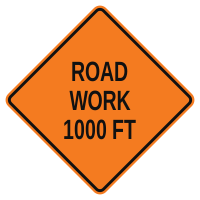
What does an orange sign like this one usually tell you?
You're in a construction or work zone In Minnesota, orange warning signs are used in construction and work zones. Slow down and watch for lane changes, detours and people working.
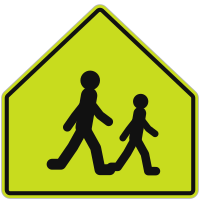
This sign warns you that:
A school or school crosswalk is ahead The pentagon shape is used for school zone and school crossing signs. They're yellow or fluorescent yellow-green. Watch for children and be ready to stop.
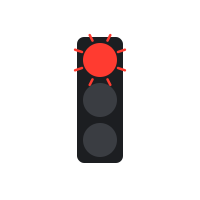
You come to this traffic light and it keeps flashing. What must you do?
Treat it like a stop sign: stop fully, then go when it's safe The manual says to come to a complete stop at a flashing red light and treat it as you would a stop sign. Then go when the way is clear.
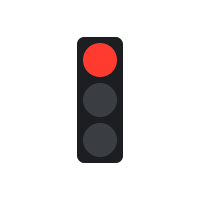
You're stopped at this light and want to turn right. There's no sign about turns. What may you do?
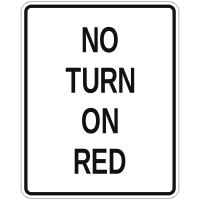
Stop completely, then turn right when the way is clear After a full stop, you may turn right on red when the intersection is clear and traffic is allowed in that direction. If a No Turn on Red sign is posted, wait for the green.
How far before a turn must you start signaling?
At least 100 feet Turn on your signal at least 100 feet before turning, and keep it on until you've finished the turn or lane change.
Unless signs say otherwise, what is the speed limit on urban or town roads?
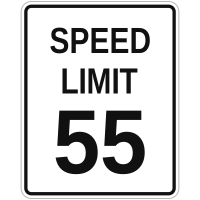
30 mph The manual lists 30 mph on urban or town roads, 10 mph in alleys and 55 mph in other places not listed, unless signs show another limit.
How close to a fire hydrant may you park?
No closer than 10 feet You may not park within 10 feet of a fire hydrant. Other no-parking distances include 20 feet from a crosswalk at an intersection and 50 feet from the nearest rail of a railroad crossing.
A sign says a lane is closed ahead and traffic is backing up. What does Minnesota's zipper merge ask you to do?
Stay in your lane until the merge point, then take turns merging When traffic is backing up, stay in your current lane until the point of merge, then take turns with other drivers. The manual says this can cut the length of backups by up to 40 percent.
A school bus is stopped with its red lights flashing. How far away must you stop?
At least 20 feet Stop at least 20 feet from the bus and stay stopped until the red lights stop flashing. This applies whether you're behind the bus or facing it, unless you're going the other way on a divided highway.
You're on a road with two lanes in your direction. A police car is stopped on the shoulder with its lights flashing. What should you do?
Move to the lane farthest from it if it's safe Minnesota's Move Over Law says to move to the lane farthest from a stopped emergency vehicle with flashing lights, if it's safe. If you can't, slow down and pass with care. The same applies to tow trucks, road crews and other vehicles stopped with warning lights.
You and another driver reach a four-way stop at the same time. The other car is on your right. Who goes first?
The driver on the right At all-way stops, when two drivers arrive at the same time, the driver on the left yields to the driver on the right.
How much space must you leave when passing a bicyclist?
At least 3 feet You must keep at least 3 feet between the side of your car and the bicyclist. When it's safe, you may cross the center of the road to pass, even in a no-passing zone.
Roads are slippery with snow. What following distance does the manual suggest?
Four or five seconds The three-second rule is for ideal conditions. When road conditions are poor, or you're driving a longer vehicle, increase it to a four- or five-second count.
At night, you must switch to low beams when an oncoming vehicle comes within:
1,000 feet Use low beams when you're within 1,000 feet of an oncoming vehicle, or following another vehicle at 200 feet or less.
At what alcohol concentration can a driver of a regular car be arrested for driving while impaired (DWI) in Minnesota?
0.08 or higher A person with an alcohol concentration of 0.08 or higher can be arrested for DWI. If an officer can prove alcohol caused driving errors, a driver can be arrested with a level as low as 0.04. For commercial vehicles, the limit is 0.04.
 Minnesota · Permit test