Wisconsin · Permit test

Wisconsin DMV permit test

To get a Wisconsin instruction permit (often called “temps”), you pass two short tests: one on road signs and one on the rules of the road. This guide explains how they’re scored, how teens can test at home, and what to bring to the DMV. There’s a free 20-question practice test further down.

  • 50Knowledge test questions. You need 40 right (80%)
  • 15Highway signs test questions. You need 12 right (80%)
  • $0Cost of both tests at a DMV service center (as of October 2026)
  • 45 minAbout how long the knowledge test takes

Key facts

At a glance

To pass
80% on each: 40 of 50 and 12 of 15
Minimum age
15, with driver education
Fee
Tests free at DMV; permit $35
Where
Walk in at a DMV service center, or online at home if 15 to 17
Languages
11, including Spanish, Hmong and ASL

How it works

Two tests, and you need 80% on both

  1. There are two tests: a highway signs test with 15 questions and a knowledge test with 50. You need 80% on each, so 12 and 40 right.
  2. You take them on a computer, and most touchscreens tell you right away how you did. Paper tests are available too.
  3. Testing is walk-in only, at most DMV customer service centers. DMV doesn’t schedule knowledge test appointments.
  4. Allow about 45 minutes, and get there early enough to finish before the center closes.
  5. As of October 2026, you can take the tests in 11 languages, including English, Spanish, Hmong, Somali and American Sign Language. Audio assist is available if you ask.
  6. If you’re 15 to 17, you can also take the tests online at home through KnowTo Drive, with a parent or guardian supervising. That costs $10 per attempt.
  7. If you fail, you can try again the next day. You get five attempts at each test in 12 months, and only two of them can be online.

Topics

What’s on the test

01

Getting your permit and license

The tests you must pass, who can supervise you on a permit, and the steps from permit to probationary to regular license.

Key points (4)
  • You must pass a vision screening, a 15-question highway signs test and a 50-question knowledge test. Each needs 80%.
  • Under 18, you must be at least 15, enrolled in driver education and have an adult sponsor sign form MV3001.
  • With a permit, the person beside you needs a regular license and at least 2 years of experience. At night they must be an instructor or 25 or older.
  • Under 18, hold the permit for 6 months and log 50 hours of practice, 10 of them at night, before the road test.
02

Road signs

How to read a sign from its color and shape, from yellow warnings to orange work zones, plus railroad crossing signs.

Key points (4)
  • Warning signs are yellow with black symbols, and most are diamond-shaped.
  • Orange signs mark work zones. Slow down, because traffic fines double there.
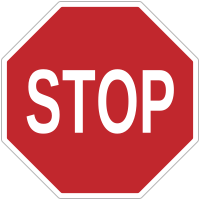
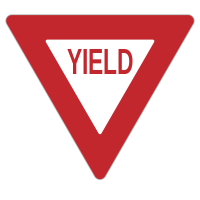
  • A stop sign has eight sides. A yield sign is a downward red and white triangle. The yellow pennant means no passing.
  • Green or brown signs show destinations. Blue signs point to services.
03

Signals, pavement markings and special lanes

What every light and arrow means, how lines tell you when you can pass, and how to use reversible and flex lanes.

Key points (4)
  • If a signal is dark or not working, treat it as a stop sign.
  • Right on red is allowed after a full stop unless a sign says no. Left on red only from one-way onto one-way.
  • A flashing yellow arrow means yield, then turn with care.
  • On dashed and solid yellow lines, you may pass only from the dashed side.
04

Right-of-way, intersections and roundabouts

Who goes first at stops, uncontrolled intersections and roundabouts, and how to look before you enter.

Key points (4)
  • At a four-way stop, the first to arrive goes first. If two arrive together, the driver on the right goes first.
  • When turning left or making a U-turn, yield to oncoming traffic.
  • Stop at least 10 feet away from a pedestrian using a white cane or guide dog.
  • In a roundabout, traffic moves counterclockwise. Yield to traffic already in it and to pedestrians.
05

Speed, space and passing

Wisconsin’s default speed limits, the four-second rule, and when and how to pass safely.

Key points (4)
  • Unless posted, residential areas are 25 mph and school zones are 15 mph when children are present.
  • Keep a four-second following distance, and add a second for each bad condition.
  • Look 10 to 15 seconds ahead. Check your rearview mirror every 6 to 8 seconds.
  • You may never go over the speed limit to pass.
06

Turning, signaling, backing and parking

How to turn and signal, when to use your lights, and how to park on hills and between cars.

Key points (4)
  • Signal about three seconds, or 100 feet, before you turn.
  • Use headlights from half an hour after sunset to half an hour before sunrise, or when you can’t see 500 feet ahead.
  • While waiting to turn left, keep your wheels straight.
  • Parking uphill with a curb, turn the wheels left. Uphill without a curb or downhill, turn them right.
07

Weather, winter and emergencies

Driving in fog, rain and snow, handling skids and breakdowns, and what to do after a crash.

Key points (4)
  • Bridges and overpasses freeze before the rest of the road.
  • Give a snowplow with flashing lights at least 200 feet.
  • If you hydroplane, ease off the gas and keep the wheel straight.
  • Report a crash to police if anyone is hurt or property damage is $1,000 or more.
08

Sharing the road

Pedestrians, emergency vehicles, school buses, motorcycles, bicycles and the blind spots around big trucks.

Key points (4)
  • Stop at least 20 feet from a school bus with flashing red lights, on either side, unless you’re across a divided highway.
  • Pass bicyclists with at least 3 feet of room.
  • Move over or slow down for a stopped police car or emergency vehicle with its lights on.
  • A truck’s No-Zone covers about 200 feet behind and 20 feet in front of it.
09

Alcohol, distractions and your driving record

The drinking and drug rules, phone limits for new drivers, seat belts, insurance and the point system.

Key points (4)
  • Drivers under 21 must have 0.00% alcohol in their system.
  • Refusing a requested alcohol test means losing your driving privilege for at least a year.
  • Permit and probationary drivers may use a phone only to report an emergency.
  • 12 or more demerit points in 12 months means your license is suspended or revoked.

Road signs

Learn the color and shape first

Wisconsin’s handbook sorts signs by color: yellow warns, orange means a work zone, white states a rule and blue points to services. Farm roads add one you’ll see a lot, the orange slow-moving vehicle triangle.

  • Red octagon with white border and the word STOP in whiteStop: full stop, then go when it’s clear
  • Downward-pointing red triangle with white center and the word YIELD in redYield: slow down and let others go first
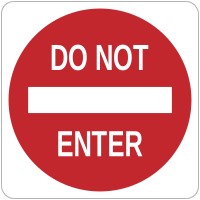
  • Red circle with a white horizontal bar on a white square, reading DO NOT ENTERDo not enter: you’d be going the wrong way
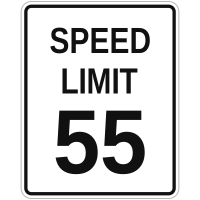
  • White rectangular sign reading SPEED LIMIT 55Speed limit: the most you may drive in good conditions
  • Yellow pennant pointing right reading NO PASSING ZONENo passing zone: don’t pass any vehicle here
  • Yellow diamond with a black arrow curving to the rightCurve ahead: slow down before it
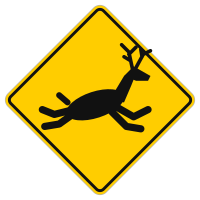
  • Yellow diamond with a black leaping deerDeer crossing: slow down and watch the roadside
  • Orange diamond reading ROAD WORK 1000 FTRoad work ahead: slow down, fines double
  • Fluorescent orange triangle with a red reflective borderSlow-moving vehicle: 25 mph or less, ease off early
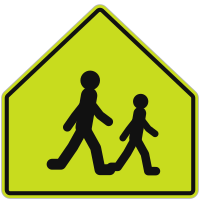
  • Fluorescent yellow-green pentagon with two children walkingSchool: watch for children, 15 mph when they’re present
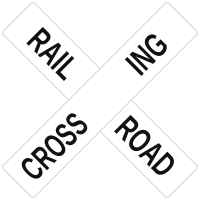
  • White X-shaped crossbuck reading RAILROAD CROSSINGRailroad crossbuck: yield to trains
  • Blue square with a white HBlue service sign: hospital nearby

Free practice test

Try 20 questions in the same style

The real tests have 50 rules questions and 15 sign questions. Here are 20 in the same style, with some sign questions mixed in, at the same 80% bar, so 16 right is a pass. After each answer you can ask the tutor to explain it another way, or why a different answer is wrong. Anything you miss comes back at the end.

Question 1 of 20

You have a Class D instruction permit and want to practice driving after dark. Who must sit in the seat beside you?

Sample of the knowledge test: same format, 20 questions.

Test day

What to bring to the DMV

  • Proof of your name and date of birth, such as a U.S. birth certificate or passport.
  • Proof of U.S. citizenship or legal status.
  • Proof of identity, such as a signed Social Security card or a photo ID.
  • Two documents that show your name and Wisconsin street address. If you’re 26 or younger, a parent’s Wisconsin license or ID can count.
  • Your Social Security number.
  • Under 18: form MV3001 signed by your driving school and your sponsor. If you tested online, bring your KnowTo Drive certificate too.

Before you go

  1. Read the Wisconsin Motorists’ Handbook. The tests are based on it.
  2. Try DMV’s free online Class D practice test. Its results don’t count toward your permit.
  3. Under 18: enroll in driver education, including behind-the-wheel lessons, and get your MV3001 signed.
  4. Find a DMV service center that gives knowledge tests. Milwaukee Downtown and Sauk City don’t.
  5. Gather original documents. DMV doesn’t accept photocopies or expired documents.
  6. Bring the $35 permit fee (as of October 2026). The tests themselves are free at DMV.
  7. Bring your glasses or contacts if you need them to see.
Wisconsin DMV: Knowledge and signs testsThere’s nothing to book for the permit tests. Walk in to a DMV service center. Teens 15 to 17 can test online through KnowTo Drive instead.

Study options

Where to study

Both tests come from the Wisconsin Motorists’ Handbook, and the handbook and DMV’s practice test are free. Want more practice? We’ve compared the apps, websites and driving schools people use.

OptionPriceFree to useLinks
Official and free
Wisconsin Motorists’ Handbook (BDS126)Official · PDFBoth permit tests are based on this. The 2026 edition is written in plain language, and Section 4 covers every sign group on the signs test. There’s a short practice quiz with answers at the back.
FreeThe whole handbook
Wisconsin DMV Class D practice testOfficial · webDMV’s own online practice test, linked from the handbook. A good last check before you go. The results don’t count toward your permit.
FreeKnowledge and road-sign practice
Apps and websites
ZutobiApp and web · all statesGame-style practice with a shorter version of the handbook. Its website says it has 600+ Wisconsin questions. Very well rated: 4.7 stars from about 239,000 ratings on the App Store. The listing doesn’t say how long each PLUS option lasts.
Free start, then paid (Zutobi PLUS from $4.99 on iPhone)Some practice for free
Driving-Tests.org and DMV GenieWeb and app · all statesThese two are the same company. The website has free Wisconsin permit tests and an audio version of the handbook (about 2 hours 52 minutes) if you’d rather listen. The DMV Genie app has 4.8 stars from about 184,000 ratings. In-app plans run up to $99.99 for lifetime access.
Free tests, app Premium from $9.99 a weekWisconsin permit practice tests and handbook audio
DMV-Permit-Test.comWeb · all statesTwenty free Wisconsin tests of 50 questions each, plus a Spanish version of the site. A paid Premium tier exists, but we couldn’t confirm its price.
Free with ads, paid extras (cheat sheet $15.99 one-time)20 Wisconsin practice tests
Wisconsin DMV Knowledge Test (Nilu Rathod)App · iPhoneThe most-rated Wisconsin-only app we found: 4.8 stars from 60 ratings. Practice tests for car, motorcycle and CDL, with bookmarks and progress history. Last updated in July 2025.
Free, then $2.99 a week, $7.99 a month or $12.99 lifetimeLimited until you pay
Wisconsin DMV Permit Test Prep (Altaf Mogal)App · iPhone and iPadSays it has more than 1,000 questions, with flashcards and a review of the ones you got wrong. 4.8 stars from 12 ratings. Last updated in June 2025.
Free, then $2.99 a week, $7.99 a month or $14.99 one-timeSome practice, with ads
Wisconsin DMV Practice Test (Onurcan Koroglu)App · iPhone500+ questions in 36-question practice tests, with a road-sign reference. 4.9 stars, but from only 9 ratings. The catch: it hasn’t been updated since 2023, so it predates the current handbook.
Free, Premium $4.99 one-timeSome practice tests
Video
Permit test walk-throughs on YouTubeVideo · freePlenty of channels read Wisconsin practice questions out loud, which helps if you learn by listening. They’re unofficial, so check anything surprising against the handbook, and favor recent videos made after the 2024 rewrite.
Free (ads)Everything
In person
Wisconsin driver training schoolsLocalIf you’re under 18, you must be in driver education, including behind-the-wheel lessons, to get your permit. Your school also signs your MV3001. DMV lists licensed schools; call the nearest one for schedules and fees. Some programs give the knowledge test themselves.
Set by each school-
Driver Education Grant ProgramOfficial · state grantTeens from income-eligible families can have their driver education paid for by the state, at a school registered with DMV. Worth checking before you pay for a course.
Free if you qualifyClassroom and behind-the-wheel training

Prices and ratings checked October 2026.

FAQ

Common questions

How many questions are on the permit test in Wisconsin?

There are two tests. The knowledge test has 50 questions and you need 40 right. The highway signs test has 15 questions and you need 12 right. That’s 80% on each, and you have to pass both to get your permit.

Can I take the Wisconsin permit test online?

Yes, if you’re 15 to 17 and taking driver education. You test at home on a laptop or desktop with a webcam, while a parent or guardian supervises. As of October 2026 it costs $10 per attempt, paid to the vendor, KnowTo Drive. If you’re 18 or older, you take the tests at a DMV service center, where they’re free.

Do I need an appointment for the knowledge test?

No. The knowledge and signs tests are walk-in only, and DMV doesn’t schedule them. Allow about 45 minutes and arrive early enough to finish before the center closes. You do need an appointment later for the road test.

What do I need to bring to get my permit?

Bring proof of your name and date of birth, proof of citizenship or legal status, proof of identity, two proofs of your Wisconsin address, and your Social Security number. Everything must be original and not expired. If you’re under 18, bring form MV3001 signed by your driving school and your sponsor.

How much does a Wisconsin instruction permit cost?

As of October 2026 the Class D instruction permit is $35, and it’s valid for 18 months. The knowledge and signs tests are free at a DMV service center. Only the online test for teens costs extra: $10 per try.

What happens if I fail?

You can take the test again, but not until the next day. You get five attempts at each test in 12 months. If you test online, only two of those five can be online. After five fails, you need special permission from DMV staff.

All 20 practice questions with answersA printable list of the practice test above
  1. You have a Class D instruction permit and want to practice driving after dark. Who must sit in the seat beside you?

    A qualified instructor, or a licensed person aged 25 or older with at least 2 years of licensed driving experience Night driving has a stricter rule than daytime practice. During hours of darkness, a permit holder must have a qualified instructor, or a licensed person 25 or older with at least two years of licensed experience, in the seat beside them.

  2. You’re under 18. How much supervised driving does your sponsor have to confirm before you can get a probationary license?

    50 hours, with at least 10 of them during hours of darkness The handbook says you must practice for at least 50 hours with a qualified adult: 40 in daylight and 10 in darkness. Your sponsor verifies the hours, and you also need to have held your permit for at least six months.
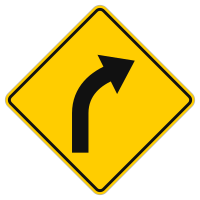
  3. Yellow diamond with a black arrow curving to the right

    What kind of sign is this?

    A warning sign: a hazard or special situation is ahead Warning signs are yellow with black lettering or symbols, and most are diamond-shaped. They tell you about a hazard or special situation ahead, such as this curve, a hill or a deer crossing.
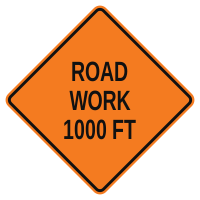
  4. Orange diamond reading ROAD WORK 1000 FT

    You see this sign and orange cones ahead. What should you do?

    Slow down and watch for workers, because traffic fines double in work zones Orange signs mark construction, maintenance or emergency work areas. They’re your signal to slow down and watch for people working on or near the road. Traffic fines double in these areas.
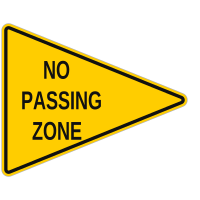
  5. Yellow pennant pointing right reading NO PASSING ZONE

    What does this sign mean?

    No passing zone: you may not pass any vehicle here The No Passing Zone sign is a yellow pennant with black lettering. While you’re in the zone, you’re not allowed to pass any vehicle.
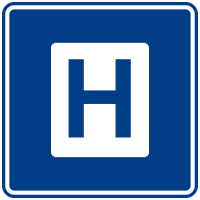
  6. Blue square with a white H

    What does a blue sign like this one tell you?

    How to reach nearby services, such as a hospital or camping Service signs are square or rectangular, blue with white letters or symbols. They point you to services nearby, such as a hospital, camping or disabled access.
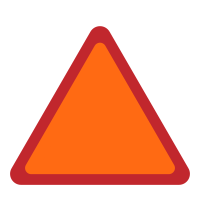
  7. Fluorescent orange triangle with a red reflective border

    You come up behind a vehicle with this sign on the back. What does it tell you?

    It’s a slow-moving vehicle that may travel 25 mph or less The slow-moving vehicle sign is a triangle with reflective orange markings. A vehicle showing it may be traveling at 25 mph or less, so you’ll close the gap quickly. Slow down early and only pass when it’s safe and legal.
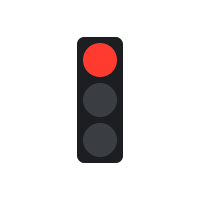
  8. Three-section traffic signal with the top red light lit

    You’re stopped at this light and want to turn left. When may you do it in Wisconsin?

    From a one-way street onto another one-way street, after a full stop and yielding to all traffic You may turn left on red only when you’re turning from a one-way street onto a one-way street. Even then you must stop first, yield to all traffic and stay in your lane. Right on red works the same way, unless a sign prohibits it.

  9. You reach an intersection where the traffic lights have lost power. What should you do?

    Treat it as if there were a stop sign If a traffic light loses power or isn’t working right, proceed as if the signal were a stop sign. Stop fully, take turns and yield as you would at any stop. If a police officer is directing traffic, follow their directions instead.

  10. Two cars arrive at a four-way stop at the same time. Who goes first?

    The driver on the right At a four-way stop, the first to arrive goes first. If two or more drivers arrive at the same time, the driver on the right goes first.

  11. You’re about to enter a roundabout. Who must you yield to?

    Pedestrians and bicyclists, and traffic on your left that’s already in the roundabout Traffic in a roundabout moves counterclockwise, so it comes at you from the left. Slow down, yield to pedestrians and bicycles, yield to traffic already in the roundabout, and enter when there’s a safe gap. The handbook also says to yield to semitrucks.

  12. What following distance does the Wisconsin Motorists’ Handbook recommend in good conditions?

    Four seconds, adding a second for each bad condition such as rain or heavy traffic Wisconsin uses a four-second following distance rule. Pick a fixed object ahead, count “one thousand one” up to “one thousand four”, and if you reach it first you’re too close. Add a second for each adverse condition, such as heavier traffic, rain, snow or ice.

  13. Unless a sign says otherwise, what is the speed limit in a residential area?

    25 mph Unless otherwise posted, the speed limit in residential areas is 25 mph. A school zone is 15 mph when children are present, and outlying parts of cities and villages with no posted limit max out at 35 mph.

  14. You plan to turn at the next intersection. When should you start signaling?

    About three seconds, or 100 feet, before the turn The handbook says to start signaling about three seconds (about 100 feet) before turning at an intersection. That gives other drivers time to react. If you’re turning just after an intersection, start signaling once you’ve crossed it.

  15. You’re parking uphill next to a curb. Which way should you turn your front wheels?

    All the way to the left, away from the curb When you park uphill with a curb, turn your wheels all the way to the left before you put the car in park. If the car rolls back, the tires catch the curb. Uphill without a curb, or downhill, turn them to the right. Set the parking brake either way.

  16. Your car starts to hydroplane on a wet road. What should you do?

    Ease off the gas, keep the wheel straight, and don’t brake or turn until the tires grip again Hydroplaning means your tires are sliding on top of the water. Ease your foot off the gas, keep the wheel straight, and don’t try to stop or turn until the tires are gripping the road again. Bald tires make it happen even at low speeds.

  17. A snowplow ahead of you has its lights flashing. How much room should you give it?

    At least 200 feet The handbook’s winter driving tips say to give snowplows at least 200 feet of room when their lights are flashing red, amber or green.

  18. On a two-lane road, a school bus is stopped on the other side with its red lights flashing. What must you do?

    Stop at least 20 feet away and wait until the red lights stop flashing When a school bus is stopped with its red lights flashing, you must stop at least 20 feet away, whether it’s on your side of the road or the opposite side. You can go once the red lights stop flashing. The only exception is a divided highway with a barrier, when you’re on the other side.

  19. When you pass a bicyclist, how much room should you leave?

    At least 3 feet Give bicyclists at least three feet of room when you pass. Bicyclists can use the whole traffic lane, so don’t share a lane with them. Wait for oncoming traffic to clear before you pass.

  20. What is the legal alcohol concentration for a driver under 21 in Wisconsin?

    0.00%, so no alcohol at all The legal alcohol concentration for drivers under 21 is 0.00%. That means you can’t have any alcohol in your system while driving. Instruction permit holders must stay absolutely sober at any age.