Australia · Citizenship test

Australian citizenship test

This guide explains how the Australian citizenship test works. You’ll see how it’s marked, which parts of the official booklet it covers and what to bring to your appointment. When you’re ready, there’s a free 20-question practice test further down.

  • 20Multiple-choice questions, on a computer, in English
  • 45 minTime for the Standard Test (Assisted Test: 90 minutes)
  • 5 of 5Australian values questions you must get right
  • 15 of 20Correct answers needed overall (75 per cent)

Key facts

At a glance

Time
45 minutes (Assisted Test: 90)
Cost
No extra fee, it’s part of your application
Who sits it
Most applicants aged 18 to 59
Language
English only (booklet in 40 languages)

How it works

20 questions, and every values question must be right

You need 15 of 20 right overall. You also need all 5 Australian values questions right, whatever your total.
  1. You do not book the test yourself. Home Affairs sends you an appointment letter with the date and time.
  2. The test is on a computer and in English only. The questions are chosen at random from the four testable parts of Our Common Bond.
  3. There are 20 multiple-choice questions. 5 of them are about Australian values.
  4. To pass, you need two things. You must answer all 5 values questions correctly. You must also get at least 15 of the 20 questions right overall, which is 75 per cent.
  5. One wrong values answer means you do not pass, even if you get 15 or more right overall.
  6. You have 45 minutes. You can answer the questions in any order, and skip a question to come back to it later.
  7. Text-to-speech is available, so you can listen to the questions and the answer choices.

Topics

What’s on the test

01

First Australians and Early Settlement

Australia’s first peoples, the First Fleet, the convict colony and the gold rush.

Key points (4)
  • Aboriginal and Torres Strait Islander peoples are Australia’s first inhabitants. They have the oldest continuous cultures and traditions in the world.
  • Aboriginal and Torres Strait Islander peoples express their deep connection with the land through stories, art and dance. Their diverse cultures are an important part of Australia’s national identity.
  • The First Fleet of 11 convict ships arrived from Great Britain on 26 January 1788. This was the start of European settlement in Australia.
  • Britain’s laws were harsh, and its jails were full. So Britain sent convicts to the new colony of New South Wales.
02

Building the Nation

Federation in 1901, how migration shaped Australia, and the place of English and other languages.

Key points (4)
  • In 1901, the separate colonies united into a federation of states called the Commonwealth of Australia.
  • In 1901, the national parliament, the national government and the High Court were set up under the new Australian Constitution.
  • The 1901 count of about four million people did not include Aboriginal and Torres Strait Islander peoples.
  • Aboriginal and Torres Strait Islander peoples were counted in official population figures only after the 1967 Referendum.
03

States, Territories and Capital Cities

The six states and two mainland territories, their capitals and the places they are known for.

Key points (4)
  • Australia has six states and two mainland territories. Each state and mainland territory has its own capital city.
  • Canberra is Australia’s capital city. It is in the Australian Capital Territory.
  • Western Australia is the largest state. Tasmania is the smallest state. Victoria is the smallest mainland state.
  • Sydney Harbour Bridge and Opera House: New South Wales. Melbourne Cricket Ground and 12 Apostles: Victoria. Great Barrier Reef: Queensland. Ningaloo Coast and Margaret River: Western Australia. Barossa Valley: South Australia. Cradle Mountain and Port Arthur: Tasmania.
04

Traditions and Important Days

Welcome to Country, Acknowledgement of Country, Australia Day and Anzac Day.

Key points (4)
  • A Welcome to Country is performed by an Aboriginal or Torres Strait Islander custodian of the local area. It welcomes visitors to their traditional land.
  • Anyone can deliver an Acknowledgement of Country. It pays respect to the Traditional Custodians of the land, particularly Elders past and present.
  • Australia Day is on 26 January. It marks the anniversary of the First Fleet’s arrival in 1788. It is a public holiday in every state and territory.
  • Anzac Day is on 25 April. It is named after the Australian and New Zealand Army Corps. These soldiers landed at Gallipoli in Türkiye on 25 April 1915, during World War I.
05

Flags, Symbols and the National Anthem

The three official flags, the Coat of Arms, national flower, colours, gemstone and anthem.

Key points (4)
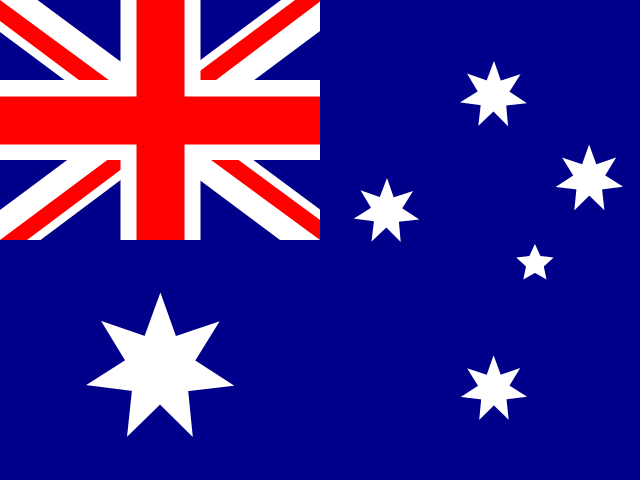
  • The Australian National Flag is blue, white and red.
  • The Union Jack, in the top left corner, represents Australia’s history of British settlement and the laws and institutions it inherited.
  • The Commonwealth Star has seven points: one for each of the six states and one for the territories.
  • The Southern Cross, on the right of the flag, is a group of stars that can be seen in the southern sky.
06

Democratic Beliefs, Freedoms and Equality

Parliamentary democracy, the Rule of Law, living peacefully, respect, the four freedoms and equality.

Key points (4)
  • Australia is a parliamentary democracy. The power of the government comes from the Australian people.
  • The Rule of Law means the law applies to everyone in Australia in the same way. No person, group or religious rule is above the law.
  • In Australia, change should come about through discussion, peaceful persuasion and the democratic process. Australians reject using violence to change people’s minds or to change the law.
  • Every person has rights and equality under Australian law, whatever their background. All Australians are expected to treat each other with dignity and respect.
07

Responsibilities and Privileges of Citizenship

What citizens must do, what citizenship gives you, and how you can take part, including paying tax.

Key points (4)
  • As an Australian citizen, you have four responsibilities. You must:
  • Voting is a responsibility for Australian citizens aged 18 years or over. Voting is also a right and a privilege.
  • By law, you must vote in federal elections and in state or territory elections. In some states, voting in local council elections may not be compulsory.
  • Service in the Australian Defence Force is voluntary. But a responsibility of every citizen is to defend Australia should the need arise.
08

Having Your Say, Federation and the Constitution

Enrolling and voting, the AEC, the secret ballot, why the colonies federated, and how the Constitution works.

Key points (4)
  • If you are an Australian citizen aged 18 or over, you must enrol to vote. This covers federal, state and territory elections and referendums.
  • You can only vote if your name is correctly on the electoral roll.
  • Voting is compulsory in federal, state and territory elections and in referendums. If you do not vote and do not have a good reason, you may have to pay a fine.
  • The Australian Electoral Commission (AEC) runs federal elections and referendums. It also keeps the Commonwealth electoral roll.
09

Head of State, Governor-General and Our Leaders

The King of Australia, the Governor-General, constitutional monarchy and the titles of Australia’s leaders.

Key points (4)
  • As of 21 October 2026, Australia’s Head of State is the King of Australia, His Majesty King Charles III.
  • The King has no day-to-day role in the government of Australia.
  • Australia is a constitutional monarchy. This means the King is Australia’s Head of State, but he has to act in line with the Constitution.
  • The King does not live in Australia, so his powers are delegated to the Governor-General in Australia.
10

Parliament and the Three Levels of Government

The two Houses of federal Parliament, state, territory and local government, and who does what.

Key points (4)
  • The national level of government has three names: the Australian Government, the Federal Government and the Commonwealth Government.
  • The Australian Parliament has two Houses: the House of Representatives and the Senate. In a federal election, citizens vote to elect representatives to each House.
  • The House of Representatives is also called the Lower House or the People’s House.
  • The official booklet says that over 150 members are elected to the House of Representatives. As of 21 October 2026, the exact number is 150.
11

Political Parties, Forming Government and Making Laws

Political parties and independents, how the government and Opposition are formed, ministers and Cabinet, and how a Bill becomes law.

Key points (4)
  • The main political parties in Australia are the Liberal Party of Australia, the Australian Labor Party, the Nationals and the Australian Greens.
  • A member of parliament who does not belong to any political party is called an independent.
  • After a federal election, the party or coalition with a majority of members in the House of Representatives generally forms the government. Its leader becomes the Prime Minister.
  • The party or coalition with the second largest number of members in the House of Representatives forms the Opposition.
12

Courts, Police and Australian Law

Independent courts and judges, juries, the police and AFP, serious crimes, family violence and traffic laws.

Key points (4)
  • Courts in Australia are independent. A court decides if a person has broken the law and what the penalty is.
  • The government appoints judges and magistrates, but it cannot take their jobs away because it disagrees with their decisions.
  • People are considered innocent until they are found guilty in a court. Every person has the right to a lawyer in court.
  • A jury is a group of ordinary citizens chosen at random. The jury decides guilt. In a criminal trial, the judge decides the penalty.
13

Australian Values: Law, Democracy and Freedoms

Commitment to the Rule of Law, parliamentary democracy, and freedom of speech, association and religion - and their limits.

Key points (4)
  • Australian values are based on freedom, respect, fairness and equality of opportunity.
  • Under the Rule of Law, all Australians are equal in relation to the law. No person or group is above the law.
  • You should follow the law even if no one is watching.
  • Australian laws apply to all people in Australia, whatever their background or culture.
14

Australian Values: Equality, Respect and a Fair Go

Equal rights for all, equality of men and women, a fair go in work and life, and mutual respect and tolerance.

Key points (4)
  • Australian society values equal rights for all people, whatever their gender, sexual orientation, age, disability, religion, race, or national or ethnic origin.
  • Under Australian law, two people can marry, including two men or two women.
  • It is against the law to discriminate against a person because of their gender. A woman has the right to get a job ahead of a man if she has better qualifications and skills.
  • Physical violence against a spouse or partner is never acceptable. It is a criminal offence in Australia.
15

Australian Values: Our Community

Contributing, mateship and volunteering, learning English, keeping society safe and loyalty to Australia.

Key points (4)
  • Australians expect everyone living in Australia to take part in society and make a contribution to the community.
  • Everyone has a responsibility to try to support themselves and their families when they are able to do so.
  • Mateship means we help each other in times of need.
  • Volunteering is a chance to share knowledge, learn new skills, and feel more part of the Australian community.

Free practice test

Try 20 questions in the real format

It’s the same shape as the real test: 20 questions with 3 answer options each, and 5 of them on Australian values. After each answer you can ask the tutor to explain it another way, or why a different answer is wrong. Anything you miss comes back at the end.

Question 1 of 20

At a protest, a speaker urges the crowd to smash shop windows. What is true?

Sample of the citizenship test: same format, 20 questions.

Test day

What to bring to your test appointment

  • Your appointment letter from Home Affairs
  • An original photo ID, such as an Australian driver licence, a passport or an Australian-issued proof of age card
  • Certified copies and electronic images of your ID are not accepted. Without photo ID, your appointment is moved to a later date.

Before you go

  1. Study Parts 1 to 4 of Our Common Bond. Only these parts are tested.
  2. Take extra care with the Australian values chapters, because you need all 5 values questions right.
  3. Our Common Bond is available in 40 community languages to help you prepare. The test itself is in English only.
  4. Try the official practice test on the Home Affairs website.
  5. Read your appointment letter again. If you need to change the time, follow the instructions in the letter.
  6. Check that you have your original photo ID, and allow up to an hour for the appointment.
Home Affairs: Learn about the citizenship testYou cannot book the test yourself. After you apply for citizenship, Home Affairs sends you an appointment letter with the date and time of your test.

Study options

Where to study

Every question comes from Parts 1 to 4 of Australian Citizenship: Our Common Bond. The booklet and the official practice test are both free. Want more practice? We’ve compared the apps, websites, videos and classes people use.

OptionPriceFree to useLinks
Official and free
Australian Citizenship: Our Common BondOfficial · web and PDFEvery test question comes from Parts 1 to 4, the testable section, which is about 50 pages. The translations help you understand it, but the test is in English only.
FreeThe whole booklet, in English and 40 other languages
Home Affairs practice testOfficial · webSame format as the real test: 20 questions, 45 minutes, 5 values questions and the same pass rule. It’s a sample, so the real questions will be different.
FreeA full 20-question sample test
Our Common Bond podcastOfficial · audioHome Affairs’ own podcast. An introduction, then one short episode for each testable part, ending with Australian values. Handy on the bus or while cooking.
Free5 episodes
AMEPOnline citizenship modulesOfficial · webFrom the Adult Migrant English Program. One module for each testable part of Our Common Bond, with a focus on the English you need. Open to anyone, not just AMEP students.
Free4 modules
Apps and websites
Australian Citizenship Test(s)App · iPhoneThe most-rated citizenship app on the Australian App Store: 4.8 stars from about 12,000 ratings. It has a 20-question test mode, a mode that repeats your mistakes, and audio for every question. We couldn’t find an Android version.
Free with adsEverything
Australian Citizenship: 2026 (Spurry)App · iPhoneWell rated, with 4.7 stars from about 5,400 ratings. The store lists lots of different unlock prices, so check which one you’re being offered before you pay.
Free, with in-app purchases from $1.49 to $19.99A free version to try; the listing doesn’t say how much is locked
Pass Australian CitizenshipWeb and app · iPhone and AndroidAn Australian-made option with 280+ questions, 16 mock exams and 13 languages. 4.7 stars from about 425 ratings on the App Store. A weekly price adds up if you study for a month or more.
Free plan, Unlimited $4.99 a week2 practice sessions, 2 topic tests, 2 mock exams and the study guide
AU Australian Citizenship Test (S Mehta)App · iPhoneQuestions split into the four testable parts, plus a timed test mode and a list of the ones you got wrong. 4.7 stars from about 560 ratings. If you want it ad-free, the one-time $14.99 option is better value than paying weekly.
Free with ads, ad-free from $4.99 a week or $14.99 onceThe questions and mock tests
Australian Citizenship SupportWeb · works on phonesA long-running website with 570 questions, unlimited chapter tests and the booklet in text and audio. It offers a money-back guarantee if you fail, with conditions in its terms.
$39 one-time, for 1 year1 chapter test and 1 full test simulation
Video
SBS Learn English: Australian CitizenshipVideo and podcast · freeFour episodes plus a bonus, about 10 minutes each, going through the booklet in clear, slow English. It’s on YouTube, Spotify and Apple Podcasts, and some episodes come in other languages too. SBS isn’t Home Affairs, so check the rules on the official site.
FreeEverything
Practice question videos on YouTubeVideo · freePlenty of channels read out practice questions and answers. Good if you learn by listening. They’re unofficial and some are old, so make sure they mention King Charles III, not the Queen.
Free (ads)Everything
In person
AMEP English and citizenship classesTAFEs and AMEP providersThe Adult Migrant English Program gives free English classes to many permanent visa holders aged 18 and over. Some providers run classes aimed at the citizenship test. Completing 400 hours of AMEP classes can also make you eligible for the 90-minute Assisted Test.
Free if you’re eligibleClasses, for eligible migrants
Library and council coursesLocal libraries and community centresMany councils and libraries run free citizenship test courses, often over several weeks. Fairfield City Library in Sydney ran one in 2026 with Arabic and Assyrian support, for example. Dates change each term, so ask your local library or settlement service what’s on.
Usually free-

Prices and ratings checked October 2026.

FAQ

Common questions

How many questions are on the Australian citizenship test?

There are 20 multiple-choice questions, and you need at least 15 right. That’s 75%. Five of the 20 are about Australian values, and you have to get all 5 of those right too. You get 45 minutes.

What happens if I get one values question wrong?

You don’t pass, even with 19 out of 20. The values rule is separate from your total score. So spend extra time on Part 4 of Our Common Bond, the part about Australian values.

Can I take the citizenship test online?

No. You sit the real test in person, on a computer at your appointment. What you can do online is practise. Home Affairs has a free practice test, and the Adult Migrant English Program has free online citizenship modules.

How much does the citizenship test cost?

Nothing extra. The test is included in your citizenship application fee. As of October 2026, Home Affairs’ fee form lists $595 for a general eligibility application, or $85 at the concession rate. Check the amount when you pay, because fees change.

Where can I get the Australian citizenship book as a PDF?

Home Affairs gives it away free. The booklet is called Australian Citizenship: Our Common Bond. Only the testable section, Parts 1 to 4, is on the test, and it’s about 50 pages. You can also read it in 40 other languages to help you understand it, but the test itself is in English.

How do I book or reschedule my citizenship test?

You don’t book it yourself. After you apply, Home Affairs sends you a letter with your test date and time. If you need a different time, follow the instructions in that letter. Don’t just skip it, because missing your appointment can lead to your application being refused.

All 20 practice questions with answersA printable list of the practice test above
  1. At a protest, a speaker urges the crowd to smash shop windows. What is true?

    The speaker is breaking the law by encouraging damage. It is illegal to encourage others to break the law. Protests must also be peaceful and must not damage property. The speaker breaks the law even without touching a window.

  2. Parents pay for their son to go to university. They say their daughter cannot go because she is a girl. Under Australian values, she should have …

    the same access to education as her brother. Men and women have equal rights in Australia. Both have equal access to education and employment. A daughter should have the same opportunity to study as a son.

  3. Which of these is an example of mateship?

    Driving a friend to a medical appointment. Mateship means helping each other in times of need. The booklet gives examples such as taking a meal to an elderly neighbour, or driving someone to a medical appointment. Visiting someone who is sick or lonely is another example.

  4. It is late at night. The road is empty, with no police or cameras. The light turns red. What should a driver do?

    Stop and wait, as the law requires. Australian values say you should obey the law at all times, even when no one is watching. The law applies on an empty road at night just as it does at busy times. The driver should stop.

  5. Under Australian law, who can marry each other?

    Two people, including two men or two women. Under Australian law, two people can marry each other. This includes marriage between two men or between two women. It reflects equal rights whatever a person’s sexual orientation.

  6. Historically, Aboriginal people come from …

    mainland Australia and Tasmania. Aboriginal people are historically from mainland Australia and Tasmania. Torres Strait Islander people come from the islands between the northern tip of Queensland and Papua New Guinea. Both are Australia’s first peoples.

  7. Why did many Europeans move to Australia after World War II?

    They had to leave their homelands. After World War II, millions of people in Europe had to leave their homelands. Many chose to start a new life in Australia. This created a wave of non-British migration.

  8. The Great Barrier Reef lies off the coast of …

    Queensland. The Great Barrier Reef lies along Queensland’s east coast. Queensland is the second largest state, and Brisbane is its capital. The Torres Strait Islands lie to the north of Queensland.

  9. Which special events are held on Australia Day?

    Citizenship ceremonies. Events are held across Australia on Australia Day, including special citizenship ceremonies. At these ceremonies, many people become Australian citizens.

  10. What does the Union Jack on the Australian National Flag represent?

    Australia’s history of British settlement. The Union Jack, in the top left corner, represents Australia’s history of British settlement. It also stands for the laws and institutions Australia inherited from Britain as a result. It is about history and heritage.

  11. Freedom of expression also means people can meet in public or private places to …

    discuss social or political ideas. Freedom of expression means people are free to meet in public or private places for social or political discussion. They must still obey Australian law. Part 4 of the booklet lists the same right under freedom of speech, so on the test it can appear under either name.

  12. Embassies, high commissions and consulates are …

    offices of Australian officials overseas. In many countries, Australia has an embassy, high commission or consulate. These are offices where Australian officials work, and citizens can ask them for help while overseas.

  13. The Australian Constitution is …

    the basic rules for the government of Australia. The Constitution is the legal document that sets out the basic rules for the government of Australia. It is the supreme law, and the government must follow it.

  14. The Governor-General’s ‘reserve powers’ are …

    special powers for specific circumstances. The Governor-General has special powers called ‘reserve powers’. They can only be used in specific circumstances. The booklet does not list those circumstances.

  15. The Administrator of the Northern Territory is appointed by …

    the Governor-General. In the Northern Territory, the Governor-General appoints an Administrator. The Administrator’s role and responsibilities are similar to those of a state Governor.

  16. The Opposition is formed by the party or coalition with …

    the second largest number of members in the House of Representatives. The party or coalition with the second largest number of members in the House of Representatives forms the Opposition. Its leader is called the Leader of the Opposition.

  17. Who is the highest authority in a court?

    The judge or magistrate. The judge or magistrate is the highest authority in a court. A magistrate is a judge in a lower court. No one can tell them what to decide.

  18. The booklet calls Indigenous cultures “continuous”. This means they …

    have been passed down without a break. Continuous means without a break. Aboriginal and Torres Strait Islander beliefs and ways of life have been passed down from one generation to the next. They still guide people today.

  19. In 1901, about how many people lived in Australia, not counting Indigenous peoples?

    About four million. In 1901, Australia’s population was about four million. This count did not include Aboriginal and Torres Strait Islander peoples. They were included in official figures only after the 1967 Referendum.

  20. Uluru is in …

    the Northern Territory. Uluru is in the Northern Territory, together with Kata Tjuta and Kings Canyon. These are the territory’s icons. Uluru is not in any state.