 Alberta · Learner’s test
Regulatory signs: what you must or must not do
Regulatory signs are the ones you have to obey. In Alberta most are white squares or rectangles. A red circle with a slash means the action shown isn’t allowed, and a green circle means it is. Stop and yield signs have their own shapes, so you can tell what they are even from behind.
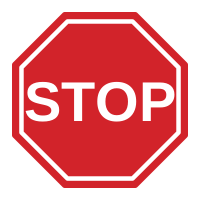 Stop completely, then go when the way is clear
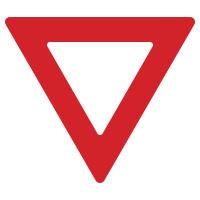 Let others go first; stop only if you need to
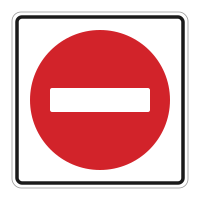 Don’t drive into this road
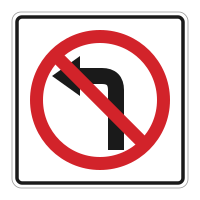 No left turn at this intersection
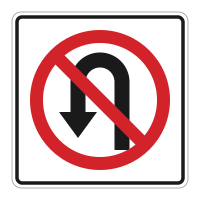 No U-turn here
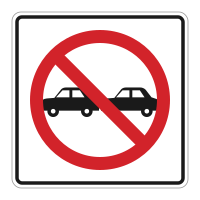 Don’t pass other vehicles on this stretch
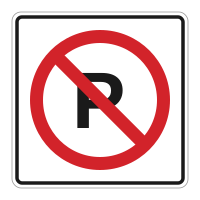 No parking here
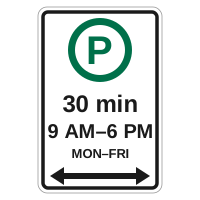 Parking allowed for the time and hours shown
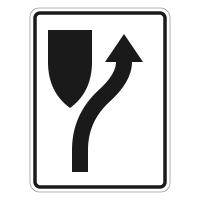 Keep to the right of the island
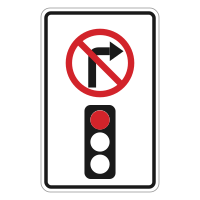 No right turn while the light is red
Lane control signs
Lane control signs are white arrows on a black square, posted over or beside the lane they control. Move into the lane you need early. Once you’re in a lane with an arrow, you have to go the way it points.
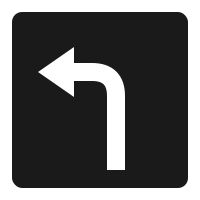 This lane must turn left
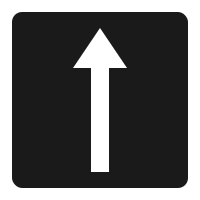 This lane must go straight
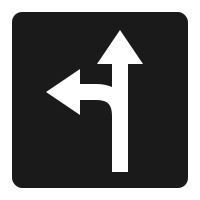 Go straight or turn left from this lane
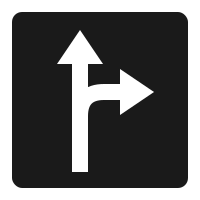 Go straight or turn right from this lane
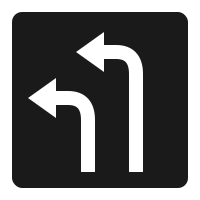 Both lanes turn left; stay in your lane through the turn
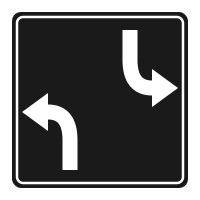 Centre lane for left turns from both directions only
Warning signs
Warning signs are yellow diamonds with black symbols. Each one tells you about something on the road ahead, like a curve, a merge or a railway crossing, so you can slow down before you get there. Construction warnings use the same diamond in orange.
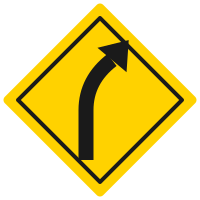 Curve ahead: slow down before it
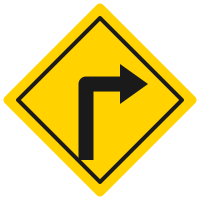 Sharp turn ahead: slow right down
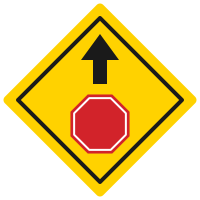 Stop sign ahead: get ready to stop
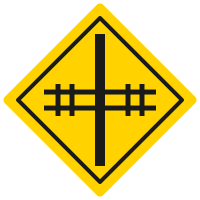 Railway crossing ahead: look and listen for trains
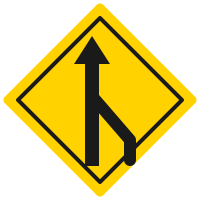 Traffic joins from the side: let it merge smoothly
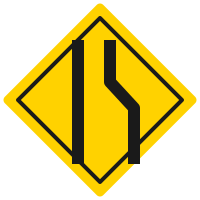 Right lane ends: move left when it’s safe
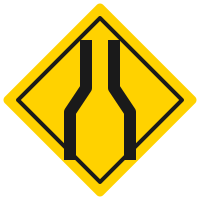 Road gets narrower: slow down and keep right
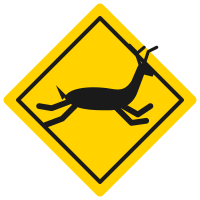 Deer cross here: watch the ditches, especially at dusk
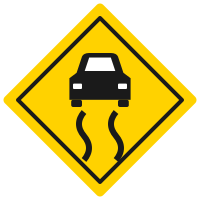 Slippery when wet: slow down in rain
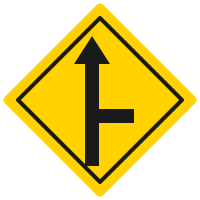 Side road ahead that drivers can’t see well: watch for cars pulling out
Schools, work zones and slow vehicles
A yellow-green pentagon means a school. With a maximum speed sign attached, it starts a school zone. Unless other times are posted, that applies on school days from 8:00 to 9:30 a.m., 11:30 a.m. to 1:30 p.m. and 3:00 to 4:30 p.m. Without a speed sign, it’s a school area: no special limit, but drive with extra care.
Playground zones use their own sign and apply every day from 8:30 a.m. to one hour after sunset. School and playground zones are both 30 km/h unless another speed is posted, and you can’t pass a vehicle going the same way while they’re in effect.
In a construction zone, a traffic control person may hold up a STOP or SLOW paddle. Do what it says, and watch for workers and equipment.
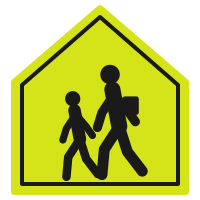 School zone or area: slow down and watch for children
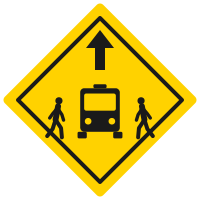 School bus stop ahead: be ready for a stopped bus
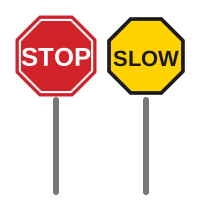 Traffic control person: stop on STOP, go slowly on SLOW
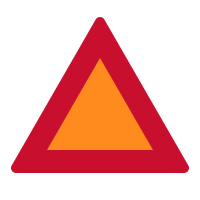 On the back of a slow vehicle: ease off and pass only when safe
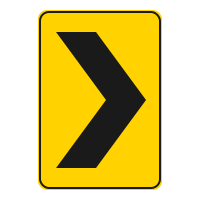 Sharp curve: follow the chevrons around it
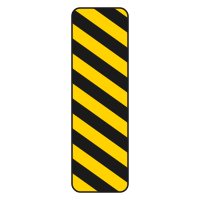 Something close to the road: pass on the side the stripes slope toward
Signals count too
The same chapter of the guide covers lights. A flashing red light is treated like a stop sign. When yellow lights flash on a school, playground or pedestrian sign, slow to 30 km/h at most and yield or stop for pedestrians. Over a lane, a red X means get out of it and a downward green arrow means you can use it.
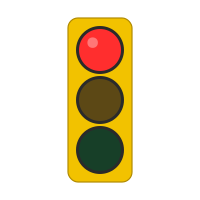 Red: stop and wait
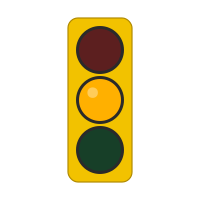 Yellow: stop if you can do it safely
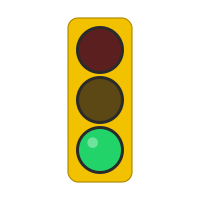 Green: go if the way is clear
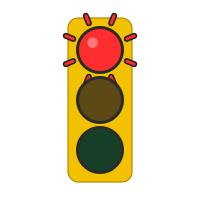 Flashing red: stop, then go when it’s safe
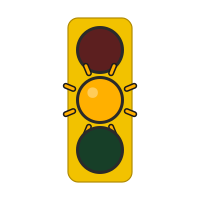 Flashing yellow: slow down and go with care
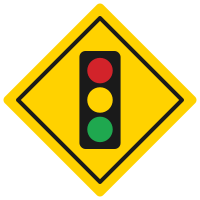 Traffic lights ahead: be ready to stop
How do you study for the Alberta road signs test?
- Learn the shapes and colours above until you can name a sign’s group from across the street.
- Read Chapter 2 of the Driver’s Guide, Traffic Control. It has every sign, signal and pavement marking the test can ask about.
- Pay extra attention to the school and playground zone signs. The times and the 30 km/h limit come up a lot.
- Try the practice test. Five of its 20 questions show you a sign and ask what it means or what you should do.
Explore
Everything else, in one place
Sources: Alberta Driver’s Guide, Alberta.ca. Checked October 2026.
- Alberta Driver’s Guide: Cars and Light Trucks (2026), Chapter 2 ↗
- Alberta.ca: Driver’s knowledge test ↗
Rules and fees can change, so check the official site before your test.