 Nova Scotia · Learner’s test
Is there a separate road signs test in Nova Scotia?
Yes. The Road Sign Recognition Test is one of the two parts of the Knowledge Test, and it’s scored on its own. If you pass the rules part but not the signs part, you retake only the signs part.
The signs part asks you to recognize highway road signs and know what they mean. The handbook’s chapter 3 has more signs than fit here, including guide signs and the railway crossbuck.
Regulatory signs: rules you must follow
Regulatory signs tell you the law, and you obey them unless a peace officer directs you otherwise. Most are white squares or rectangles with black or red letters. A green circle means something is allowed, and a red circle with a slash means it isn’t.
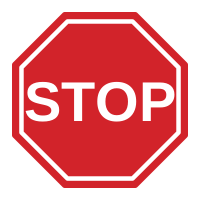 Stop: come to a complete stop at the stop line or crosswalk, and go when the way is clear
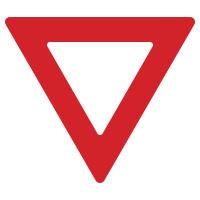 Yield: slow down and give the right of way, stopping if you need to
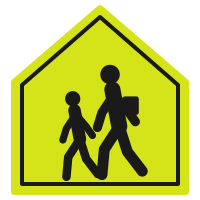 School zone: with children present, 30 km/h where the approach limit is 50 km/h, or 50 km/h where it’s higher
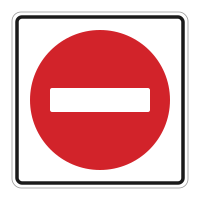 Do not enter
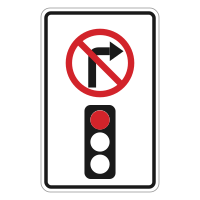 No right turn on red signal: wait for the green light
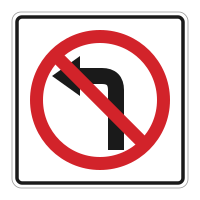 No left turn permitted
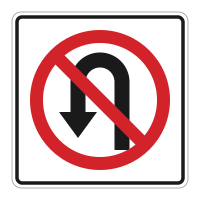 No U-turn: don’t turn to go the opposite way
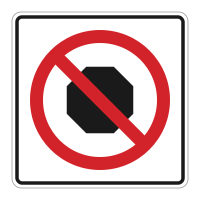 No stopping
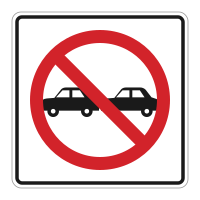 Do not pass
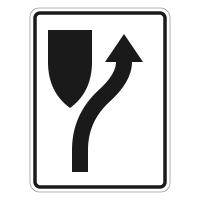 Keep to the right of the traffic island or obstruction
Warning signs: what’s on the road ahead
Most warning signs are yellow diamonds with black letters or symbols. Each one warns you about a change in the road ahead. At a merge sign, drivers in both lanes share the job of merging smoothly, so be ready to yield.
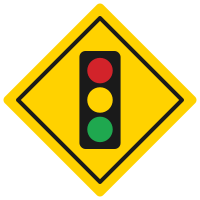 Traffic signal lights ahead
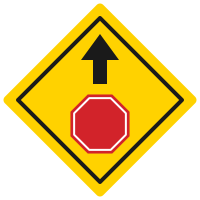 Stop sign ahead
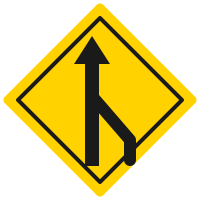 Merge: get ready to merge with other vehicles
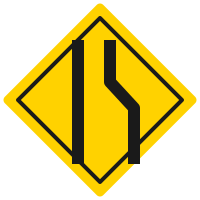 Right lane ends
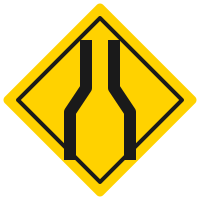 Road narrows ahead
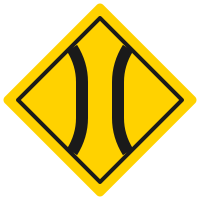 Narrow structure ahead, such as a bridge, culvert or underpass
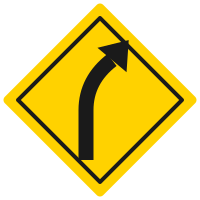 Right curve ahead: a posted speed sign gives the safe speed for this turn
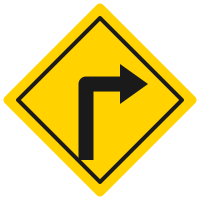 Sharp turn or bend in the road ahead
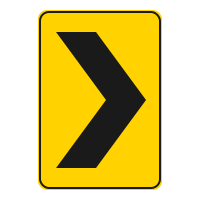 Chevrons: posted in groups to guide you around a sharp curve
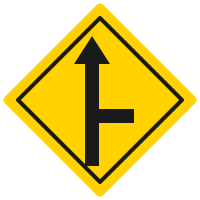 Hidden intersection ahead: drivers on the side road can’t see you well, so be ready to slow down
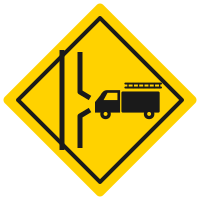 Fire truck entrance ahead
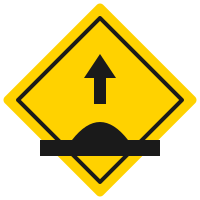 Bump or rough road ahead
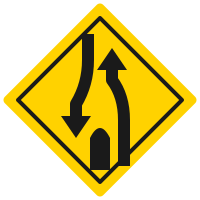 Divided highway ends: two-way traffic ahead
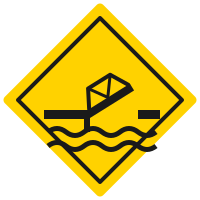 Bridge opening ahead: the bridge can open to let boats through
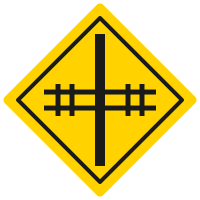 Railway crossing ahead: the symbol shows the angle of the tracks
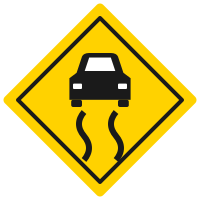 Slippery when wet
Signal lights
The handbook teaches signal lights in Rules of the Road, and they’re worth learning with the signs. Unless a sign says no turn on red, you may turn right on a red after you stop and check it’s safe. A left turn on red is allowed only from a one-way street onto another one-way street.
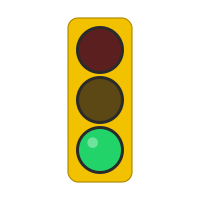 Green: go when it’s safe, yielding to pedestrians and to vehicles already in the intersection
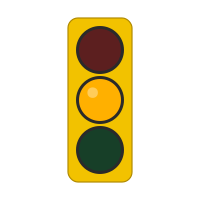 Yellow: stop before the intersection if you can do it safely
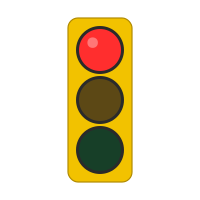 Red: stop at the marked line or the near side of the crosswalk
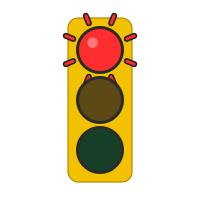 Flashing red: same as a stop sign
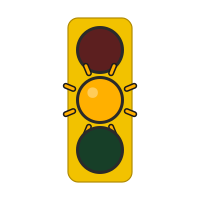 Flashing yellow: same as a warning sign, so slow down and go with caution
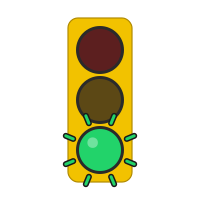 Flashing green: you may turn left, go straight or turn right
Lane, hazard and work zone signs
Lane arrows tell you which way you must go from that lane at the intersection. Hazard markers show which side to pass on. Work zones are marked with orange signs, and traffic control persons use STOP/SLOW paddles.
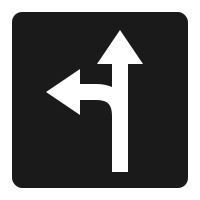 Straight through or left turn only lane
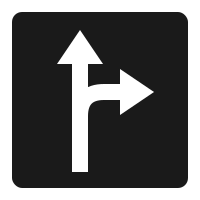 Through or right turn only lane
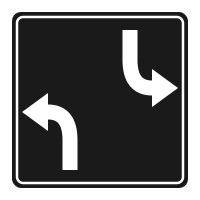 Two-way left turn lane: only for vehicles turning left
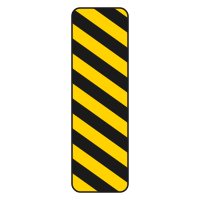 Hazard warning: the lines slope to the right, so drive to the right of the sign
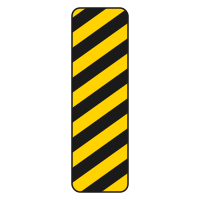 Hazard warning: the lines slope to the left, so drive to the left of the sign
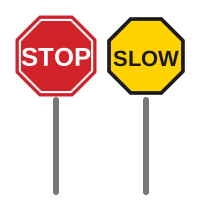 Traffic control persons use STOP/SLOW paddles to direct traffic through a work zone. Follow their directions
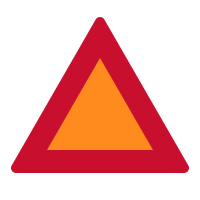 Slow-moving vehicle: it can’t keep up a speed over 40 km/h, so slow down
The handbook ends chapter 3 with a short quiz that asks you to match six sign shapes to their meanings. It’s a quick way to check yourself.
Sources: Government of Nova Scotia and 3 more. Checked November 2026.
- Government of Nova Scotia: Nova Scotia Driver’s Handbook (PDF) ↗
- Government of Nova Scotia: Take a driver knowledge test: Learner’s Licence (class 7) ↗
- Government of Nova Scotia: Registry of Motor Vehicles, Who Takes the Exam ↗
- Government of Nova Scotia: Changes to traffic safety legislation ↗
Rules and fees can change, so check the official site before your test.
Explore
Everything else, in one place
Licences