New Mexico · Permit test

New Mexico driver’s license test and instructional permit

You can get an instructional permit at 15, once you’re signed up for an approved driver education course. New Mexico has no DMV: the Motor Vehicle Division (MVD) runs licensing, and the first part of the New Mexico driver’s license test is its written knowledge exam, which you take with a vision test at an MVD field office or at a driving school that has a contract with MVD. You need 70% on the written test, and the permit costs $10. The road test comes later, before your provisional license.

  • 15Youngest age for an instructional permit
  • 70%Score needed on the Class D written test
  • $10Instructional permit fee
  • 6 monthsTime on the permit before a provisional license

Key facts

At a glance

Who runs it
The Motor Vehicle Division (MVD) of the New Mexico Taxation and Revenue Department
Where you take it
At an MVD field office, or at a driver education school with an MVD contract
Number of questions
Not published by MVD
Languages
English, Spanish and six other languages
Driving on the permit
With an approved instructor, or a licensed driver 21 or older who has held a license for 3 years, beside you

How it works

How the New Mexico driver’s license test works for a permit

Class D written test
70%
To pass you need at least 70%.
  1. You take the knowledge exam at a Motor Vehicle Division (MVD) field office, along with a vision test, or with a driver education school that has a contract with MVD to give it.
  2. The questions come from the New Mexico Driver Manual: signals and signs, right-of-way, speed and parking, safe driving, sharing the road and alcohol.
  3. State offices typically don’t start a written test after 3 p.m., so you have enough time to finish.
  4. Under 18, you and your parent or guardian complete and sign the permit application at the office.

Topics

What’s on the test

01

Permits and graduated licensing

The New Mexico Driver Manual opens with the three stages of the graduated driver license (GDL) for drivers under 18: the instructional permit, the provisional license and the unrestricted license.

Key points (4)
  • You can get an instructional permit at 15 once you’re enrolled in a driver education course approved by the Traffic Safety Bureau, and you hold it for at least six months.
  • On the permit you drive with an approved instructor beside you, or a licensed driver 21 or older who has been licensed for at least three years.
  • A provisional licensee may not drive between midnight and 5:00 a.m. without a licensed driver 21 or older, except for the reasons the law lists, such as work, school or a medical emergency.
  • All children under 12 must wear the right safety restraint while the vehicle is moving.
02

Signals, signs and pavement markings

The manual explains what each light means, how sign shapes and colors work and what the lines on the road tell you.

Key points (4)
  • A flashing red light means the same as a stop sign, and a flashing yellow light means slow down and go on with caution.
  • You may turn right on a steady red after a full stop, if it’s safe and no sign says you can’t.
  • Warning signs are usually yellow with black letters or symbols, and work area signs are orange.
  • With a solid and a dashed yellow line, you may not pass if the solid line is on your side. Two solid yellow lines mean neither side can pass.
03

Lane rules, passing and turning

The general rules say which lane to use when no sign or marking tells you, how to pass and how to turn into the right lane.

Key points (4)
  • On a road with two or more lanes going your way, stay in the right lane except to pass.
  • Never pass on the shoulder, paved or not, and don’t back up in a travel lane except to parallel park.
  • A shared center lane is for left turns (or U-turns where allowed) by traffic from both directions.
  • At 55 mph you need about 10 seconds to pass, so you need a 10-second gap in oncoming traffic.
04

Right-of-way, school buses and emergency vehicles

The law says who must yield; it never gives anyone the right-of-way. The manual lists the rules for intersections, people on foot, school buses and trains.

Key points (4)
  • At a four-way stop the first driver to arrive goes first; if two arrive at once, the vehicle on the right goes first.
  • Drivers entering a traffic circle yield to drivers already in it.
  • For an emergency vehicle with a siren or red or blue lights, pull to the right edge of the road, but drive through an intersection before you pull over.
  • Stop for a school bus with red lights flashing on either side of the road, unless it’s coming toward you on a road split by a median or barrier.
05

Speed limits, parking and points

New Mexico’s default speed limits, the places you can’t park and how points on your record can cost you your license.

Key points (4)
  • Unless posted otherwise: 15 mph in a school zone with a posted limit, 30 mph in business or residential areas, 55 mph on highways and 75 mph on rural interstates.
  • Don’t park within 15 feet of a fire hydrant, 25 feet of a crosswalk at an intersection, 30 feet of a traffic signal or stop sign, or 50 feet of a railroad crossing.
  • A red curb is a fire zone, a yellow curb is a loading zone or other limit, a white curb is for short stops and a blue curb is for handicap parking.
  • Twelve or more points within 12 months means your license is suspended for one year.
06

Scanning, lights and following distance

The Safe Driving Tips and Communicating sections cover where to look, when to use your lights and horn and how much space to leave.

Key points (4)
  • Look at least 10 seconds ahead, which is about one block in the city.
  • Dim your high beams within about a block of an oncoming vehicle, and use low beams within 200 feet when you follow another vehicle.
  • Signal at least 100 feet before you turn.
  • Follow no closer than three seconds, and leave four seconds on slippery roads, behind motorcycles or when pulling a trailer.
07

Weather, wildlife and emergencies

How to adjust for wet, icy and dark roads, New Mexico’s large wildlife, vehicle failures and skids.

Key points (4)
  • Slow by about 10 mph on a wet road and cut your speed in half on packed snow. Bridges and shady spots can be icy when other pavement isn’t.
  • Tires can start to hydroplane above about 35 mph in the rain, and can lose all traction at about 50 mph in heavy rain.
  • Watch for wildlife at dawn, dusk and the first hours after dark, and expect more animals where one is crossing.
  • If you skid, stay off the brake and steer where you want the vehicle to go.
08

Bicycles, trucks and motorcycles

The Sharing the Road section treats bicycles as vehicles, explains a truck’s blind spots and ends with a motorcycle section.

Key points (4)
  • Try to leave at least five feet when you pass a bicyclist.
  • A car at 55 mph can stop in about 400 feet, but a large truck could need almost 800 feet.
  • If you can’t see the truck driver in the side mirror, the driver can’t see you.
  • Always pass a large truck or RV on the left, then move ahead of it.
09

Alcohol, drugs, insurance and crashes

The Be in Shape to Drive section covers vision, fatigue, alcohol and drugs, then the manual explains what to do after a crash and the insurance you must carry.

Key points (4)
  • You need at least 20/40 vision in at least one eye, with or without glasses or contacts.
  • You can be arrested at a blood alcohol content (BAC) of .08% or more, or .02% if you’re under 21. Refusing a BAC test can cost you your license for one year.
  • Your body gets rid of about one drink an hour, and only time sobers you up.
  • The minimum insurance is $25,000 for one person hurt or killed, $50,000 for two or more and $10,000 for property damage.

Road signs

Road signs from the New Mexico Driver Manual

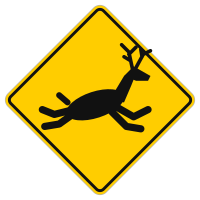
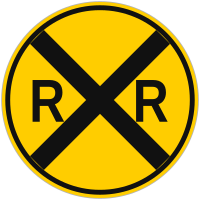
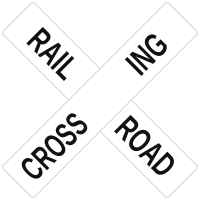
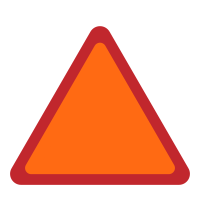
The New Mexico Driver Manual sorts signs by color and shape: yellow diamonds warn, orange signs mark work areas and a red circle with a slash means the action shown isn’t allowed. It also shows the round railroad sign, the crossbuck and the orange triangle on slow vehicles, and it asks you to watch for animal crossing signs on rural roads.

  • Red octagon with white border and the word STOP in whiteStop: eight sides, red with white letters. Stop at the stop line if there is one, and go only when crossing traffic and people on foot have cleared
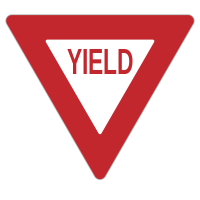
  • Downward-pointing red triangle with white center and the word YIELD in redYield: slow down and let traffic in the intersection or on the road you’re entering go first
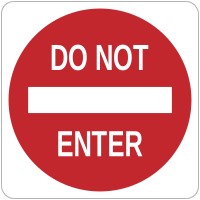
  • Red circle with a white horizontal bar on a white square, reading DO NOT ENTERDo not enter: you’ll see it at exit ramps you’d be taking the wrong way, at crossovers and on one-way streets
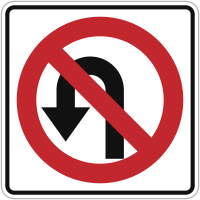
  • Black U-turn arrow inside a red circle with a red slashNo U-turn: a red circle with a slash means the action shown isn’t allowed
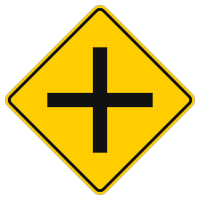
  • Yellow diamond with a black plus-shaped crossroad symbolCross road: a warning sign, yellow and diamond shaped, that a road crosses ahead
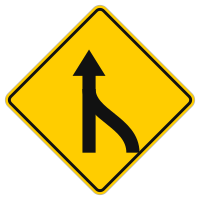
  • Yellow diamond with an upward arrow for the main road and a second road merging into it from the rightMerging traffic: traffic will join your road from the side ahead
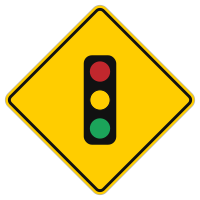
  • Yellow diamond with a black traffic signal showing red, yellow and green lightsSignal ahead: there’s a traffic light ahead, so be ready to stop
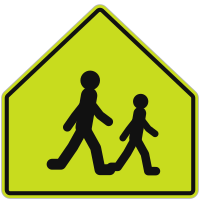
  • Fluorescent yellow-green pentagon with two children walkingSchool: the limit within a school zone with a posted speed limit is 15 mph
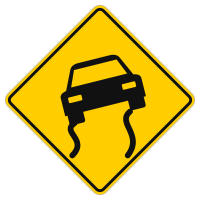
  • Yellow diamond with a car and two S-shaped skid marksSlippery when wet: on a wet road, slow down by about 10 mph
  • Yellow diamond with a black leaping deerDeer crossing: animal crossing signs mark places where vehicles have hit wildlife before
  • Round yellow sign with a black X and two letters RRailroad crossing ahead: the round yellow sign stands before you reach the tracks
  • White X-shaped crossbuck reading RAILROAD CROSSINGCrossbuck: it means the same as a yield sign, so you must yield to crossing trains
  • Fluorescent orange triangle with a red reflective borderSlow-moving vehicle: the orange triangle means the vehicle travels less than 25 mph

Test day

What to bring for your instructional permit

  • A referral card from your driver education school, or its certificate of completion, to show you’re enrolled in or have finished an approved course
  • For a REAL ID permit: one proof of your identification number, one proof of identity and age, and two proofs of New Mexico residency
  • For a Standard permit: one proof of identity and age and two proofs of New Mexico residency. No Social Security number is needed
  • Original documents or certified copies. Documents not in English need a full translation certified by the translator
  • Proof of financial responsibility (insurance), which MVD’s procedures manual lists for an instruction permit
  • Your parent or guardian if you’re under 18, and money for the $10 permit fee

Before you go

  1. Sign up for a driver education course approved by the Traffic Safety Bureau. The school gives you a referral card once you’ve had at least 9 hours of classroom instruction.
  2. Read the New Mexico Driver Manual. It’s free to download in English and Spanish.
  3. Try MVD’s free NM Practice Driving Test app on your phone.
  4. Check your documents against MVD’s REAL ID or Standard list. Photocopies aren’t accepted.
  5. Book an appointment. MVD’s locations page says most offices require one.
New Mexico MVD: make an appointmentState field offices are open 8 a.m. to 12 p.m. and 1 p.m. to 4 p.m. You can also book by phone at 1-888-683-4636.

Study options

Where to study

The knowledge exam is based on the New Mexico Driver Manual, which MVD posts free in English and Spanish. MVD also has its own free practice app, the NM Practice Driving Test. Your driver education course, and apps and websites, add more practice.

OptionPriceFree to useLinks
Official and free
NM Practice Driving TestOfficial · app for iPhone and AndroidThe practice exam from the Motor Vehicle Division (MVD), released in August 2021 for people preparing for the permit knowledge test. The App Store lists it in English and Spanish, with 4.7 stars from 73 ratings.
FreeThe whole app
New Mexico Driver ManualOfficial · PDFMVD’s manual for the car knowledge exam, from the license stages to sharing the road with motorcycles. It has no sample questions, so use it with the app.
FreeThe whole manual, in English or Spanish
CDL manual and New Mexico addendumOfficial · PDFThe car manual doesn’t cover commercial driver’s license (CDL) tests. MVD posts a separate CDL manual and a two-page addendum with New Mexico’s classes, endorsements and test rules.
FreeBoth documents
Apps and websites
DMV-Permit-Test.comWebsiteEach question has a short explanation, and there’s a Spanish section. The site says the real exam has 25 questions with 18 right to pass; that’s its own figure, since MVD doesn’t publish a count and its rule is 70%.
Free tests, optional Premium20 New Mexico car practice tests, plus motorcycle and CDL tests
ZutobiWeb and app · all statesSays it has 600+ New Mexico questions in short lessons and videos, aligned with the New Mexico Driver Manual. The app has 4.7 stars from about 239,000 App Store ratings.
Free to try, then Zutobi PLUS (App Store prices from $4.99)A free start on the New Mexico course
DMV GenieApp · all statesCar, motorcycle and CDL practice in one app; pick New Mexico when you start. Check the plan length before you pay. It has 4.8 stars from about 184,000 App Store ratings.
Free to download, Premium in the app (App Store prices from $7.99)Practice tests and quizzes. The exam simulator and cheat sheets need Premium
Required courses
None for the Road study guideOfficial · online or printed workbookRequired for first-time drivers 18 to 24. The University of New Mexico’s continuing education division sells the guide, which ends with a practice exam and the payment number you take to MVD for the final exam on driving while intoxicated (DWI). There’s a Spanish workbook too.
$25, no refundsNot listed
Approved driver education schoolsCourse · private schools around the stateThe New Mexico Traffic Safety Center lists every approved in-person school by town, with its course type (37 or 56 hours), address and contact details. Some schools also have a contract with MVD to give the written and road tests.
Set by each school, up to $800 under state rulesNot listed
High school driver educationCourse · public high schoolsPublic high schools must offer driver education, according to the Traffic Safety Center, and usually run the 56-hour classroom program with no driving hours. The center posts a list of approved high school programs.
Set by each schoolNot listed

Prices and ratings checked October 2026.

FAQ

Common questions

Is there a DMV in New Mexico?

Not by that name. Driver’s licenses, permits and the written and road tests come from the Motor Vehicle Division (MVD), part of the New Mexico Taxation and Revenue Department. Apps and websites that say New Mexico DMV mean the MVD.

How many questions are on the New Mexico driver’s license test, and what’s a passing score?

MVD doesn’t publish the number of questions. Its Driver Procedures Manual says all Class D and motorcycle written tests need a score of 70% or better to pass. Apps and websites that give a question count are using their own figures, not MVD’s.

Can I take the New Mexico permit test online?

MVD doesn’t list the knowledge exam among its online services, which cover things like renewals, registration and driving records. Its permit page has you take the exam at an MVD field office, or with a driving school that has an MVD contract. Online, you can book your appointment, fill in a pre-application and practice with MVD’s free app.

Can I take the test in Spanish or another language?

Yes. MVD’s procedures manual lists the knowledge exam in English, Spanish, Tagalog, Italian, German, French, Vietnamese and Chinese, and says no other languages are planned. The driver manual comes in English and Spanish. MVD doesn’t publish a rule on bringing your own interpreter, so ask the office when you book.

What happens if I fail the written test?

Under MVD’s knowledge exam policy, you can take the exam up to twice a week, even twice on the same day. The testing week runs Sunday to Saturday. If you fail a third time, you wait six months from the date of your first try. Once you pass, MVD says the score stays valid for five years.

Does school attendance affect getting a permit?

It can. The state rule on instruction permits, 18.19.5.118 of the New Mexico Administrative Code (NMAC), asks applicants under 18 for a school form showing 90% attendance in ninth grade and at least a nearing-proficiency score in eighth grade reading and math. Missing one means waiting six months, and missing both means a year. A student with an individualized education program (IEP) or Section 504 plan can get a certification that takes the disability into account, and a home or private school that keeps no attendance records can say so. A high school diploma or general educational development (GED) certificate replaces the form. MVD’s permit page doesn’t list this form, so ask your school and MVD before you go.

Is anything changing for New Mexico permits and driver’s ed?

Yes. From January 1, 2027, Senate Bill 73 (2026) requires every approved driver education course to include at least three hours on driving with vulnerable road users, such as people on foot, bicyclists and motorcyclists. The permit steps, fees and the knowledge exam aren’t changed by that law.

Sources: New Mexico MVD · New Mexico State Records Center and Archives · New Mexico Legislature and 9 more. Checked October 2026.

Rules and fees can change, so check the official site before your test.