Utah · Permit test

Utah DMV permit test

The Utah DMV permit test is the written knowledge test you pass to get a learner permit. It's 50 closed-book questions taken from the Utah Driver Handbook, and you need 80%, so 40 right. You can apply at 15. One thing that surprises people: in Utah, permits and licenses come from the Driver License Division, not the DMV, which only handles vehicles. Try the 20 free practice questions on this page before you book.

  • 50Closed-book questions if you've never been licensed
  • 80%Score needed to pass, so 40 of 50
  • 15Minimum age for a learner permit
  • 13Languages besides English, some with audio

Key facts

At a glance

Who gives it
The Utah Driver License Division (DLD), part of the Department of Public Safety
Questions
50, closed book, if you've never been licensed. 25, open book, if you have
To pass
80%, which is 40 of 50. The test isn't timed
Permit fee
$19, covering three tries in 12 months, as of October 2026
Languages
English plus 13 others, including Spanish, Arabic, French, Korean, Portuguese and Vietnamese

How it works

How the Utah DMV permit test works: 50 questions, 40 to pass

  1. You take the written knowledge test at your learner permit appointment at a Driver License Division office.
  2. If you've never held a license, it's 50 questions and closed book. If you've been licensed before, it's 25 questions and open book.
  3. Every question comes from the Utah Driver Handbook. You need 80% to pass.
  4. The test isn't timed. The handbook says it usually takes 30 to 45 minutes.
  5. It's offered in English and 13 other languages, including Spanish, Arabic, French, Korean, Mandarin Chinese and Vietnamese.
  6. You can take two written tests in a day if the office can fit you in. Coming back another day needs a retest appointment.
  7. Your fee covers three tries within 12 months. After a third fail, you pay again for three more.

Topics

What’s on the test

01

Signs, signals and road markings

Section 9 of the Utah Driver Handbook covers the signs, lights and lines you'll be asked about, including the flashing yellow arrow and Utah's shared center turn lanes.

Key points (4)
  • Warning signs are usually yellow diamonds. Work zone signs are orange, and speeding fines in work zones are doubled.
  • A flashing yellow arrow lets you turn, but oncoming traffic has a green light, so you yield first.
  • Two solid yellow center lines mean no passing in either direction.
  • You may not enter a shared center left turn lane more than 500 feet before your turn.
02

Learner permits and Utah's teen driver rules

Who can sit next to you on a permit, how long you hold it, and the limits on new drivers under 18.

Key points (4)
  • You can get a learner permit at 15. It's valid for 18 months.
  • Under 18, you hold the permit at least six months and finish driver education. At 15, you also wait until you're 16.
  • You need 40 hours of practice, 10 of them after sunset.
  • Until 18, a licensed teen can't drive from midnight to 5 a.m. without a licensed driver 21 or older, apart from work, school activities, farm work and emergencies.
03

Right-of-way, school buses and emergency vehicles

Who goes first at intersections, when you must stop for a school bus, and how to handle emergency vehicles and the move over law.

Key points (4)
  • At a four-way stop, yield to the driver on your right if you arrive together.
  • On a two-lane road or a four-lane road without a median, traffic in both directions stops for a school bus with flashing red lights.
  • When an emergency vehicle uses its siren or lights, pull to the right side of the road and stop until it passes.
  • Don't follow within 500 feet of a fire truck answering an alarm.
04

Speed limits, following distance and headlights

Utah's default speed limits, the two-second rule, and when to use and dim your lights.

Key points (4)
  • With no sign posted, the limit is 25 mph in business and residential areas and 20 mph near schools at school times.
  • Keep at least two seconds behind the car ahead, more in bad weather and at night.
  • Dim your high beams within 500 feet of an oncoming car and within 300 feet of a car you're following.
  • Turn your headlights on whenever you can't see 1,000 feet ahead.
05

Alcohol, phones and child car seats

Utah's 0.05 limit, the Not-a-Drop Act for drivers under 21, the phone law, and how children must ride.

Key points (4)
  • The legal limit is 0.05 BAC, and 0.04 for commercial drivers.
  • Under 21, any measurable alcohol means six months without driving privileges on a first offense.
  • Under 18, phone use is limited to emergencies, reporting hazards or crimes, and talking with a parent or guardian.
  • Children ride rear-facing until at least 2 years and 30 pounds, and ride in a car seat or booster until 8 unless they're 57 inches tall.
06

Signaling, turns and parking

How early to signal, how to turn and change lanes, and where you can't park.

Key points (4)
  • Signal for at least two seconds before turning or changing lanes. Since May 6, 2026 you don't have to signal in a roundabout.
  • When you parallel park, stay within 12 inches of the curb.
  • Don't park within 15 feet of a fire hydrant or 20 feet of a crosswalk.
  • Don't park within 30 feet of a stop sign or signal, or 50 feet of a railroad crossing.

Road signs

Signs, signals and lines from the Utah Driver Handbook

Section 9 of the Utah Driver Handbook covers signs, signals and road markings. Pay extra attention to the flashing yellow arrow and the shared center left turn lane, both common on Utah roads and both easy to get wrong.

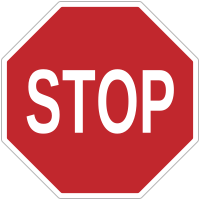
  • Red octagon with white border and the word STOP in whiteStop: come to a full stop behind the line
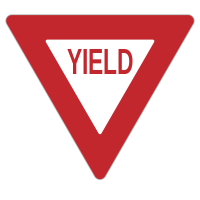
  • Downward-pointing red triangle with white center and the word YIELD in redYield: slow down and give way
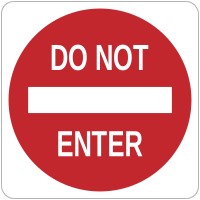
  • Red circle with a white horizontal bar on a white square, reading DO NOT ENTERDo not enter: you'd be going the wrong way
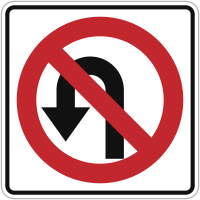
  • Black U-turn arrow inside a red circle with a red slashNo U-turn
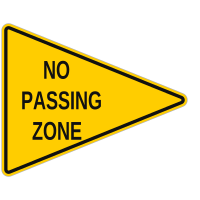
  • Yellow pennant pointing right reading NO PASSING ZONENo passing zone starts here
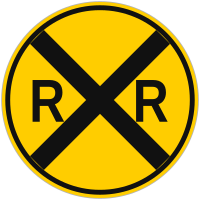
  • Round yellow sign with a black X and two letters RRailroad ahead: slow, look and listen
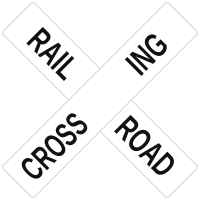
  • White X-shaped crossbuck reading RAILROAD CROSSINGRailroad crossbuck: stop if a train is coming
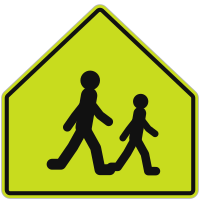
  • Fluorescent yellow-green pentagon with two children walkingSchool zone: 20 mph at school times
  • Orange diamond with a black flagger symbol holding a flagFlagger ahead: do as the flagger says
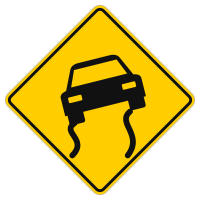
  • Yellow diamond with a car and two S-shaped skid marksSlippery when wet: slow down in rain
  • Four-section left-turn signal with the flashing yellow arrow litFlashing yellow arrow: turn after yielding
  • Center lane bordered by solid yellow outer lines and broken yellow inner lines, with opposing left-turn arrowsShared center lane: left turns only, 500 feet at most

Free practice test

20 practice questions on Utah's own rules

These 20 questions are written from the 2026 Utah Driver Handbook, multiple choice like the real test. The real one is 50 questions for a first-time driver, and you need 80%, so here 16 right out of 20 is a pass. After each answer, the tutor can explain it another way or tell you why the other choices are wrong.

Question 1 of 20
Round yellow sign with a black X and two letters R

You see this sign as you drive toward a rural crossing. What should you do?

Sample of the written knowledge test: same format, 20 questions.

Test day

What to bring to your learner permit appointment

  • Your appointment confirmation number
  • Proof of identity, such as a certified birth certificate or a valid U.S. passport
  • Proof of your Social Security number, such as a signed card or a W-2
  • Two proofs of your Utah address dated within 90 days, such as a bank statement or utility bill
  • A parent or legal guardian if you're under 18, to sign for financial responsibility
  • The $19 permit fee, as of October 2026, and your glasses or contacts for the eye test

Before you go

  1. Read the 2026 Utah Driver Handbook. It's free as a PDF on the Driver License Division site.
  2. Try the division's free 30-question online practice test, then the 20 questions on this page.
  3. Check your documents against the division's list. Photocopies, laminated birth certificates and hospital certificates aren't accepted.
  4. Book your learner permit appointment online. People with appointments are served before walk-ins.
  5. If you're under 18, make sure a parent or guardian can come with you to sign.
  6. Ask about the test in your language if English isn't your first one.
Utah Driver License Division: Apply for a learner permitFill in the online application and pick an appointment. If you fail and need to come back, book a written retest appointment instead.

Study options

Where to study

Everything on the test comes from the Utah Driver Handbook, which the Driver License Division gives away free as a PDF. The division also has a 30-question practice test online and a visual handbook with short videos. We've compared those with the apps and driving schools Utah learners use.

OptionPriceFree to useLinks
Official and free
Utah Driver Handbook (2026)Official · PDFThe Driver License Division's handbook and the source of every written test question. The 2026 edition starts with a list of new laws, such as no signal needed in roundabouts from May 6, 2026. Each section ends with short review questions, and the answers are at the back.
FreeThe whole handbook
DLD written knowledge practice testOfficial · OnlineThe division's own practice test, in the format of the real one. You get a score and feedback after each try. The division says it doesn't cover every question you might see, so use it alongside the handbook.
Free30 questions, as many tries as you like
Visual Driver HandbookOfficial partner · WebsiteA picture-and-video version of the handbook from Utah's Zero Fatalities safety program, linked from the division's resources page. Good if you learn better by seeing than by reading.
FreeSections 1-9 of the handbook
Traffic Safety and Trends ExamOfficial · OnlineNot practice: first-time drivers must pass this 40-question online exam with 100% before getting a license. You can take it in sections and retake it as often as you need, which makes it a useful study tool once you have your permit number.
FreeUnlimited retakes
Driving skills test videosOfficial · VideoShort videos from the division showing the maneuvers scored on the road test, such as hill parking and two-point turns. Watch them before your first practice drives on those skills.
FreeEvery required maneuver
Utah Motorcycle Handbook and Commercial Driver ManualOfficial · PDFIf you're going for a motorcycle endorsement or a CDL, these are the books those written tests come from. The motorcycle handbook is the 2024 edition.
FreeBoth manuals
Apps and websites
Utah DMV Practice Test (Nilu Rathod)iPhone appCar, motorcycle and CDL practice tests based on the Utah handbook. 4.6 stars from 623 App Store ratings, last updated June 2025. It's a private app, not from the state.
Free with in-app purchases: $3.99 a week, $8.99 a month or $14.99 lifetimeFree to download. The listing doesn't say what premium unlocks
Utah DMV - UT Permit test ed (Driver-Start)iPhone appFlashcards, mock and marathon tests and a progress screen, and it works offline. 4.2 stars from 574 App Store ratings. Its last listed update is from October 2017, so it won't reflect the 2026 law changes.
Free, $0.99 each to remove two kinds of adsThe whole app
Online home study driver educationDivision-approved online coursesThe 30-hour online classroom part of driver education, from schools the division approves. You still need 6 hours behind the wheel with an instructor. Out-of-state online courses aren't accepted.
Set by each schoolNothing, these are paid courses
In person
High school driver educationPublic high schools27 classroom hours, 6 behind the wheel and 6 observing, approved by the State Office of Education. Results go to the division for you, and a course can also give you the road test.
Set by your school districtDepends on your district
Private driving schools and third-party testersDivision-approved schoolsCommercial schools teach the 18-hour classroom course and the 6 driving hours, and certified testers can give the road test from age 15. Testers charge their own fee on top of the license fee.
Set by each schoolNothing, these are paid

Prices and ratings checked October 2026.

FAQ

Common questions

How many questions are on the Utah DMV permit test?

If you've never had a license, it's 50 questions and closed book. If you've been licensed before, in Utah or elsewhere, it's 25 questions and open book. Either way you need 80% to pass, and the test isn't timed.

Is the Utah permit test run by the DMV?

No, though almost everyone calls it that. Utah's Division of Motor Vehicles handles titles, registration and plates. Learner permits, licenses, ID cards and the tests are all run by the Driver License Division, at its own offices.

What happens if I fail the Utah permit test?

You can take the written test twice in one day if the office has room. To come back another day, book a written retest appointment online. Your $19 fee covers three tries within 12 months. After a third fail, you pay a new fee for three more.

Can I take the Utah DMV permit test online?

Not the permit test itself. It's taken in person at a Driver License Division office. What you do online is the Traffic Safety and Trends Exam, a separate 40-question test that first-time drivers must pass with 100% before getting a license.

What do I need to bring for a Utah learner permit?

Your appointment confirmation number, proof of identity, proof of your Social Security number, two proofs of your Utah address dated within 90 days, and the $19 fee. If you're under 18, a parent or guardian must come and sign for financial responsibility.

Is there a free Utah DMV permit practice test?

Yes. The Driver License Division has a free 30-question practice test online, and you can take it as often as you like. The 20 questions on this page are free too, with an explanation for every answer.

All 20 practice questions with answersA printable list of the practice test above
  1. Round yellow sign with a black X and two letters R

    You see this sign as you drive toward a rural crossing. What should you do?

    Slow down, look and listen for a train, and be ready to stop The round yellow sign with an X and RR warns that a railroad crossing is ahead. The Utah Driver Handbook says to slow down, look and listen for a train or railroad vehicle, and be prepared to stop.
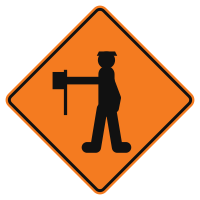
  2. Orange diamond with a black flagger symbol holding a flag

    What does this orange sign tell you?

    A flagger may be directing traffic ahead, and you must do as they say Orange signs mark work zones. This one warns that a flagger is ahead. The handbook says a flagger may direct traffic in a work zone and you must follow the flagger's directions.
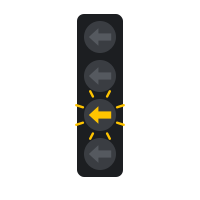
  3. Four-section left-turn signal with the flashing yellow arrow lit

    You want to turn left and this signal is showing. What does it mean?

    You may turn left, but you must first yield to oncoming traffic and pedestrians A flashing yellow arrow means turns are allowed, but you must yield first. The handbook points out that oncoming traffic has a green light at the same time, so wait for a safe gap.
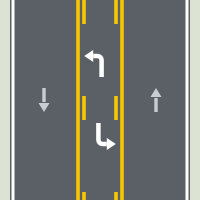
  4. Center lane bordered by solid yellow outer lines and broken yellow inner lines, with opposing left-turn arrows

    You plan to turn left using this center lane. What is the furthest ahead of your turn you may usually enter it?

    500 feet This is a shared center left turn lane. The handbook says you may not enter it more than 500 feet before making your turn, unless the last car is more than 500 feet from the intersection.
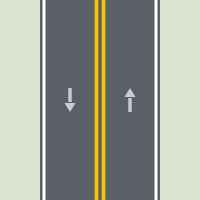
  5. Two-way road divided by two solid yellow lines; no passing in either direction

    The center of a two-way road is marked like this. What does it mean?

    Passing is not allowed in either direction Two solid yellow lines down the middle of a two-way road mean passing is prohibited in both directions. A broken yellow line on your side is what would allow you to pass.

  6. What is the youngest age at which you can get a Utah learner permit?

    15 You must be at least 15 to apply for a learner permit in Utah. At 15 you also have to hold the permit for six months and until you turn 16 before you can get a license.

  7. You're 16 and just got your license. When can't you drive unless a licensed driver 21 or older is with you (outside the listed exceptions)?

    From midnight to 5 a.m. A 16-year-old with a license may not drive from midnight to 5 a.m. unless a licensed driver 21 or older is in the front seat. The exceptions are driving to and from work or a school-sponsored activity, farm work and emergencies.

  8. How many hours of practice driving must a Utah learner under 18 complete before getting a license?

    40 hours, with 10 after sunset Utah requires 40 hours of practice driving, and 10 of them must be after sunset. This is on top of driver education, which is required for applicants 15 to 18.

  9. You're 17. When does Utah law let you use a handheld phone while driving?

    Only for a medical emergency, to report a safety hazard or a crime, or to talk with a parent or guardian Drivers under 18 may use a wireless device while driving only during a medical emergency, to report a safety hazard or criminal activity, or to communicate with a parent or legal guardian. The voice-command allowance is for drivers over 18.

  10. On a two-lane road, a school bus ahead stops and turns on its flashing red lights. Who must stop?

    Traffic in both directions On a two-lane road, traffic in both directions must stop for a school bus showing alternating flashing red lights. Stay stopped until the lights turn off.

  11. You're driving on a divided highway with four lanes and a median. A school bus on the other side of the median is stopped with red lights flashing. What must you do?

    You don't have to stop, but drive with care On a divided highway with four or more lanes and a median, only the vehicles in the lanes behind the bus must stop. Traffic going the other way doesn't have to, but the handbook still asks you to watch for children and adjust your speed.

  12. You and another car arrive at a four-way stop at the same time. The other car is on your right. Who goes first?

    The car on your right When two drivers reach a four-way stop at the same time, you yield to the driver on your right. If someone got there before you, they go first.

  13. On a highway you come up on a stopped car on the shoulder with its hazard lights flashing. What does Utah's move over law ask you to do?

    Slow down, give as much room as you can, and change to a lane not next to it if it's safe When you approach a stationary vehicle by the highway with its hazard lights on, Utah law says to reduce speed, give it as much space as practical and, if it's safe, move into a lane that isn't next to it.

  14. There's no speed limit sign and you're driving through a residential area. What is the speed limit?

    25 mph When no sign is posted and there are no special hazards, the speed limit in any business or residential area is 25 mph. Near a school during recess or school hours it drops to 20 mph.

  15. On the freeway in good conditions, what's the least following distance the Utah Driver Handbook says to keep?

    Two seconds The handbook says to keep at least two seconds of following distance behind the vehicle ahead, and to increase it in bad weather or poor visibility. At night, add at least two more seconds.

  16. You're using high beams at night and a car comes toward you. When should you dim your lights?

    When you're within 500 feet Dim your high beams when you come within 500 feet of an oncoming car. When you're following another car, dim them within 300 feet.

  17. For a driver 21 or older in a regular car, what blood alcohol concentration (BAC) breaks Utah's DUI law?

    0.05 or higher Utah's legal limit is 0.05 BAC, lower than most states, and 0.04 for commercial drivers. You can also be charged below the limit if you're impaired to the point that it's unsafe to drive.

  18. You're 19 and you're stopped with a small but measurable amount of alcohol in your body. Under Utah's Not-a-Drop Act, what happens on a first offense?

    Your driving privileges are denied for six months Under the Not-a-Drop Act, a driver under 21 with any measurable alcohol loses all driving privileges for six months on a first offense. A second offense within 10 years means two years, or until 21 if that's longer.

  19. Until what point should a young child ride rear-facing in the back seat, according to the Utah Driver Handbook?

    Until at least 2 years old and 30 pounds, or longer if the seat allows Children must ride rear-facing in the back seat until at least two years of age and 30 pounds, or longer if the car seat allows. After that they move to a forward-facing seat with a harness until at least four and 40 pounds.

  20. How close to a fire hydrant may you park in Utah?

    No closer than 15 feet You may not park within 15 feet of a fire hydrant. Other limits in the same list: 20 feet from a crosswalk, 30 feet from a stop sign or traffic signal, and 50 feet from the nearest rail of a railroad crossing.