You're enrolling in an approved driver training course. What is the earliest age you can apply for a Washington learner permit?
15 With driver training, you can apply as early as 15, starting no more than 10 days before your course begins. Without a course, you have to wait until 15 and a half to take the knowledge test.
You're 17 and want your license before 18. How much supervised driving do you need to have done on your learner permit?
40 hours in daylight and 10 at night Teens applying at 16 or 17 need 40 hours of daytime driving and 10 hours of nighttime driving with a licensed driver. A parent, guardian or responsible adult confirms the hours.
For the first 6 months on an intermediate license, who can ride with you if they're under 20?
Nobody under 20 except immediate family For the first 6 months, you can't carry passengers under 20 unless they're immediate family, such as a brother, sister or your own child. After that, and until the first year is up, you can carry up to 3 passengers under 20 who aren't family.
You have an intermediate license. Between which hours can't you drive, unless a licensed driver aged 25 or older is with you?
1 a.m. and 5 a.m. Intermediate drivers can't drive from 1 a.m. to 5 a.m. unless a licensed driver aged 25 or older is with them. Driving for farm work is an exception. The limit ends after 1 year of safe driving.
You're 16 and driving on your learner permit. When may you use your phone, even hands-free?
Only to report an emergency Drivers with a learner permit or an intermediate license can't use a phone or any wireless device while driving, even hands-free. The only exception is reporting an emergency, such as calling 911.
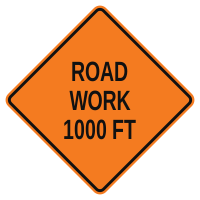
What does an orange sign like this one tell you?
Construction or maintenance work is ahead The Washington Driver Guide uses orange for construction and maintenance warnings. Slow down, watch for workers and follow any flaggers.
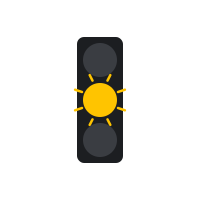
You come to this signal and it keeps flashing. What does it mean?
The same as a yield sign A flashing yellow light means the same thing as a yield sign. Slow down, look both ways and be ready to stop for traffic or pedestrians.
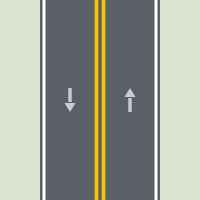
What do yellow lines like these on the road separate?
Traffic moving in opposite directions Yellow lines separate traffic moving in opposite directions. White lines separate lanes going the same way. You may not cross a solid yellow line to pass.
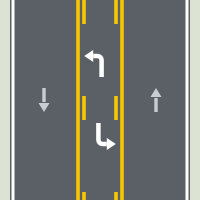
You're in this lane in the middle of the road. How far can you travel in it?
No more than 300 feet The guide says you shouldn't travel farther than 300 feet in a center turn lane. These lanes are only for starting or finishing a left turn, and you must never use them to pass.
Two cars reach a four-way stop at about the same time. Who goes first?
The car on the right At a four-way stop, the first car to arrive goes first. If two arrive at about the same time, yield to the vehicle on your right.
You're about to enter a roundabout. Who has the right-of-way?
Traffic already in the roundabout Yield to all traffic already in the roundabout before you enter. Roundabouts are designed for speeds of about 15 to 25 mph.
You're on a road with 3 lanes in each direction and a median between them. A school bus going the other way stops with red lights flashing. What must you do?
You don't have to stop You must stop for a school bus with flashing red lights whether you're in front of it or behind it. The one exception: on a road with 3 or more lanes, separated by a median or barrier, traffic going the opposite direction doesn't have to stop.
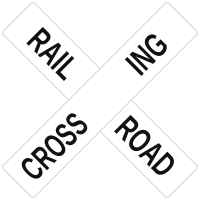
The signals at a railroad crossing are flashing. Where should you stop?
Between 15 and 50 feet from the nearest rail Stop 15 to 50 feet from the nearest rail when signals flash, a gate is down or coming down, or a train is close. Never drive around a lowered gate. A train can take up to a mile to stop.
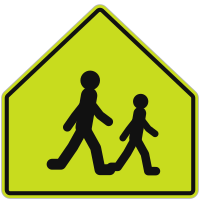
What is the speed limit in a Washington school zone?
20 mph The school zone speed limit is 20 mph. The guide explains that higher speeds raise the risk of fatal crashes with children.
How close to a fire hydrant may you park?
No closer than 15 feet You can't park within 15 feet of a fire hydrant. Other no-parking distances in the guide: 30 feet from a traffic signal, stop sign or yield sign, 5 feet from a driveway or alley, and 50 feet from a railroad crossing.
You're approaching a stopped emergency vehicle with its lights flashing. You can't move into a farther lane. What should you do?
Slow to at least 10 mph below the posted limit Washington's move-over rule says to move into a farther lane if you can. If you can't, slow down to at least 10 mph below the posted speed limit. Never drive faster than 50 mph in an emergency zone.
You're using high beams at night and a car comes toward you. When must you switch to low beams?
Within 500 feet Dim your lights when you're within 500 feet of an oncoming vehicle. When you're following another vehicle, dim them within 300 feet.
What is the best way to avoid hydroplaning?
Slow down when the road is wet Hydroplaning happens when water builds up between your tires and the road, so the tires lose their grip. The guide says the best way to avoid it is to slow down on wet roads.
You're 19. At what blood alcohol concentration (BAC) are you considered to be driving under the influence in Washington?
0.02% or more Drivers under 21 are considered under the influence at 0.02% BAC or more, or with any THC in their blood. For drivers 21 and older, the limits are 0.08% BAC or 5.00 ng of THC.
What does Washington's implied consent law mean?
By driving in Washington, you agree to be tested if an officer suspects you're impaired Under implied consent, anyone who drives in Washington has agreed to a test if an officer suspects impairment. Refusing can cost you your driving privileges for 90 to 730 days, or until you turn 21, whichever is longer.
 Washington · Permit test