Rhode Island · Permit test

Rhode Island permit test: the DMV knowledge exam

It’s the knowledge exam of the Division of Motor Vehicles (DMV), and you pass it to get a learner’s permit, whatever your age. The Rhode Island permit test is based on the state’s motor vehicle laws and rules of the road, and the DMV tells you to study the entire Rhode Island Driver’s Manual for it.

  • 40Multiple-choice questions
  • 8 daysShortest wait before a retake
  • 90 minutesLongest time you get for the exam

Key facts

At a glance

Who runs it
The Rhode Island Division of Motor Vehicles (DMV)
Languages
English, Spanish and Portuguese on the computer, and printed exams in other languages by a separate booking
Vision test
At the same visit. You need 20/40 or better, with glasses or contacts if you wear them
Permit fee
$8.50 at 18 or older, $13.50 under 18, each with a $3.50 technology surcharge included

How it works

How the Rhode Island permit test works

  1. At 18 or older, you take it at DMV headquarters, 600 New London Avenue in Cranston, with an online reservation.
  2. Under 18, you take it after the 33-hour driver education course. If you took the course with the Community College of Rhode Island (CCRI), you take the exam through CCRI. If you took it at another approved school, you bring the completion certificate to Cranston.
  3. For a printed exam in a language other than English, Spanish or Portuguese, book a permit test reservation first, then schedule the foreign language exam online with its confirmation number. Bring someone who can translate before and after the test, arrive at least an hour early and go to the Enforcement Office on the first floor. Only you may be in the exam room.
  4. Drivers with a valid license from another state don’t take the exam. They hand in that license instead, and the driver’s license page has the transfer rules.

Topics

What to study, topic by topic

These eight topics follow the Driver’s Manual chapters the DMV marks as testing material. The driver’s manual page lists every marked section.

01

Distractions, drowsiness and emotions

Chapter II of the manual covers the kinds of distraction, the signs of drowsy driving and how strong feelings and road rage change the way you drive.

Key points (4)
  • Looking away from the road for two or more seconds doubles the risk of a collision.
  • Being awake for 20 hours impairs you about as much as a blood alcohol concentration of .05 percent, and 24 hours about as much as .10 percent.
  • Rest is the only real fix for drowsiness. Loud music, caffeine and open windows help for a few minutes at most.
  • If another driver turns aggressive, don’t respond, avoid eye contact and stay in your car.
02

Basic driving skills and safety rules

Chapter III takes you from the checks before you start the engine through seat belts, stopping, turns, parking, passing, highway driving and phone use.

Key points (4)
  • Rhode Island’s seat belt law is a primary law for all ages, so police can stop you if anyone in the car is unbuckled.
  • At a stop sign, stop before the crosswalk. With no crosswalk, stop at the stop line, and with neither, where you can see the cross traffic.
  • At a four-way stop, cars that stopped before you go first. If two arrive together, yield to the car on your right.
  • Don’t park within 8 feet of a fire hydrant, within 20 feet of a crosswalk at an intersection or within 30 feet of a stop sign or traffic light.
03

Signals, signs and road markings

Chapter IV covers hand signals, lane lines, roundabouts and traffic lights, and the manual’s last pages show the regulatory, guide and warning signs.

Key points (4)
  • Signal at least 100 feet before you turn, by hand or with your turn signals.
  • Yellow lines separate traffic going opposite ways, and white lines separate traffic going the same way.
  • In a roundabout, traffic moves counterclockwise around the center island, and you yield to vehicles already in it.
  • Treat a flashing red light as a stop sign. At a flashing yellow arrow, turn only after yielding to oncoming traffic and pedestrians.
04

Driving emergencies

Chapter V gives steps for skids, brake and tire failure, a stuck accelerator, threats of a collision, railroad tracks, fire, water and winter driving.

Key points (4)
  • With anti-lock brakes, press the pedal firmly and hold it. Don’t pump it.
  • After a blowout, grip the wheel with both hands and ease off the gas. Don’t brake hard.
  • If your car stalls on the tracks with a train coming, get everyone out and move far away from the tracks.
  • Never use cruise control in rain or snow.
05

Motorcycles and defensive driving

Chapter VI explains what every driver should know about motorcycles, and chapter VII sets out the systems for defensive driving.

Key points (4)
  • Leave at least four seconds behind a motorcycle.
  • Use the three-second rule behind other vehicles, and add a second for each poor condition.
  • IPDE stands for Identify, Predict, Decide and Execute.
  • Lane position 2, 3 to 6 inches from the left line, is the one to use before a left turn.
06

Sharing the road

Chapter VIII covers large trucks, night driving, pedestrians, school buses and bicycle riders.

Key points (4)
  • Dim your high beams at least 500 feet from an oncoming vehicle and within 200 feet of a vehicle you’re following.
  • Stop for a school bus with flashing red lights, from either direction, unless it’s on the other side of a divided highway.
  • Stop and yield to a pedestrian crossing with a white cane or a guide dog.
  • Give a bicyclist as much room as you can when you pass, 3 to 5 feet in the manual’s words.
07

Laws, collisions and police stops

Chapters IX, XI and XII list the laws every driver must know, what to do after a collision and how to act when a police officer stops you.

Key points (4)
  • Headlights go on from sunset to sunrise, whenever you can’t see 500 feet ahead and whenever your wipers are on.
  • Drivers aren’t allowed to wear earphones or headsets.
  • A police report is needed after a collision with an injury, more than $1,000 of damage, an unattended vehicle or a domestic animal.
  • If an officer stops you at night, turn on your interior lights and leave them on until the officer says otherwise.
08

Alcohol, drugs and driving

Chapter X explains how alcohol and drugs affect a driver, the blood alcohol limits, implied consent and the penalties.

Key points (4)
  • At any age, a blood alcohol concentration of .08% or more is drunk driving (DUI).
  • Under 21, .02% up to .08% is Driving While Impaired (DWI).
  • Only time sobers you up. Coffee, food, fresh air and exercise don’t.
  • Refusing a chemical test brings a license suspension of at least six months.

Road signs

Road signs in the Rhode Island Driver’s Manual

The manual’s last pages show the signs in three groups: regulatory signs, guide signs and warning signs. Work zone signs come in fluorescent yellow-green, orange or pink.

  • Red octagon with white border and the word STOP in whiteStop: stop before the crosswalk or stop line
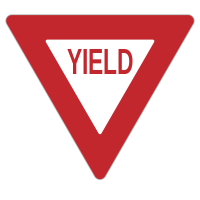
  • Downward-pointing red triangle with white center and the word YIELD in redYield
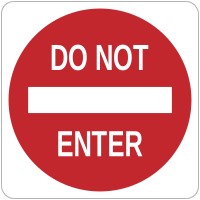
  • Red circle with a white horizontal bar on a white square, reading DO NOT ENTERDo not enter
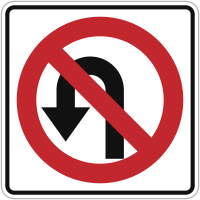
  • Black U-turn arrow inside a red circle with a red slashNo U-turn
  • White sign reading NO TURN ON REDNo turn on red
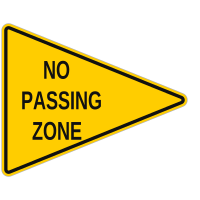
  • Yellow pennant pointing right reading NO PASSING ZONENo passing zone
  • Yellow diamond with three black arrows forming a counter-clockwise circleRoundabout ahead: yield to vehicles already in it
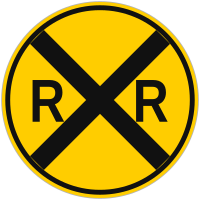
  • Round yellow sign with a black X and two letters RRailroad crossing ahead
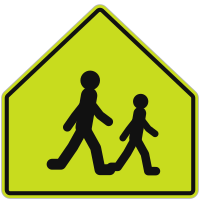
  • Fluorescent yellow-green pentagon with two children walkingSchool crossing
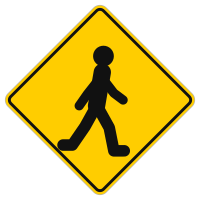
  • Yellow diamond with a black walking personPedestrian crossing
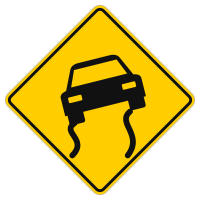
  • Yellow diamond with a car and two S-shaped skid marksSlippery when wet
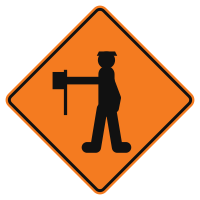
  • Orange diamond with a black flagger symbol holding a flagFlag person ahead

Free practice test

20 practice questions on Rhode Island’s rules of the road

Here are 20 questions written from the Rhode Island Driver’s Manual. The real exam has 40, and the DMV doesn’t publish a pass mark, so 15 of 20 (75%) is our own target, not the state’s. Five questions show a sign, a signal or a road marking. Each answer comes with a short reason, and the tutor can explain it a second way or say why each other choice is wrong.

Question 1 of 20

The manual compares being awake for 20 hours to driving with which blood alcohol concentration?

20 practice questions in the style of the permit test.

Test day

What to bring to the knowledge exam

  • A completed License/ID/Permit Application, form LI-1
  • One proof of identity, such as a certified copy of your birth certificate or an unexpired passport, plus proof of any name change
  • Your Social Security number, listed on the application, or a Social Security Administration letter saying you aren’t eligible for one
  • Two proofs of Rhode Island residency, such as a utility bill in your name, or in the name of someone with the same last name
  • Under 18: the original certificate from the 33-hour driver education course (photocopies aren’t accepted), and a parent or guardian with you, or their notarized signature on the LI-1
  • On an F-1 or F-2 visa: your I-20, I-94 and passport as well

Before you go

  1. Study the whole Rhode Island Driver’s Manual, as the DMV asks.
  2. Check your documents against the checklist on the third page of the LI-1 application.
  3. Make your reservation in the right category. For the computer exam, that’s the written or computerized permit test.
Rhode Island DMV: Permits and testsThe page lists the exam hours and the documents, and the DMV’s home page has the reservation link.

Study options

Where to study

Read the Driver’s Manual first, starting with the chapters the DMV marks as testing material.

OptionPriceFree to useLinks
Official sources
Rhode Island Driver’s ManualOfficial · PDF and online chaptersThe DMV’s study book for the knowledge exam and the driver skills test. The DMV tells you to study all of it.
FreeThe whole manual, with the testing chapters marked online
Modified Driver Skills Testing guideOfficial · PDFThe DMV’s guide to the closed-course road test, with diagrams of each exercise.
FreeThe four road test exercises, the scoring and the car checks
Guides
Parent’s Supervised Driving Program and RoadReadyOfficial · PDF, web and phone appThe DMV’s plan for parents guiding the supervised hours under the graduated licensing law. Sponsors cover its cost.
FreeThe lesson plan and the RoadReady app for logging supervised drives
In person
Approved driver educationIn person · CCRI and four driving schoolsThe 33-hour classroom course needed under 18 for a permit. CCRI runs the state program, and its students can take the permit test there.
Set by each schoolNothing free

Prices and ratings checked November 2026.

FAQ

Common questions

How many questions are on the Rhode Island permit test?

40, all multiple choice, with up to 90 minutes to finish. Neither the DMV’s exam pages nor its Driver’s Manual publish how many you need right to pass.

Can I take the Rhode Island permit test online?

No. It’s on a computer, but you take it in person, as the section above explains. Only the reservation is made online.

Do I need an appointment for the Rhode Island permit test?

Yes. The exam is given by reservation only. Our Locations page has the exam hours at Cranston headquarters.

Do I need driver’s ed before the permit test in Rhode Island?

Under 18, yes: you pass a 33-hour classroom course first, and the where-to-learn page lists the approved schools. At 18 or older, no course is needed.

What happens after I pass?

You get your permit. Under 18 it’s a limited instruction permit and you drive only with a supervising driver; at 18 or older it’s a learner’s permit with its own rules. The learner’s permit page sets out both.

All 20 practice questions with answersA printable list of the practice test above
  1. The manual compares being awake for 20 hours to driving with which blood alcohol concentration?

    .05 percent The manual says being awake for 20 hours impairs you about as much as a blood alcohol concentration of .05 percent. After 24 hours awake, it compares to .10 percent.

  2. You start to feel drowsy on a long drive. What does the manual say actually works?

    Pulling off to rest The manual says resting is by far the most effective way to counter drowsiness, and the only recovery strategy. Music, caffeine and open windows help for a few minutes at most.
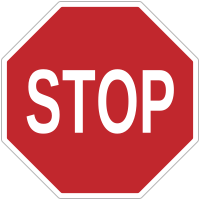
  3. Red octagon with white border and the word STOP in white

    You come to this sign. How long does the manual say to stay completely stopped, at the least?

    Three seconds The manual says to stop all forward motion for at least three seconds. That gives you time to look left, right, center and left again before you go.

  4. How close to a fire hydrant may you park, at the nearest?

    8 feet The manual lists “within 8 feet of a fire hydrant” among the places you may not park or stop. So 8 feet away is the nearest you may park.

  5. You’re 17 with a provisional license. When may you use a phone while driving, hands-free or not?

    Only in an emergency Drivers under 18 may not use a cell phone while driving, and that includes hands-free devices and speakerphones. The only exception is an emergency: pull over to a safe place and call 911.

  6. Two cars reach a four-way stop at the same time. Which one goes first?

    The car on the right At a four-way stop, cars that stopped before you go first. If two vehicles arrive at the same time, you yield the right-of-way to the vehicle on your right.

  7. Which hand signal shows that you’re about to turn right?

    Left arm up, held still All three hand signals use your left hand and arm, held still. Straight out means a left turn, up means a right turn and down means stop or slow down.
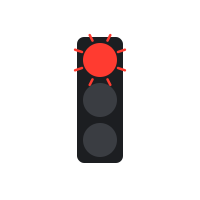
  8. Traffic signal with the red light lit and flash marks around it

    You come to this signal. What must you do?

    Make a full stop, as at a stop sign At a flashing red light, you must make a full stop and yield to vehicles on your right and left. The manual says to treat it as a stop sign.
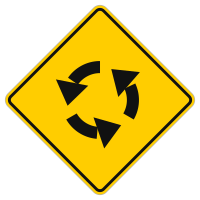
  9. Yellow diamond with three black arrows forming a counter-clockwise circle

    You see this sign. How will you travel around the center island ahead?

    Counterclockwise around it The manual says roundabouts direct traffic counterclockwise around a center island. You yield to vehicles already in the roundabout, then merge in that direction.
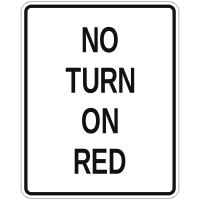
  10. White sign reading NO TURN ON RED

    You’re stopped at a red light and this sign is posted. What does it mean for you?

    Wait for green to turn right Rhode Island lets you turn right on a steady red after a full stop, unless a sign prohibits it. With this sign posted, you wait for the green light.
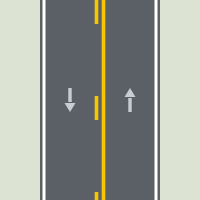
  11. Two-way road with a solid yellow line on the right-hand lane side and a broken yellow line beside it; no passing from the right-hand lane

    You’re on a two-lane road and see this center line. May you pass the car ahead?

    No, the solid line is on your side With a solid line on your side of the road and a broken line on the other, you may not pass or cross the solid line. Drivers with the broken line on their side may pass with care.

  12. A front tire blows out while you’re driving. What should you do first?

    Grip the wheel and ease off the gas The manual says to grip the wheel firmly with both hands and ease up on the accelerator. Don’t brake, because braking can cause the car to swerve.

  13. Your car stalls on railroad tracks and a train is coming. Once everyone is out, which way do you run?

    Away from the tracks, toward the coming train Run far from the tracks in the opposite direction from the way the train is moving. The debris from the crash travels the same way as the train, so you want to be on the other side.

  14. How much following distance does the manual give behind a motorcycle?

    At least four seconds The manual says to allow at least four seconds behind a motorcycle. Riders often slow down by rolling off the throttle or downshifting, which doesn’t turn on the brake light.

  15. You’re about to turn left. Which lane position does the manual tell you to use?

    Lane position 2, near the left line Lane position 2 puts your car 3 to 6 inches from the left line of your lane. The manual says to use it when you intend to turn left or when hazards are on your right.

  16. On a two-lane road with no median, a school bus coming toward you has its red lights flashing. What must you do?

    Stop until the red lights stop flashing Rhode Island requires drivers coming from either direction to stop for a school bus with flashing red lights and stay stopped until the lights stop. The exception is a bus on the other side of a divided highway.

  17. A pedestrian with a white cane is crossing the street ahead of you. What does the law require?

    Come to a full stop and yield When a pedestrian using a white cane or a guide dog is crossing or trying to cross ahead of you, you must come to a complete stop before the intersection and yield. Never assume they expect you to turn right on red after stopping.

  18. You’re driving at night with high beams on and a car comes toward you. How far away should it be when you dim them?

    At least 500 feet away The manual’s 500/200 rule says to dim your high beams at least 500 feet from an oncoming vehicle. When you follow a vehicle within 200 feet, dim them too.

  19. A police officer stops you at night. What should you do with your interior lights?

    Turn them on and leave them on If you’re stopped at night, you’re required to turn on the vehicle’s interior lights and leave them on until the officer tells you to turn them off. Leave your headlights on as well.

  20. You’re 19. At what blood alcohol concentration can you be charged with Driving While Impaired?

    .02% up to .08% Under 21, a blood alcohol concentration of .02% but less than .08% counts as Driving While Impaired (DWI). At .08% or more, any driver is charged with driving under the influence (DUI).

Sources: Rhode Island Division of Motor Vehicles and 5 more. Checked November 2026.

Rules and fees can change, so check the official site before your test.