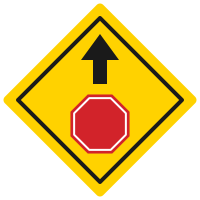
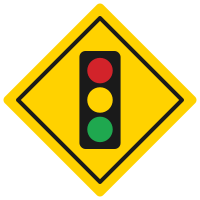
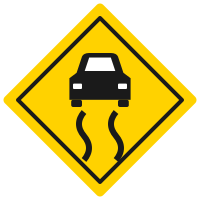
You hold a Class 7 Instruction Permit. Who must sit in the seat beside you when you drive?
A driver licensed for at least four years Your supervisor must have held a valid driver’s licence for at least four years. They sit in the front seat whenever you drive, and their blood alcohol content must be under .05.
You’re 17 and in Stage 1. When are you not allowed to drive at all?
Between 1 a.m. and 5 a.m. Stage 1 drivers under 21 may not drive between 1 a.m. and 5 a.m. At other times you can drive, as long as your supervisor is beside you and you follow the other Stage 1 rules.
In Stage 1, who may ride in the car with you?
Your supervisor and their immediate family Only the driving supervisor and that person’s immediate family are allowed in the vehicle in Stage 1. A passenger from outside the family comes later, in Stage 2.
What blood alcohol content may you have while driving on a Stage 1 permit?
Zero, every time you drive A driver in Stage 1 must have a blood alcohol content of zero. The .05 figure is the limit for your supervisor, who can’t have a blood alcohol content of .05 or more.
Two cars reach a four-way stop at about the same time, from different directions. Which one goes first?
The car on the right When two or more vehicles enter a three-way or four-way stop from different directions at about the same time, the vehicle on the left yields to the vehicle on the right. Both cars make a full stop first.
An ambulance with its siren on comes toward you as you near an intersection. What should you do?
Clear the intersection, then pull right and stop You yield to an emergency vehicle by moving clear of the intersection, driving as close as you can to the right-hand curb or edge, and stopping. Stay stopped until it has passed.
A car ahead of you has stopped at a crosswalk to let a pedestrian cross. What should you do?
Stop too, and don’t pass it The law says that when a vehicle has stopped for a pedestrian, a driver coming from behind must not pass it. The stopped driver has a clearer view of the crosswalk than you do.
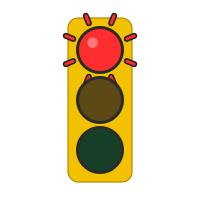
You come to an intersection with this signal. What must you do?
Stop fully, then go when it’s safe A flashing red light means you must bring your vehicle to a complete stop, and go only when it’s safe. Pedestrians may cross with caution, and they have the right of way over vehicles.
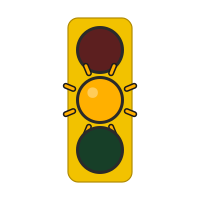
What does this signal tell you to do?
Slow down and be prepared to stop A flashing amber light means caution: slow down and be prepared to stop. At an intersection you also yield to any pedestrians in the crosswalks.
Your 14-year-old cousin is riding in your car. Who must make sure they wear a seat belt?
You, as the driver of the car The driver is responsible for making sure every passenger under 16 is wearing a seat belt, where a seat with one is available. Everyone 16 and older must wear one too.
You’re stopped at a red light and want to turn right. No sign forbids it. What may you do?
Turn after a full stop, yielding first A right turn is permitted on a red light after a complete stop, unless a sign prohibits it. You must yield to pedestrians and other traffic in or approaching the intersection.
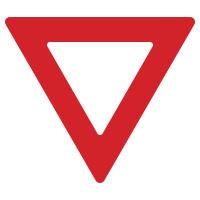
What must you do when you come to this sign?
Slow down, yield, and stop if needed At this sign you slow down, look left, right and ahead, and yield to traffic and pedestrians. You stop when you need to, to avoid them.
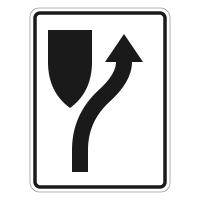
What does this sign tell you?
Keep to the right of the island This sign means the road is divided by an island, and approaching vehicles must keep to the right of it. Passing on its left would put you on the wrong side of the road.
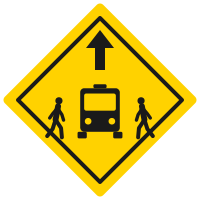
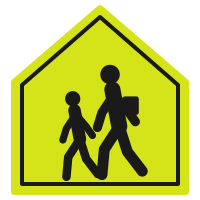
What does this sign warn you about?
A school bus stop ahead This sign warns of a school bus stop ahead. Be ready for a bus that slows or stops, and for children near the road.
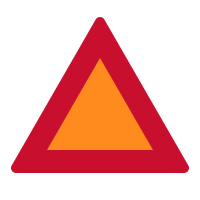
You see this sign on the back of a vehicle ahead. What does it tell you?
It can’t go faster than 40 km/h This sign goes on the back of every farm tractor and any vehicle that can’t keep up a speed over 40 km/h. Expect to slow down, and pass only when it’s safe.
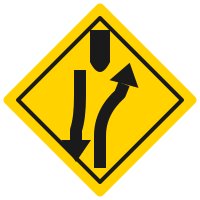
What does this sign tell you?
A divided highway begins This warning sign means a divided highway is ahead. Get ready for the road to split, and keep to the right.
In normal conditions, how far behind the vehicle ahead should you follow?
At least three seconds The handbook’s time-interval method says to follow at least three seconds behind in normal conditions. Allow more when you pull a trailer, follow a motorcycle, or drive in bad weather.
A school bus ahead of you has stopped with its red lights flashing. What must you do?
Stop, and wait until the red lights stop You must stop for a school bus with its red lights flashing, whether you’re behind it or coming toward it. Stay stopped until the red lights stop flashing, because passing it then is illegal.
In a single-lane roundabout, you’re going straight through. How do you signal?
No signal to enter; signal right to exit Vehicles going straight must not signal before entering a roundabout. They should signal right before exiting.
Your car starts to skid because you braked too hard. What should you do?
Ease off the brakes and steer into the skid If a skid is caused by slamming on the brakes, ease off the brakes and steer in the direction the rear end is skidding. Don’t oversteer.
 Prince Edward Island · Permit test