United Kingdom · Theory test

UK driving theory test

The DVSA car theory test is two parts taken one after the other at a test centre: 50 multiple-choice questions, where you need 43 right, then 14 hazard perception clips, where you need 44 out of 75. It costs £23 and it’s for learners in England, Scotland and Wales. Pass both in the same sitting and the pass is good for 2 years, which is how long you have to pass the practical driving test.

  • 50Multiple-choice questions in 57 minutes
  • 43Correct answers needed out of 50
  • 14Hazard perception video clips
  • 44Points needed out of 75 in hazard perception

Key facts

At a glance

Minimum age
17 (16 if you get the higher rate of PIP mobility)
Fee
£23, booked on GOV.UK
Languages
English or Welsh, or British Sign Language

How it works

How the theory test works: 50 questions, then 14 hazard clips

  1. The car theory test has two parts: multiple-choice questions and hazard perception. You book and take them together, on the same day, at a theory test centre.
  2. You have 57 minutes to answer 50 multiple-choice questions on a computer. Three of them are about a short, silent video clip that you can watch as many times as you like.
  3. You can flag questions to come back to, and change any answer until you finish. You need 43 out of 50 to pass this part.
  4. You can then take a break of up to 3 minutes before the hazard perception part starts.
  5. In hazard perception you watch 14 video clips of everyday road scenes. Click as soon as you see a hazard starting to develop. Each one is worth up to 5 points, and you need 44 out of 75.
  6. You only get one go at each clip, and clicking constantly or in a pattern scores zero for that clip.
  7. You must pass both parts in the same sitting. You get your result at the test centre before you leave.

Topics

What’s on the test

01

Alertness and attitude

Paying attention, avoiding distractions and driving with patience and courtesy towards everyone else.

Key points (4)
  • You must not pick up and use a hand-held phone while driving, including when you’re stationary in traffic.
  • Use the mirrors, signal, manoeuvre routine before you move off, change lanes, turn or stop.
  • Only flash your headlights to let others know you’re there. Never treat a flash as an invitation to go.
  • Use the horn only to warn others of your presence, and not in a built-up area between 11.30pm and 7am unless another road user poses a danger.
02

Speed and safety margins

Speed limits, the two-second rule, stopping distances and how weather changes them.

Key points (4)
  • National limits for cars: 30 mph in built-up areas (20 mph in Wales), 60 mph on single carriageways, 70 mph on dual carriageways and motorways.
  • Leave at least a two-second gap on fast roads, at least double that in the wet, and up to ten times more on ice.
  • Drive at a speed that lets you stop well within the distance you can see to be clear.
  • Use headlights when visibility is seriously reduced, generally under 100 metres. Switch fog lights off when it improves.
03

Hazards and fitness to drive

Spotting developing hazards early, and being fit to drive: eyesight, tiredness, alcohol, drugs and health.

Key points (4)
  • You must be able to read a number plate in good daylight from 20 metres, with glasses or lenses if you need them.
  • Take a break of at least 15 minutes after every two hours of driving.
  • You must tell DVLA about any health condition likely to affect your driving.
  • A developing hazard is something that would make you change speed or direction, like a pedestrian about to step out.
04

Vulnerable road users

The hierarchy of road users, and how to give pedestrians, cyclists, horse riders, children and older people the care they need.

Key points (4)
  • Those who can do the most harm, such as drivers of larger vehicles, have the greatest responsibility to take care.
  • At a junction, give way to pedestrians crossing or waiting to cross the road you’re turning into or out of.
  • Leave at least 1.5 metres when overtaking cyclists at up to 30 mph, and more at higher speeds.
  • Pass horse riders at under 10 mph and leave at least 2 metres.
05

Rules of the road and junctions

Traffic lights, roundabouts, crossings, box junctions, overtaking and parking.

Key points (4)
  • Amber means stop at the line, unless you’ve crossed it or are too close to stop safely.
  • At roundabouts, give priority to traffic coming from your right unless signs or markings say otherwise.
  • Don’t enter a box junction until your exit is clear, unless you’re turning right and only oncoming traffic is stopping you.
  • Don’t park within 10 metres of a junction, and don’t park facing against the traffic at night.
06

Motorway rules

Joining, lane discipline, signals, smart motorway signs and what to do if you break down.

Key points (4)
  • Keep in the left lane unless you’re overtaking, and don’t overtake on the left.
  • A red X above a lane means it’s closed. You must not drive in it.
  • You must not use the hard shoulder except in an emergency, or when signs show it’s open as a lane.
  • Learner drivers can only drive on a motorway with an approved driving instructor, in a car with dual controls and L plates.
07

Road signs and markings

What sign shapes and colours mean, direction signs and the white and yellow lines on the road.

Key points (4)
  • Red circles mostly tell you what you must not do. Blue circles mostly tell you what you must do.
  • Triangles warn, and rectangles give information or directions.
  • Direction signs are blue for motorways, green for primary routes, white for local routes and brown for tourist destinations.
  • Where a double white line is solid on your side, you must not cross or straddle it except in the cases the Code allows.
08

Your vehicle, loads and documents

Keeping your car safe and legal, carrying passengers and loads, and the documents you need.

Key points (4)
  • Car tyres must have at least 1.6 mm of tread across the central three-quarters, all the way round.
  • Children under 1.35 metres tall must normally use a suitable child seat or booster.
  • A rear-facing baby seat must never go in a seat with an active frontal airbag.
  • You need at least third-party insurance, and cars normally need an MOT at three years old, then every year.
09

Breakdowns, incidents and first aid

What to do if you break down, come across a crash or need to help someone who’s hurt.

Key points (4)
  • Place a warning triangle at least 45 metres behind your car on the same side of the road, but never on a motorway.
  • Use your hazard lights, keep uninjured people away from traffic, and don’t move casualties unless they’re in danger.
  • First aid follows DR ABC: danger, response, airway, breathing, circulation. Cool burns for at least 20 minutes.
  • If you’re involved in a collision and don’t swap details at the scene, report it to the police within 24 hours.

Road signs

Learn the shape first, then the words

In the UK, the shape of a sign tells you its job before you read it: circles give orders, triangles warn and rectangles inform. These are the signs from the Highway Code and Know Your Traffic Signs that come up most in the theory test.

  • Red octagon with a white border and the word STOP in white.Stop: stop fully at the line, then go when it’s safe
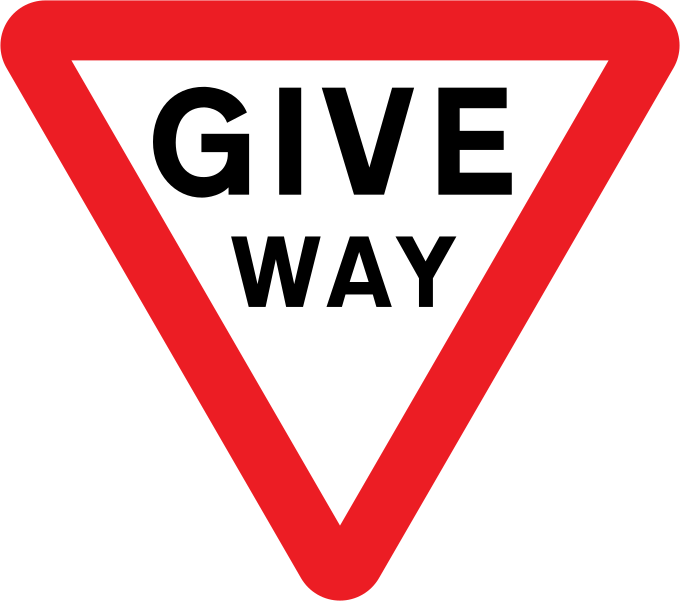
  • Upside-down white triangle with a red border and the words GIVE WAY in black.Give way to traffic on the major road
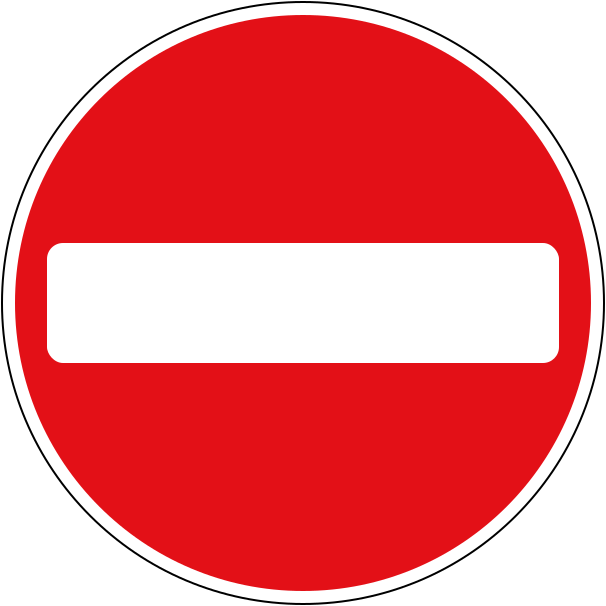
  • Red circle with a thick white horizontal bar across the middle.No entry for vehicles
  • White circle with a black diagonal band running from top right to bottom left.National speed limit: 60 mph or 70 mph for a car, by road type
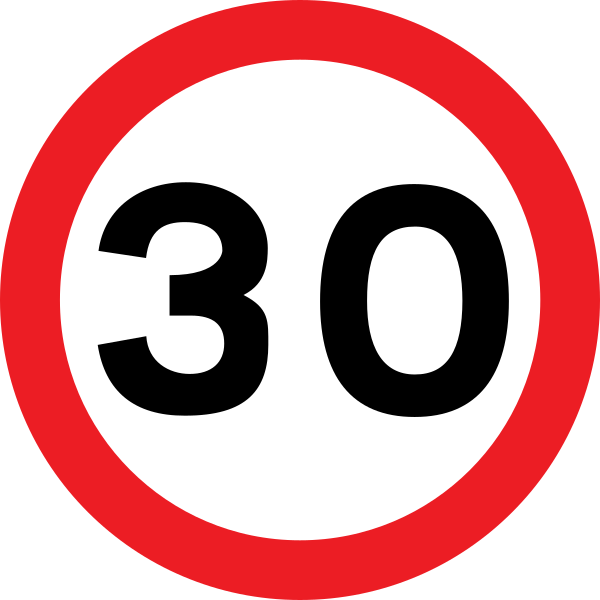
  • White circle with a red border and the number 30 in black.Maximum speed 30 mph
  • White circle with a red border showing a black car beside a red car.No overtaking
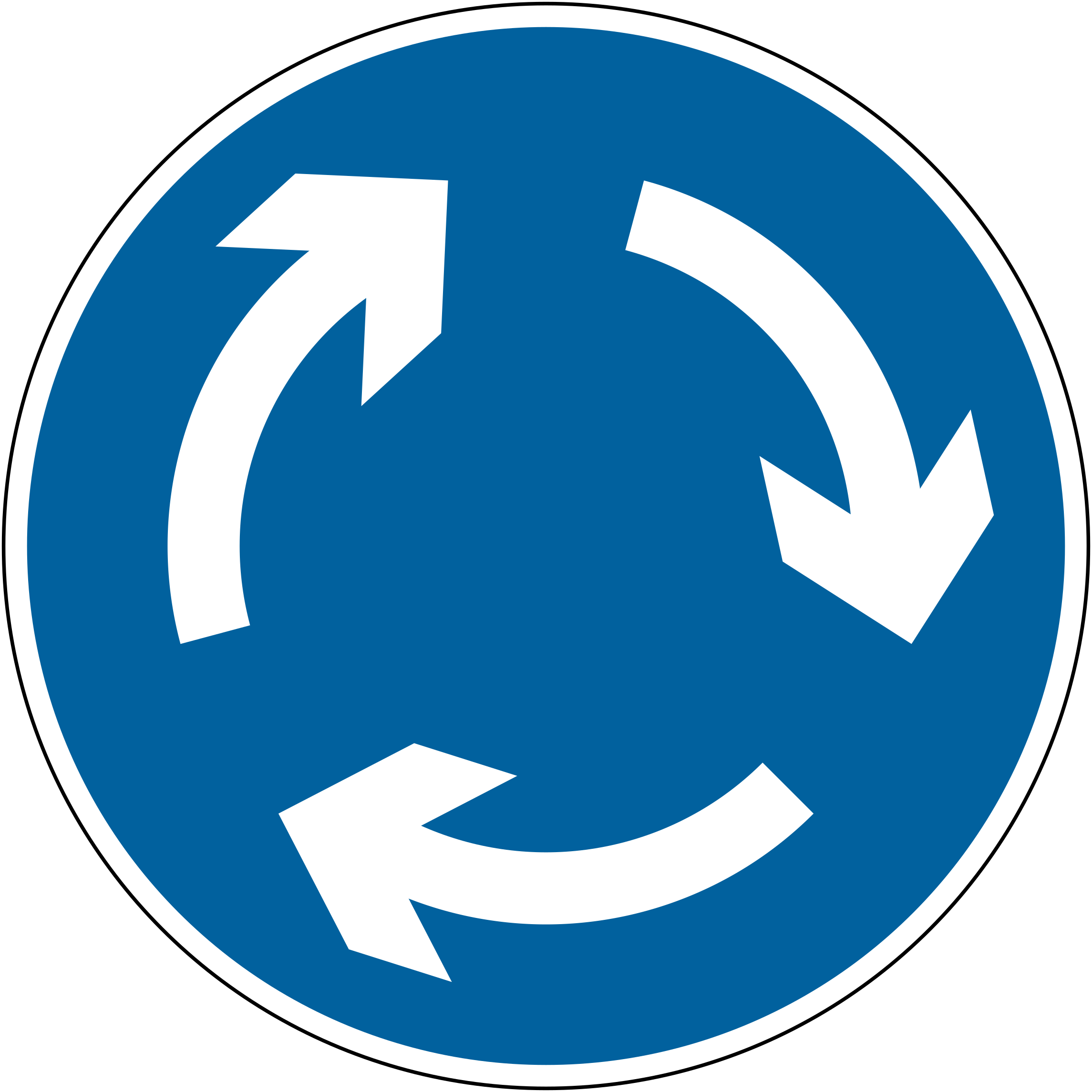
  • Blue circle with three white curved arrows going round clockwise.Mini-roundabout: give way to traffic from the right
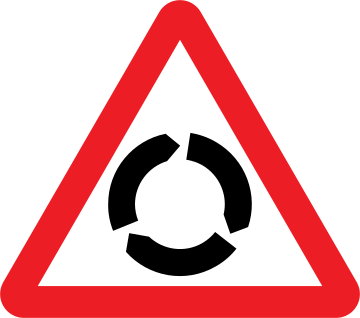
  • Red-bordered white triangle with three black curved arrows forming a circle.Roundabout ahead
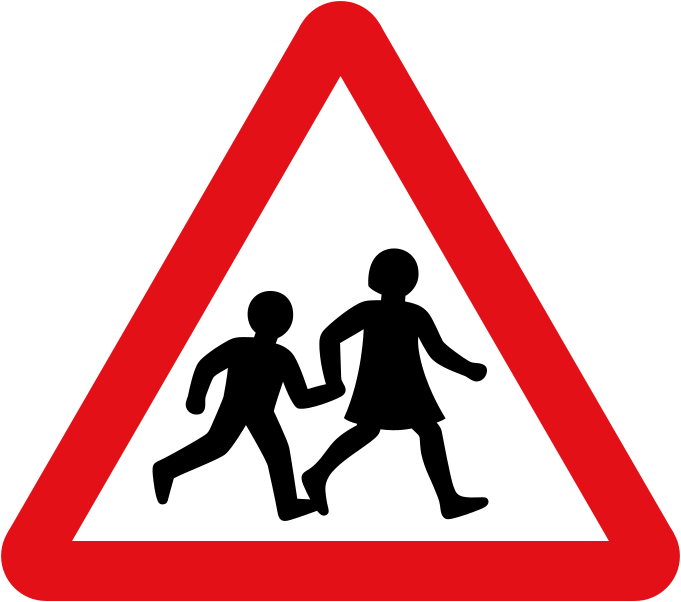
  • Red-bordered white triangle with two black children running side by side.Children going to or from school
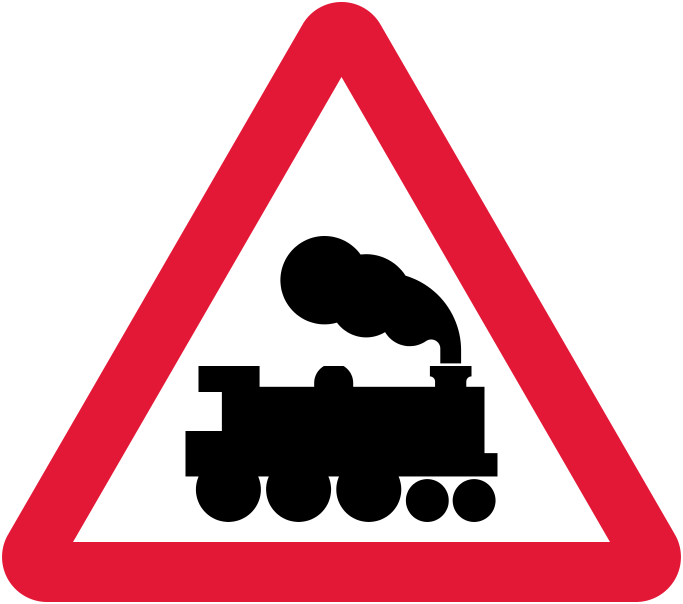
  • Red-bordered white triangle with a black steam train.Level crossing without a barrier or gate
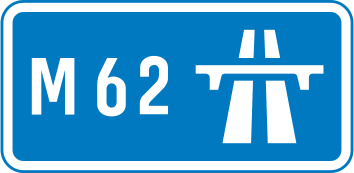
  • Blue rectangle with M62 in white and the white motorway symbol of a road passing under a bridge.Start of motorway: motorway rules apply

Free practice test

Try 20 multiple-choice questions

These 20 questions cover the multiple-choice part only, not hazard perception. The real test has 50 and you need 43 right, which is 86%. Here are 20 in the same four-option style at the same bar, so 18 right is a pass. Each answer names the Highway Code rule it comes from, so when you get one wrong you know exactly which rule to reread.

Question 1 of 20

You’re stuck in a queue of stationary traffic when your hand-held phone rings. What should you do?

Sample of the theory test: same format, 20 questions.

Test day

What to take to the test centre

  • Your UK photocard driving licence (provisional). Without it, the test is cancelled and you lose the fee.
  • If you have an old paper licence, bring a valid passport with it.
  • If your name has changed, proof such as a marriage certificate or deed poll.
  • Glasses or contact lenses if you need them to read a screen.

Before you go

  1. Get your provisional driving licence first. You can apply from 15 years and 9 months old.
  2. Book on GOV.UK, and say when you book if you need extra time, a voiceover, BSL or other support.
  3. Study the Highway Code, Know Your Traffic Signs and Driving - the essential skills. The questions are based on these three books.
  4. Try DVSA’s free practice test and the free hazard perception clips on GOV.UK.
  5. Check your appointment details, and give at least 3 full working days’ notice if you need to change it.
  6. Arrive at least 15 minutes early. If you’re late, the test is cancelled and you lose your money.
  7. Expect to put phones, watches, bags and coats in a locker, and to go through ID and security checks.
GOV.UK: Book your theory testBooking costs £23 for a car theory test, as of October 2026. You need your provisional licence number, an email address and a debit or credit card.

Study options

Where to study

The questions are based on three official books: the Highway Code, Know Your Traffic Signs and Driving - the essential skills. The first two are free on GOV.UK, and so is DVSA’s practice test. What the free material is short on is hazard practice, with only 3 official clips, so that’s mostly what the paid apps below add.

OptionPriceFree to useLinks
Official and free
The Highway CodeOfficial · webThe main book the multiple-choice questions are based on. Read it on GOV.UK, section by section. Start with the hierarchy of road users, general rules and using the road.
FreeThe whole Code
Know Your Traffic SignsOfficial · PDFDVSA’s full guide to signs and road markings, the 2023 edition. It’s long, so use it to look things up rather than reading it cover to cover.
Free to download (paid print copy available)The full 172-page PDF
DVSA practice theory testOfficial · webDVSA’s own practice test. The questions aren’t used in the real test but cover the same topics. Only 3 hazard clips, so you’ll want more from an app before the day.
FreePractice multiple-choice tests and 3 hazard perception clips
Apps and websites
Official DVSA Theory Test KitOfficial app · iPhone and AndroidMade by TSO, DVSA’s official publisher, and linked from GOV.UK. Revision questions, mock tests and hazard perception practice. 4.5 stars from about 16,000 ratings on the UK App Store.
£5.49 on iPhone, with £4.99 add-onsThe Highway Code inside the app
DVSA Hazard PerceptionOfficial app · iPhone30 official DVSA hazard clips with feedback showing where the most points were. Useful if hazard perception is your weak spot. Only 3.4 stars from about 200 ratings, though.
£2.99-
Official DVSA Theory Test Kit (PC and Mac)Official · web subscriptionThe online version of DVSA’s kit, sold on DVSA’s Safe Driving for Life shop. Mock tests, the Highway Code, a hazard perception guide and a voiceover option.
£15 for 30 days, £20 for 90 days, £30 for a year-
Driving Theory Test 4 in 1 KitApp · iPhone and AndroidThe most-rated UK theory app: 4.8 stars from about 395,000 ratings on the UK App Store. DVSA revision questions, mock tests, 85 hazard clips and the Highway Code. Made by Driving Test Success.
£5.99 on iPhone, with optional upgrades from £3.99-
ZutobiApp · iPhone and AndroidGame-style practice with the DVSA revision questions and a short version of the Highway Code. 4.6 stars from about 9,700 ratings on the UK App Store. The store listing doesn’t mention hazard perception.
Free download, paid upgrades from £2.99 to £12.99The download. The listing doesn’t say what’s free after that
Theory Test ProWebA theory and hazard practice website that driving instructors can subscribe to for their pupils. If your instructor subscribes, ask them for free access. Some councils, such as East Sussex, offer it free with a library card.
£7 a week, £10 for 3 months, £20 for a yearFree through some instructors and public libraries
Video
Theory and hazard perception videos on YouTubeVideo · freeGood for watching hazard clips explained and hearing questions talked through. They’re unofficial, so check anything surprising against the Highway Code.
Free (ads)Everything
In person
Approved driving instructorsLocalInstructors mostly teach the driving itself, but many will help with hazard perception and give you access to a theory site. Use GOV.UK to find one near you.
Set by each instructor-

Prices and ratings checked October 2026.

FAQ

Common questions

What’s the pass mark for the theory test?

You need 43 out of 50 in the multiple-choice part and 44 out of 75 in hazard perception. You have to pass both parts in the same sitting. If you fail one, you take the whole test again, even the part you passed.

How much is the theory test?

It’s £23 for a car theory test, as of October 2026. The practical driving test is separate: £62 on a weekday, or £75 for evenings, weekends and bank holidays. Book only on GOV.UK so you pay the official price.

How long is the theory test, and how much time do you get?

You get 57 minutes for the 50 multiple-choice questions. Then there’s a break of up to 3 minutes if you want it, followed by the 14 hazard perception clips. Get to the centre at least 15 minutes early, because staff check your ID and pockets before you go in.

What do I need to bring to my theory test?

Bring your UK photocard driving licence. If you still have an old paper licence, bring a valid passport too. Forget it and the test is cancelled, and you won’t get your money back. Phones, bags, coats and watches go in a locker, so you don’t need a pen or anything else.

What age can you take your theory test?

From your 17th birthday. If you get, or have applied for, the higher rate of the mobility part of Personal Independence Payment, you can take it from 16. You need a provisional licence first, and you can apply for that from 15 years and 9 months.

Can I take the theory test online?

No. You book online, but you sit the test on a computer at a theory test centre. You can practise online for free, though. DVSA has a free practice test and 3 free hazard perception clips on GOV.UK.

How long is a theory test pass valid for?

2 years from the day you pass. You need to pass your practical driving test within that time, or you’ll have to take the theory test again and pay another £23.

Who runs the official theory test, the DVLA or the DVSA?

DVSA, the Driver and Vehicle Standards Agency, runs the theory and practical driving tests. DVLA is the licensing agency: it issues your provisional and full licence and keeps your driver record. Both are on GOV.UK, which is where you book, change or cancel the test. In Northern Ireland, the DVA runs the tests instead.

Is the theory test hard?

More people fail than pass. DVSA’s figures show 44.8% of car theory tests were passed between April 2025 and March 2026. The questions aren’t tricky, but you need 43 out of 50 and many people go in having only skimmed the Highway Code. Hazard perception catches people out too, so practise clips as well as questions.

All 20 practice questions with answersA printable list of the practice test above
  1. You’re stuck in a queue of stationary traffic when your hand-held phone rings. What should you do?

    Leave it until you’ve parked somewhere safe and legal You must not pick up and use a hand-held phone while driving, and that includes sitting still in traffic. Let it ring, or let it go to voicemail, and call back once you’ve parked safely.

  2. You’re waiting at a junction and a driver on the main road flashes their headlights at you. What does the Highway Code say this means?

    Only that they’re letting you know they’re there The Highway Code says you should only flash your headlights to let other road users know you’re there. Never take it as a signal to go. Make your own decision about whether it’s safe.

  3. On a dry, fast road, what’s the smallest gap the Highway Code says you should leave behind the vehicle in front?

    Two seconds On high-speed roads you should leave at least a two-second gap behind the vehicle in front. That gives you time to react and brake if it slows down suddenly.

  4. It’s raining heavily. How should you change the two-second gap you leave on dry roads?

    At least double it On wet roads your tyres grip less, so stopping takes longer. The Highway Code says the gap should be at least doubled in the wet, so leave at least four seconds.
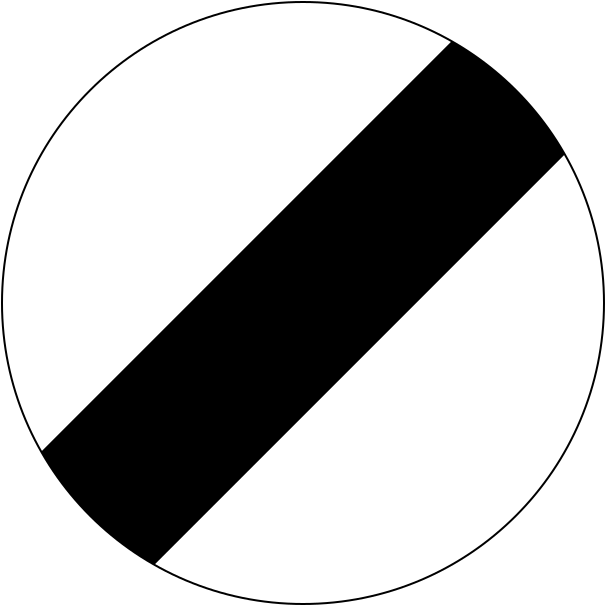
  5. White circle with a black diagonal band running from top right to bottom left.

    You’re driving a car on a single carriageway road and pass this sign. What’s the fastest you may drive?

    60 mph This is the national speed limit sign. For a car on a single carriageway road, the national limit is 60 mph. On a dual carriageway or motorway it’s 70 mph. It’s a limit, not a target, so drive slower when the road or weather calls for it.

  6. You’re planning a long drive. How often does the Highway Code recommend taking a break?

    At least 15 minutes after every two hours of driving The Highway Code recommends a break of at least 15 minutes after every two hours of driving. Tiredness creeps up on you, so plan the breaks before you set off.

  7. What eyesight standard must every driver meet, with glasses or contact lenses if needed?

    Read a number plate from 20 metres in good daylight You must be able to read a vehicle number plate, in good daylight, from 20 metres. If you need glasses or contact lenses to do that, you must wear them every time you drive.

  8. You’re driving at 30 mph and want to overtake a cyclist. How much space should you leave, at least?

    1.5 metres Leave at least 1.5 metres when you overtake a cyclist at speeds of up to 30 mph. Give them more space at higher speeds. If you can’t leave that much room, wait behind until you can.

  9. You come up behind a horse rider on a narrow road. How should you pass them, when it’s safe to do so?

    At under 10 mph, leaving at least 2 metres Pass horse riders at speeds under 10 mph and allow at least 2 metres of space. Horses can be startled and move suddenly, so go slowly and give them plenty of room.

  10. You’re turning left into a side road. A pedestrian is waiting to cross that side road. What should you do?

    Give way and let them cross At a junction you should give way to pedestrians who are crossing or waiting to cross the road you’re turning into or out of. This rule came in with the 2022 changes to the Highway Code.

  11. The traffic lights change from green to amber as you approach. You’re not yet at the stop line and can stop safely. What must you do?

    Stop at the white stop line Amber means stop. You must stop at the white stop line unless you’ve already crossed it, or you’re so close that stopping might cause a crash.

  12. You come to a box junction with yellow criss-cross lines. You want to go straight ahead. When can you enter the box?

    Only when your exit road or lane is clear You must not enter a box junction until your exit road or lane is clear. The one exception is turning right, where you may wait in the box if only oncoming traffic or other right-turning vehicles are stopping you.

  13. You’re on a three-lane motorway with light traffic. Which lane should you normally drive in?

    The left-hand lane, unless you’re overtaking Keep in the left lane unless you’re overtaking. Once you’ve passed the slower vehicles, move back to the left when it’s safe.

  14. On a motorway you see a red X on the sign above your lane. What does it mean?

    The lane is closed. Don’t drive in it, and move to an open lane A red X means the lane is closed. You must not drive in it. Follow the signs and move into an open lane in good time.
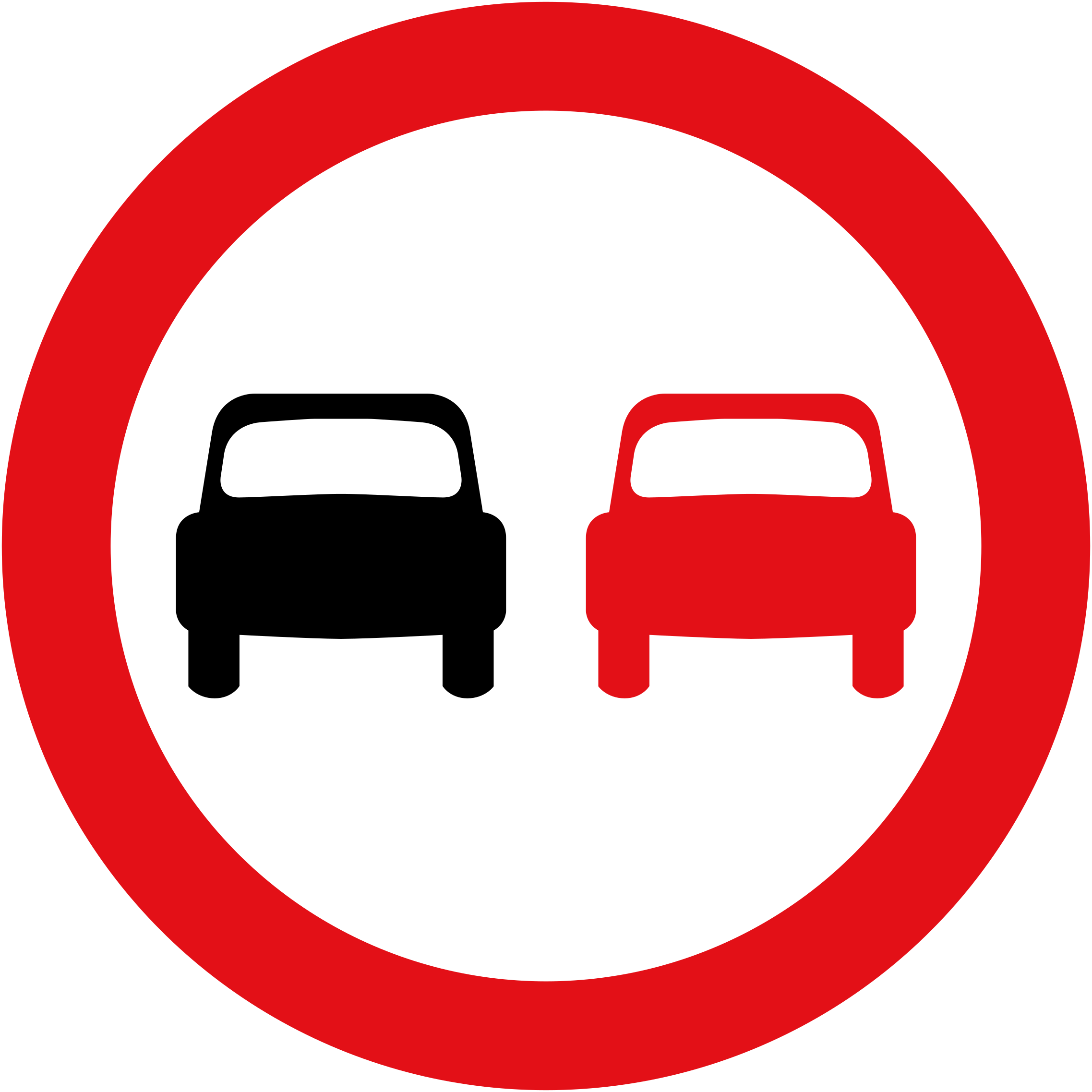
  15. White circle with a red border showing a black car beside a red car.

    What does this sign tell you?

    You must not overtake This is the no overtaking sign. A red circle gives an order, and most red circle signs tell you what you must not do. Here, you must not overtake until a sign shows the restriction has ended.
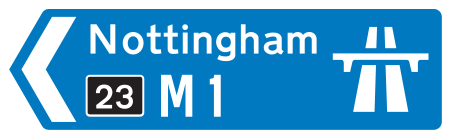
  16. Blue sign pointing left with Nottingham, a junction number 23 in a black box, M1 and the motorway symbol in white.

    What does the colour of this direction sign tell you?

    It leads to a motorway Blue direction signs are for motorways. This one points the way to the M1 at junction 23. Green signs are for primary routes, white signs for local routes and brown signs for tourist destinations.

  17. What’s the minimum legal tyre tread depth for a car in Great Britain?

    1.6 mm across the central three-quarters of the tread, all the way round Cars must have at least 1.6 mm of tread across the central three-quarters of the tread, around the whole tyre. Less than that is illegal and makes the car much harder to stop in the wet.

  18. When does a car normally need its first MOT test?

    Three years after it’s first registered Cars must normally pass an MOT three years from the date they were first registered, then every year after that.

  19. Your car breaks down on an ordinary two-way road, not a motorway. Where should you place a warning triangle, if you have one and it’s safe?

    At least 45 metres behind your car, on the same side of the road Put a warning triangle on the same side of the road, at least 45 metres behind your broken-down vehicle. Never use one on a motorway.

  20. Someone at a crash scene has a burn. How long should you cool it with clean, cool water?

    At least 20 minutes The Highway Code says to cool a burn for at least 20 minutes with plenty of clean, cool water. Don’t try to remove anything that’s stuck to the burn.