United Kingdom · Theory test

All the road signs for the theory test, by shape and colour

You don’t have to learn all the road signs for the theory test one by one. Start with shape and colour. In the UK, circles give orders, triangles warn and rectangles inform, so you can work out most signs before you read a word. The full set is in Know Your Traffic Signs, free on GOV.UK.

Shapes and colours

What you seeWhat it usually meansExample
Red circleSomething you must not doNo entry, no U-turn, a speed limit
Blue circle, no red borderSomething you must doTurn left ahead, keep left
Red triangleA warning about what’s aheadBend, school, roundabout ahead
RectangleInformation or directionsPlace names, parking, one-way street

Signs giving orders: red circles

A red ring means “don’t”. These signs ban something, like turning, overtaking or a type of vehicle, and a plate underneath can add times or exceptions. Two signs break the pattern on purpose: Stop is eight-sided and Give way is an upside-down triangle, so you can spot them even from behind or under snow.
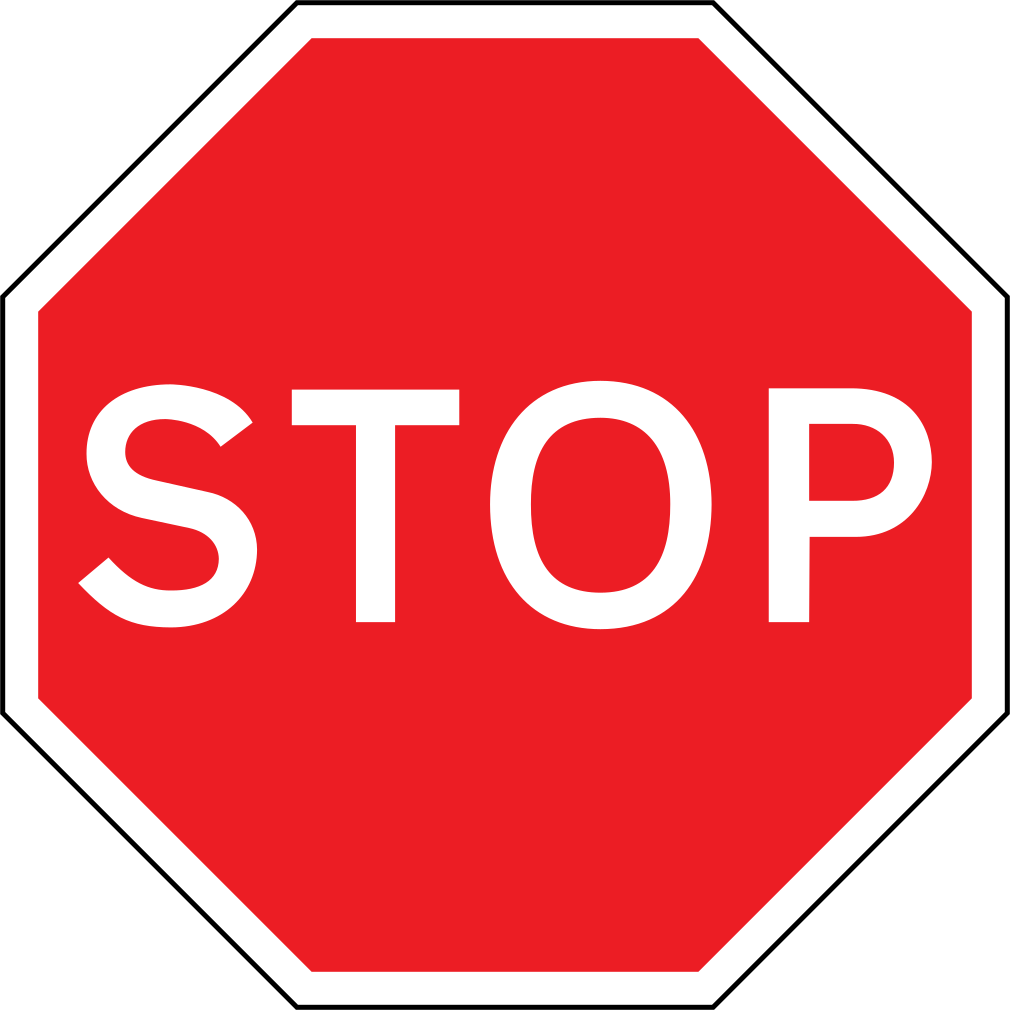
  • Red octagon with a white border and the word STOP in white.Stop: stop fully at the line, then go when it’s safe
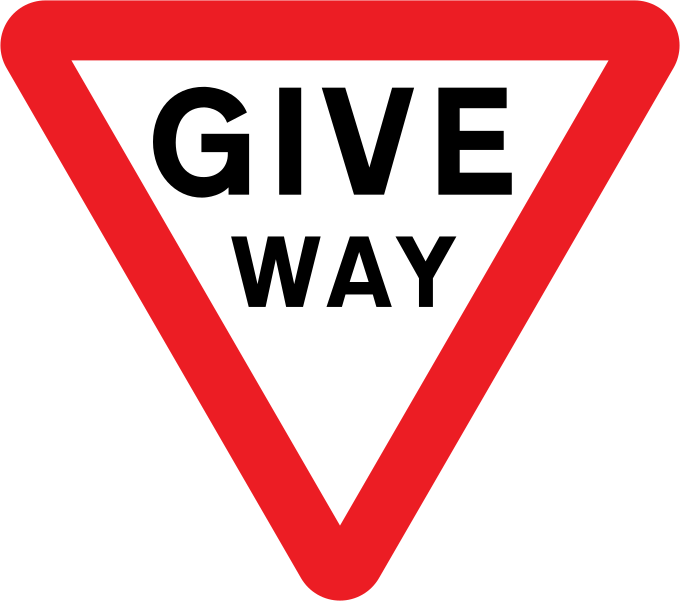
  • Upside-down white triangle with a red border and the words GIVE WAY in black.Give way to traffic on the major road
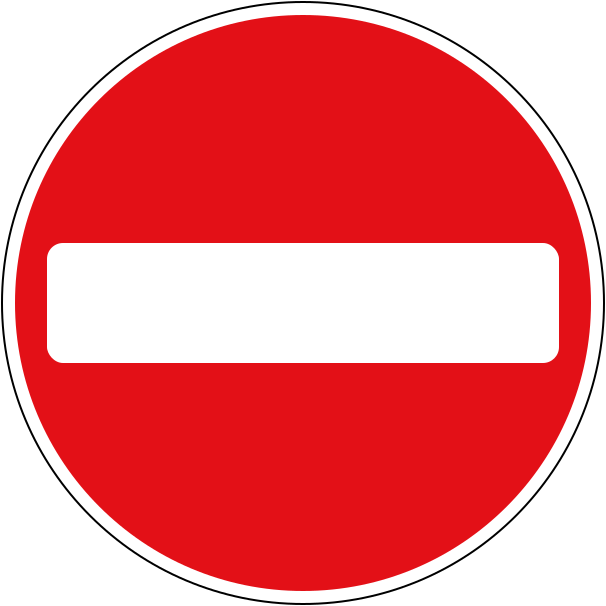
  • Red circle with a thick white horizontal bar across the middle.No entry for vehicles
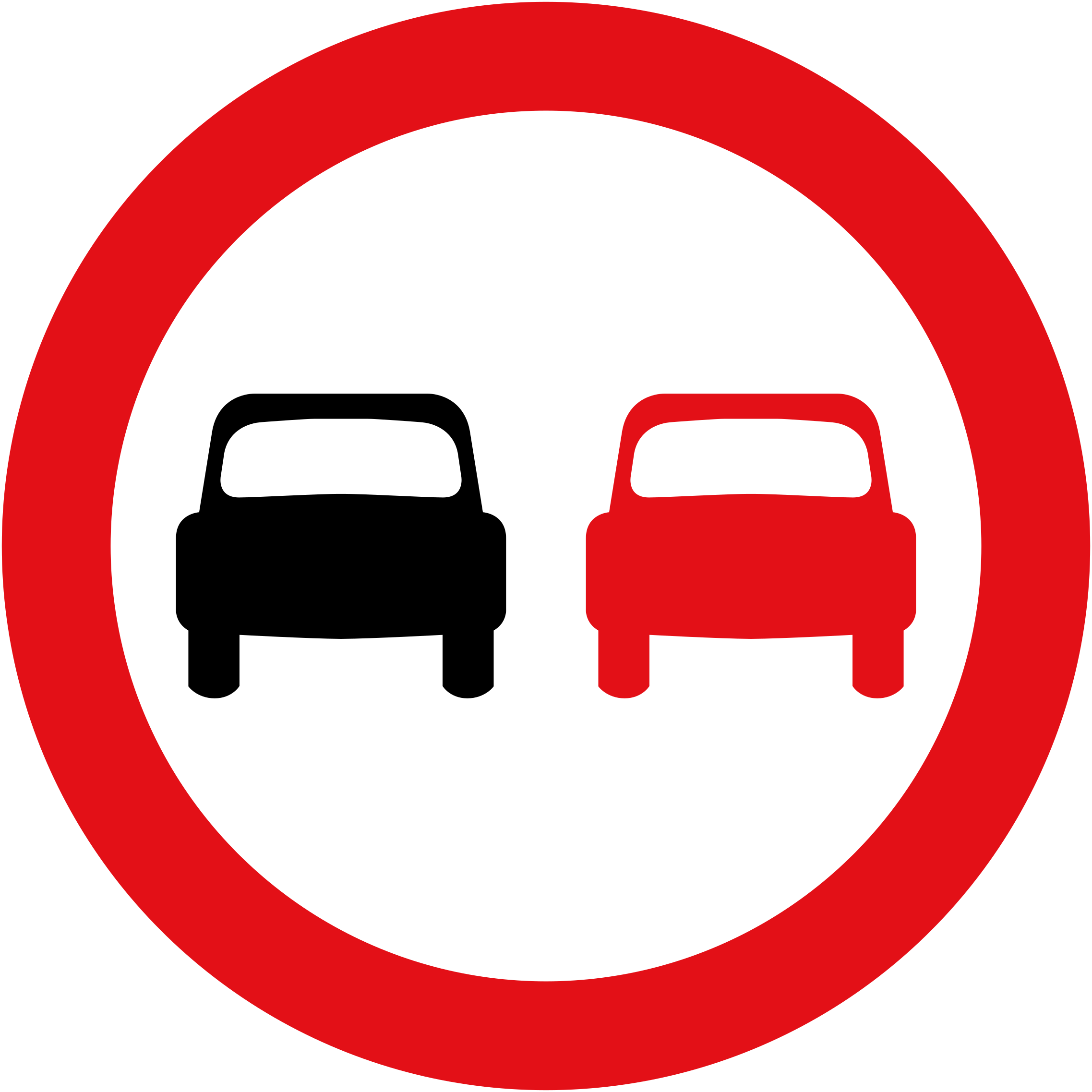
  • White circle with a red border showing a black car beside a red car.No overtaking
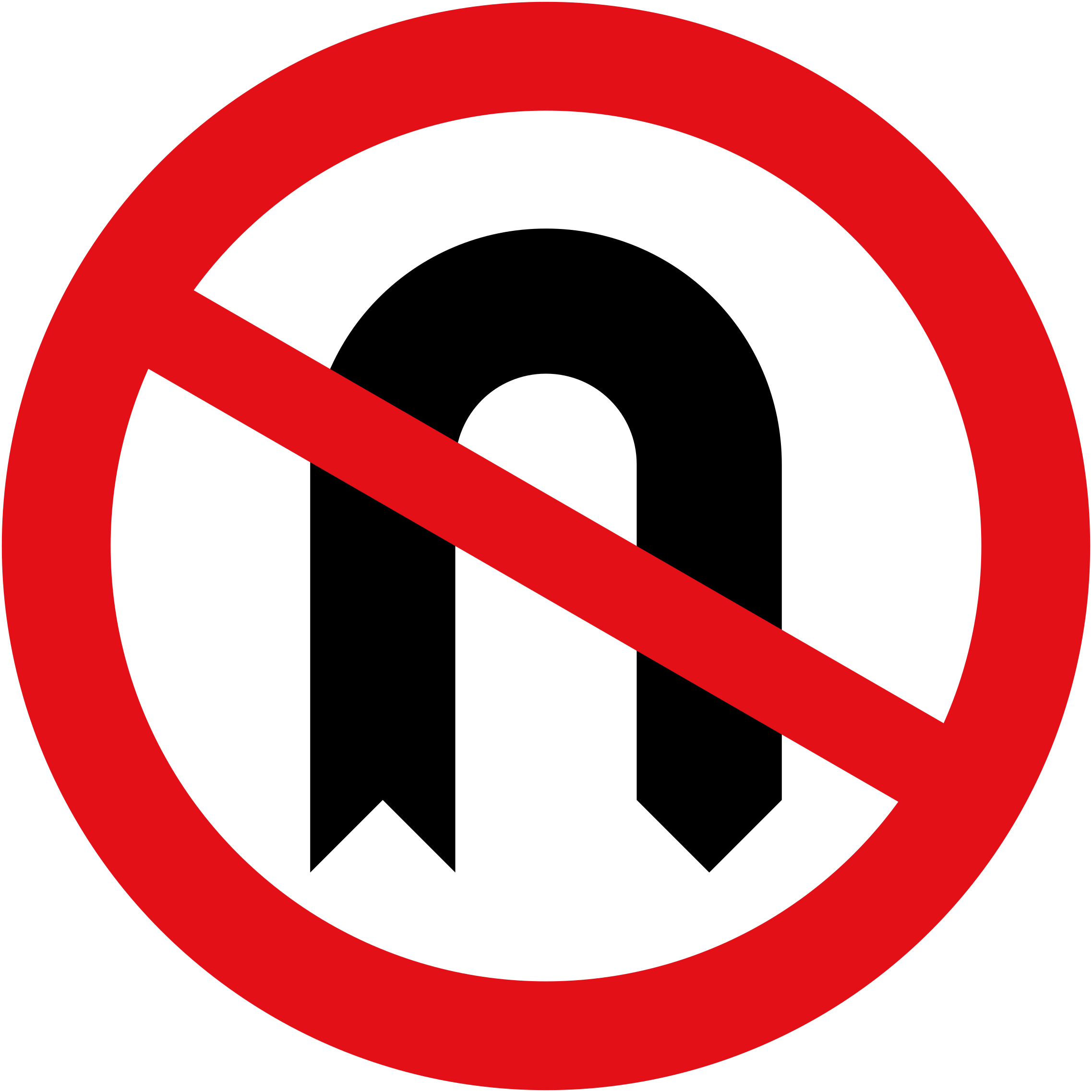
  • White circle with a red border and a black U-shaped arrow crossed by a red diagonal bar.No U-turns
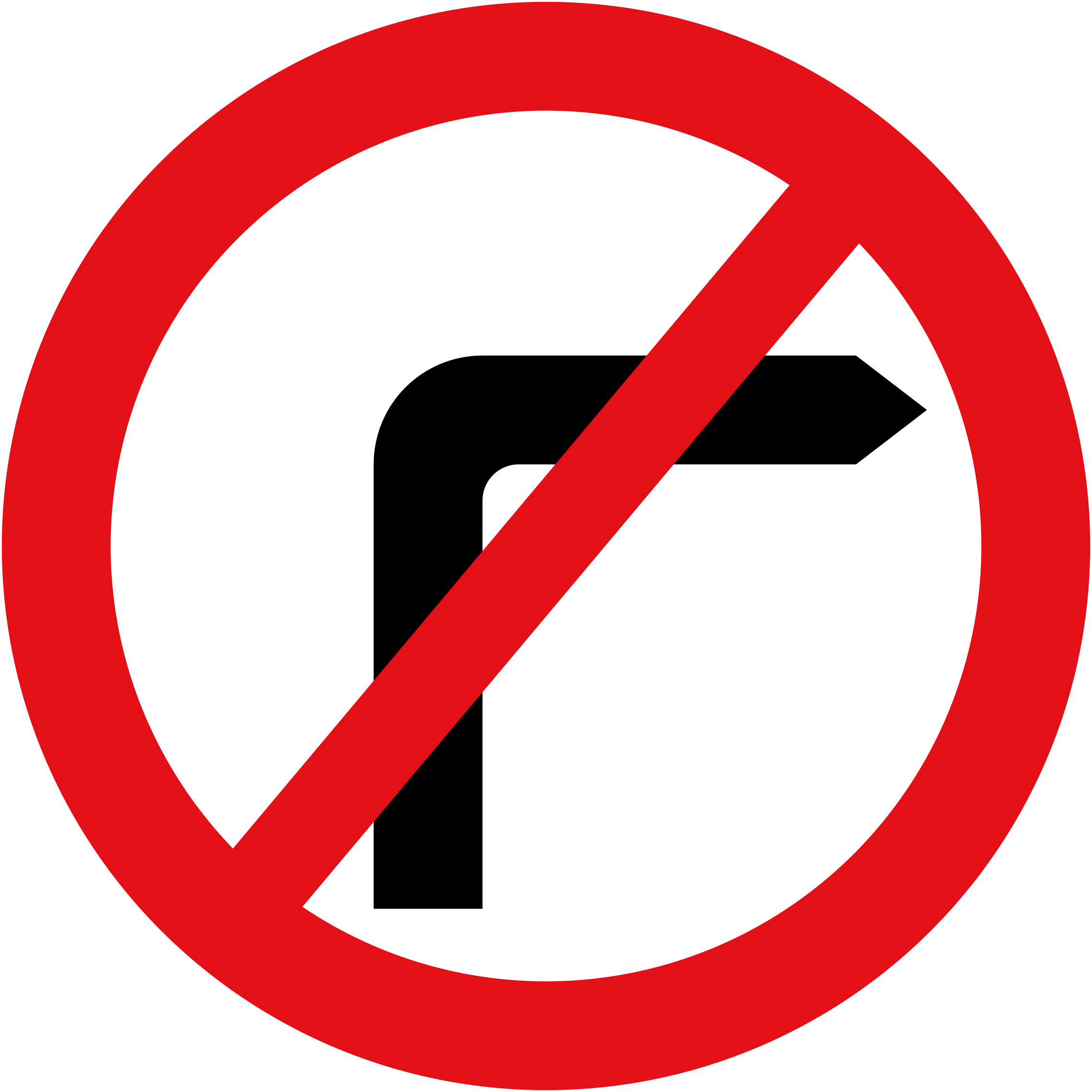
  • White circle with a red border and a black arrow bending to the right, crossed by a red diagonal bar.No right turn
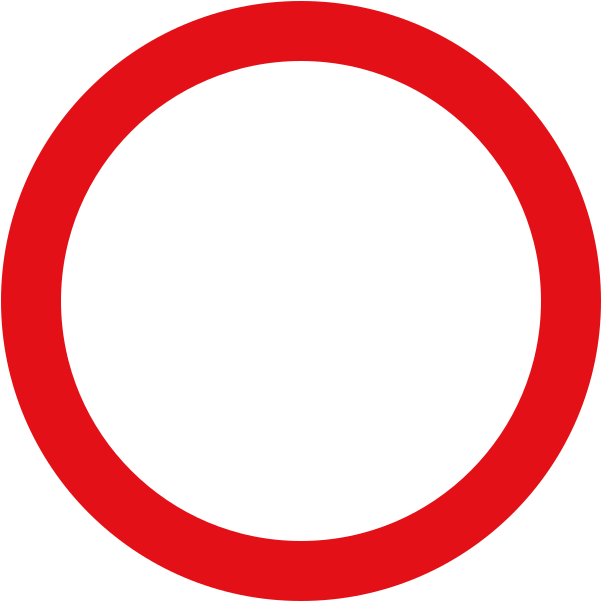
  • Plain white circle with a thick red border and nothing inside.No vehicles, except bicycles being pushed
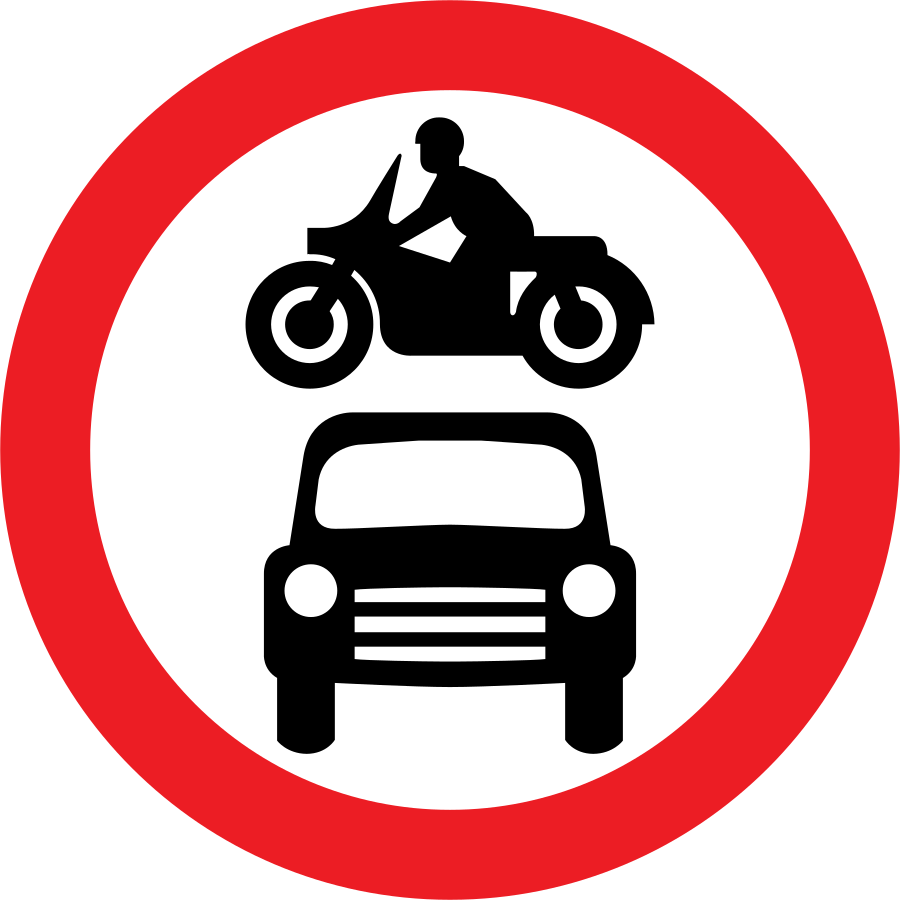
  • White circle with a red border showing a black motorcycle above a black car.No motor vehicles
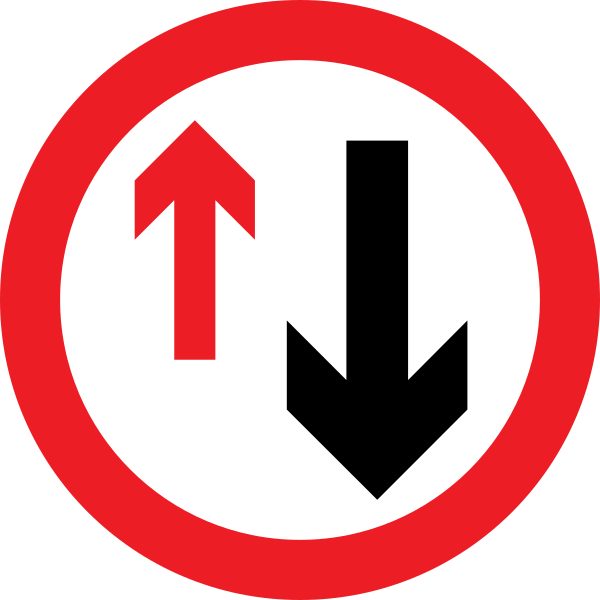
  • White circle with a red border showing a small red arrow pointing up and a large black arrow pointing down.Give way to oncoming traffic
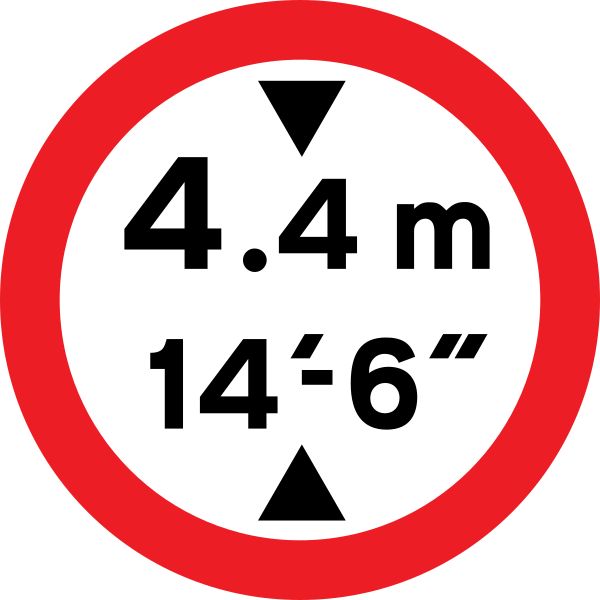
  • White circle with a red border showing 4.4 m and 14 feet 6 inches between two black pointers.No vehicles taller than the height shown
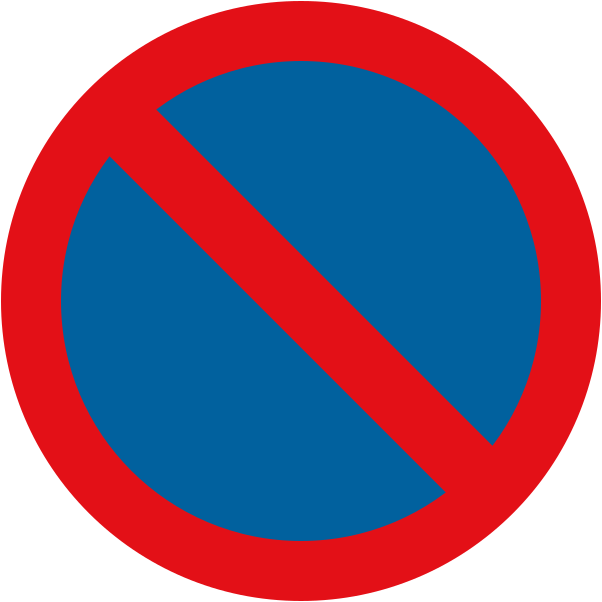
  • Blue circle with a red border and a single red diagonal bar.No waiting during the times shown
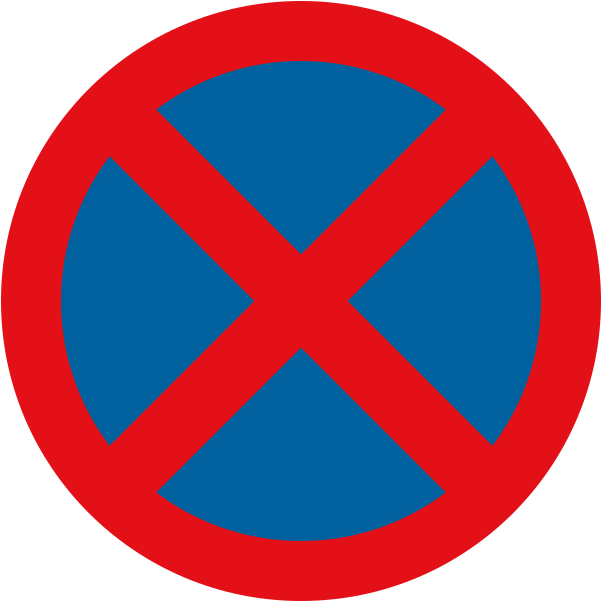
  • Blue circle with a red border and a red X across it.No stopping (clearway)

Speed limit signs

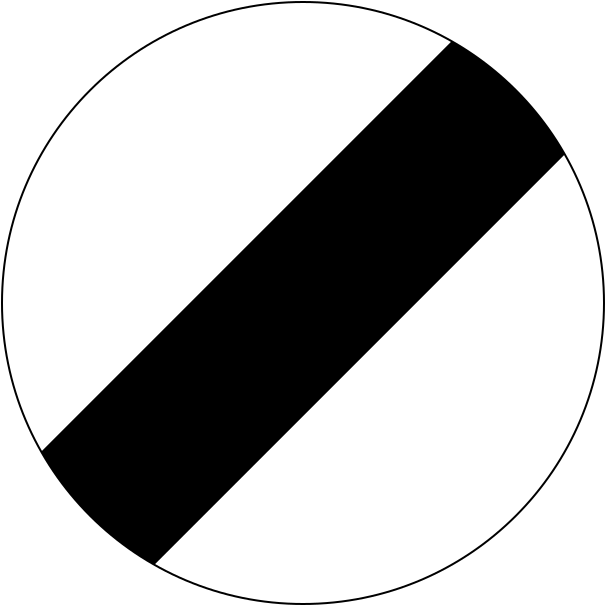
The number in a red circle is the most you may drive at, not a target. The white circle with a black diagonal band is the national speed limit: for a car that’s 60 mph on a single carriageway and 70 mph on a dual carriageway or motorway. In a built-up area with street lights, the limit is usually 30 mph even with no sign, or 20 mph in most of Wales.
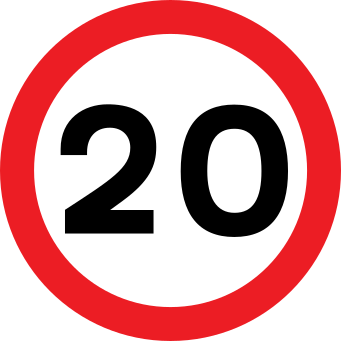
  • White circle with a red border and the number 20 in black.Maximum speed 20 mph
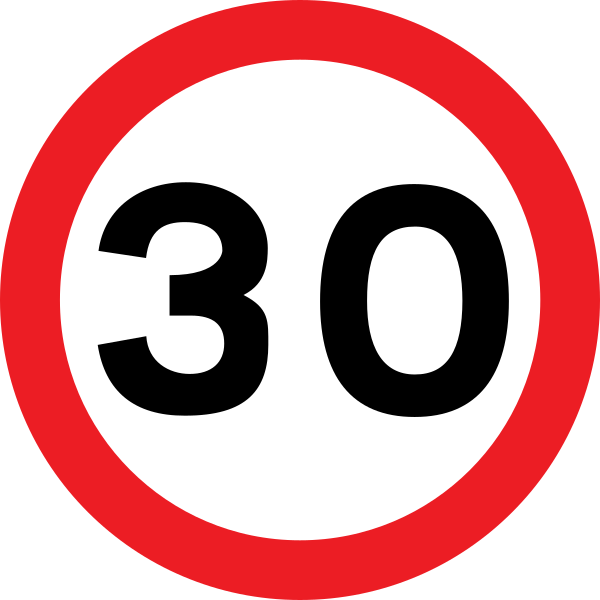
  • White circle with a red border and the number 30 in black.Maximum speed 30 mph
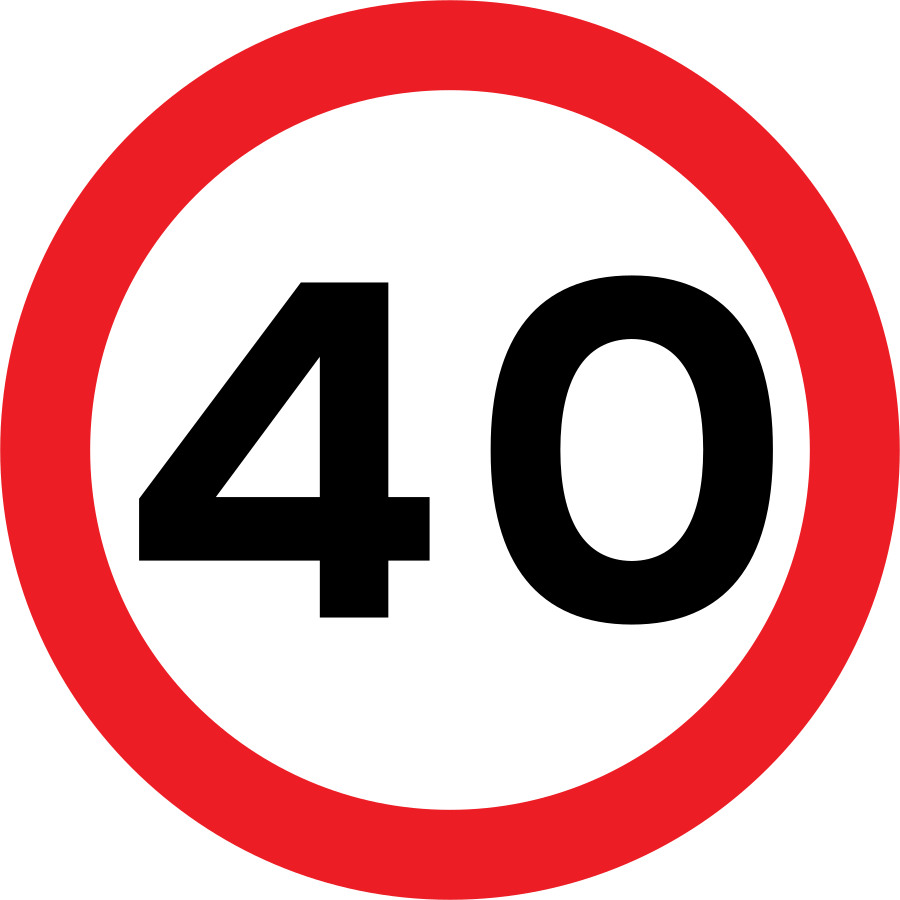
  • White circle with a red border and the number 40 in black.Maximum speed 40 mph
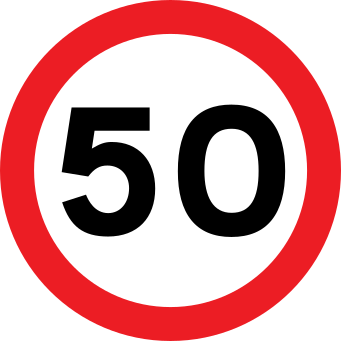
  • White circle with a red border and the number 50 in black.Maximum speed 50 mph
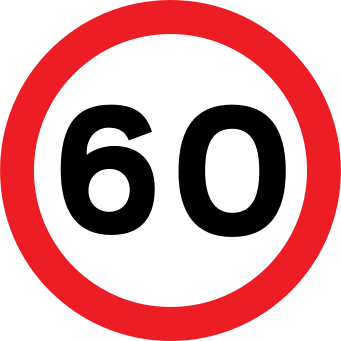
  • White circle with a red border and the number 60 in black.Maximum speed 60 mph
  • White circle with a black diagonal band running from top right to bottom left.National speed limit applies
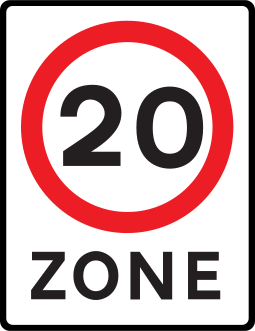
  • White rectangle with a red-ringed 20 mph sign and the word ZONE below it.Start of a 20 mph zone
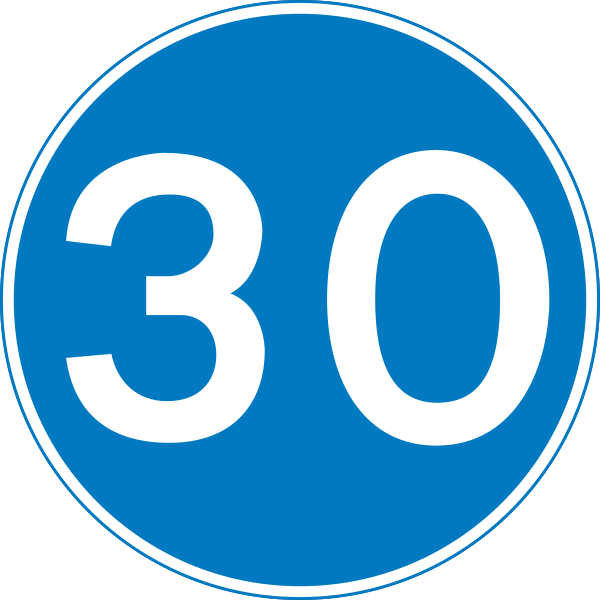
  • Blue circle with a white border and the number 30 in white.Minimum speed 30 mph

Signs giving orders: blue circles

A blue circle with no red border tells you what you must do, such as which way to go. Blue circles are also used for routes kept for buses, cycles or people on foot.
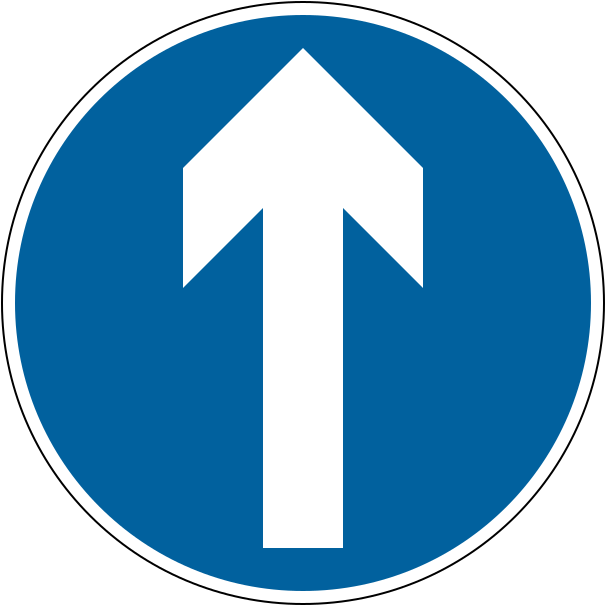
  • Blue circle with a white arrow pointing straight up.Ahead only
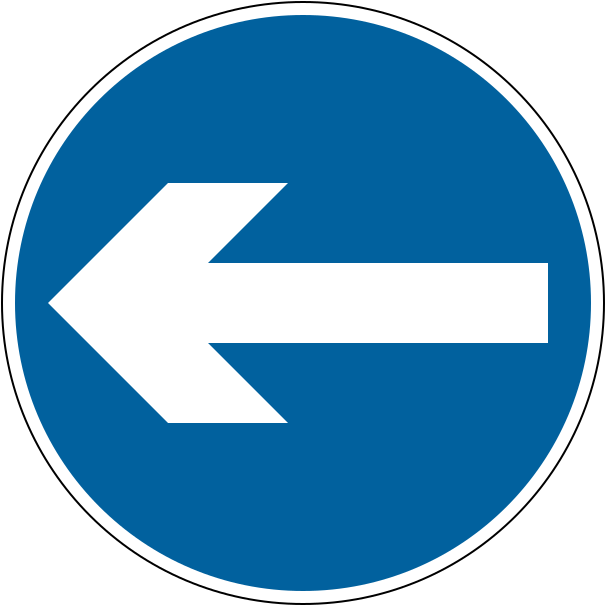
  • Blue circle with a white arrow pointing to the left.Turn left
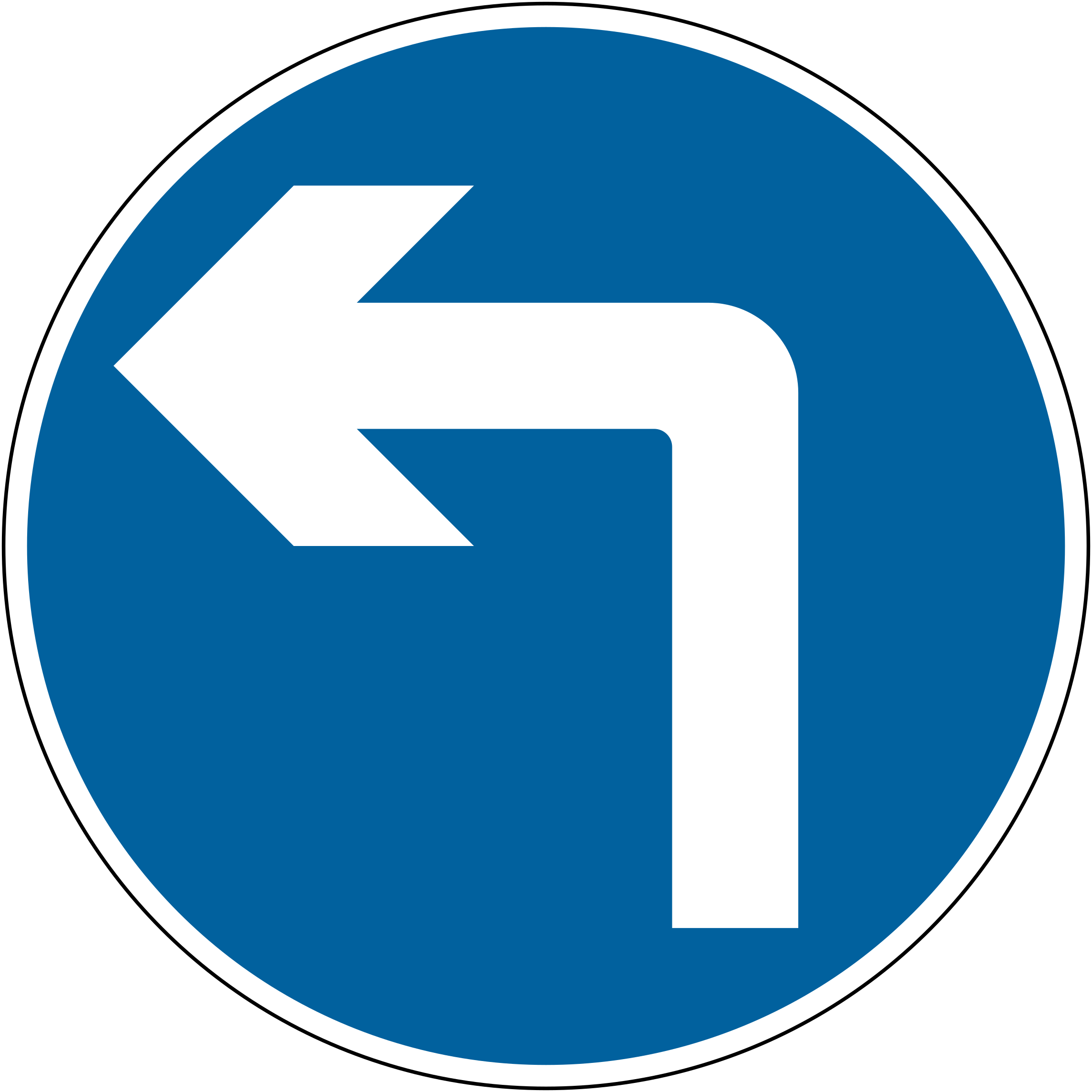
  • Blue circle with a white arrow going up and then bending to the left.Turn left ahead
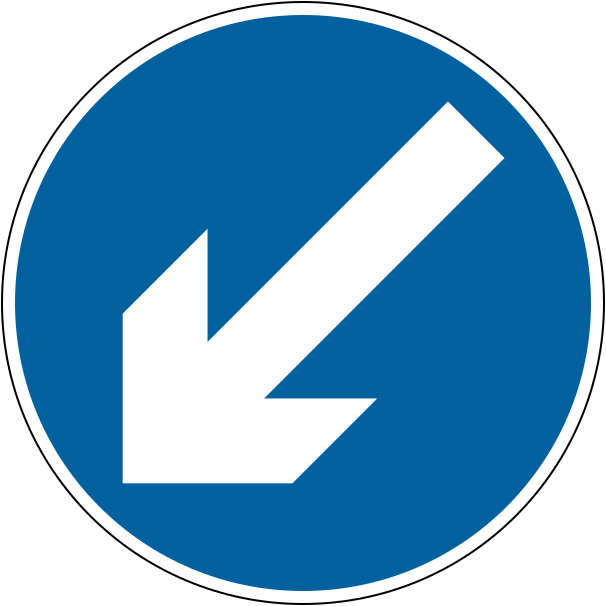
  • Blue circle with a white arrow pointing diagonally down to the left.Keep left
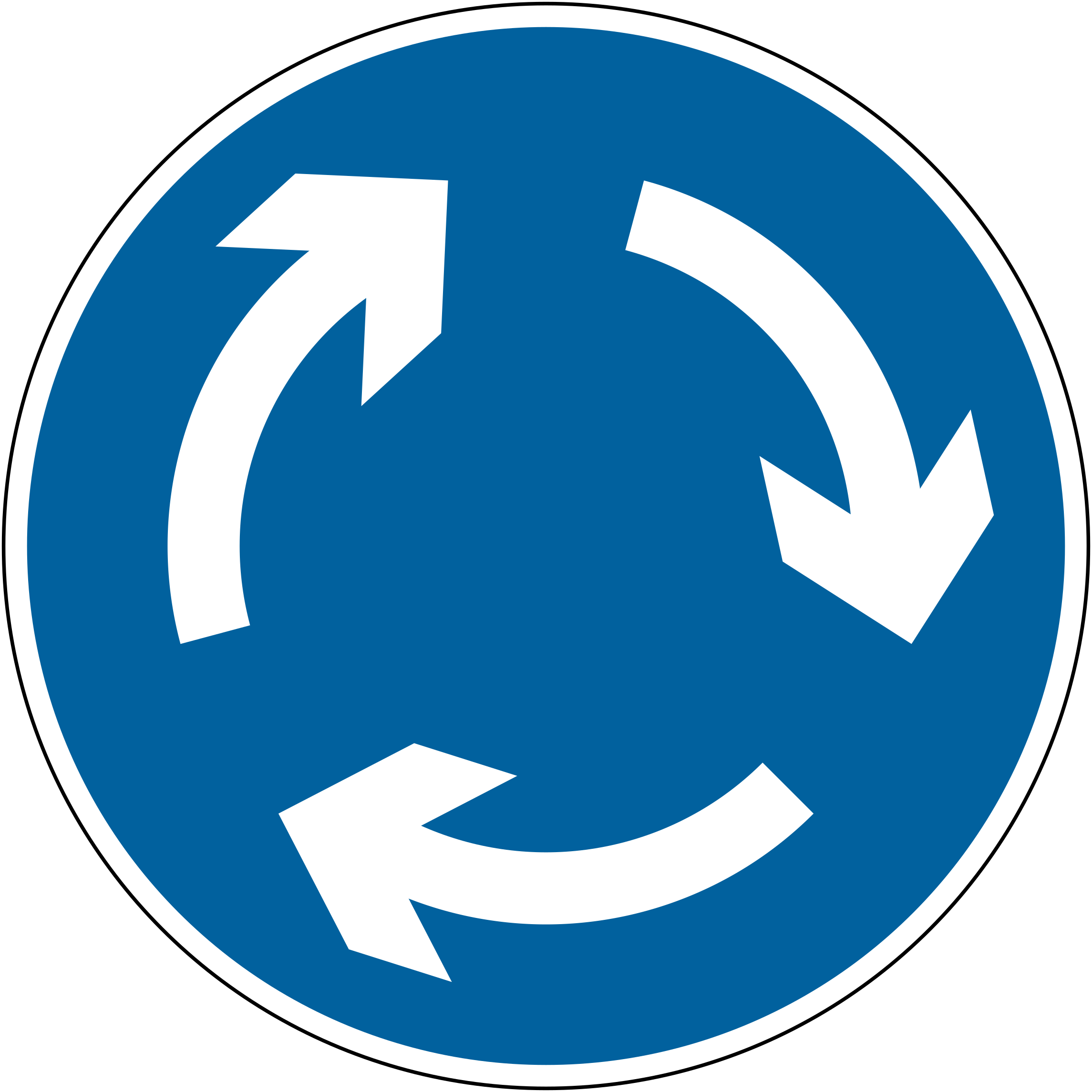
  • Blue circle with three white curved arrows going round clockwise.Mini-roundabout: give way to traffic from the right
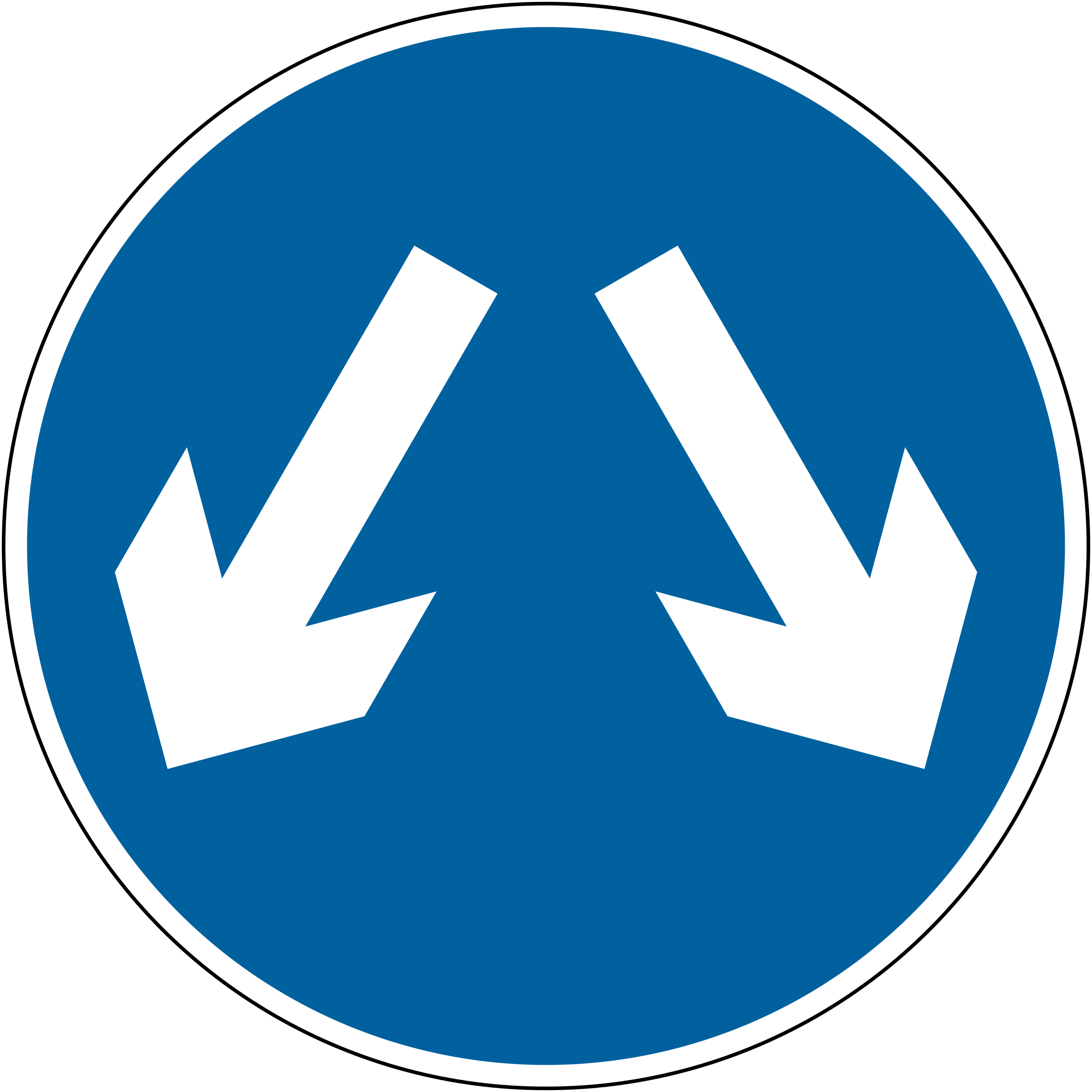
  • Blue circle with two white arrows pointing diagonally down, one to the left and one to the right.Pass either side
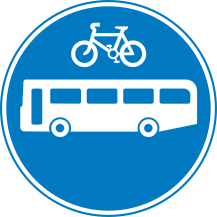
  • Blue circle with a white bicycle above a white bus.Buses and cycles only
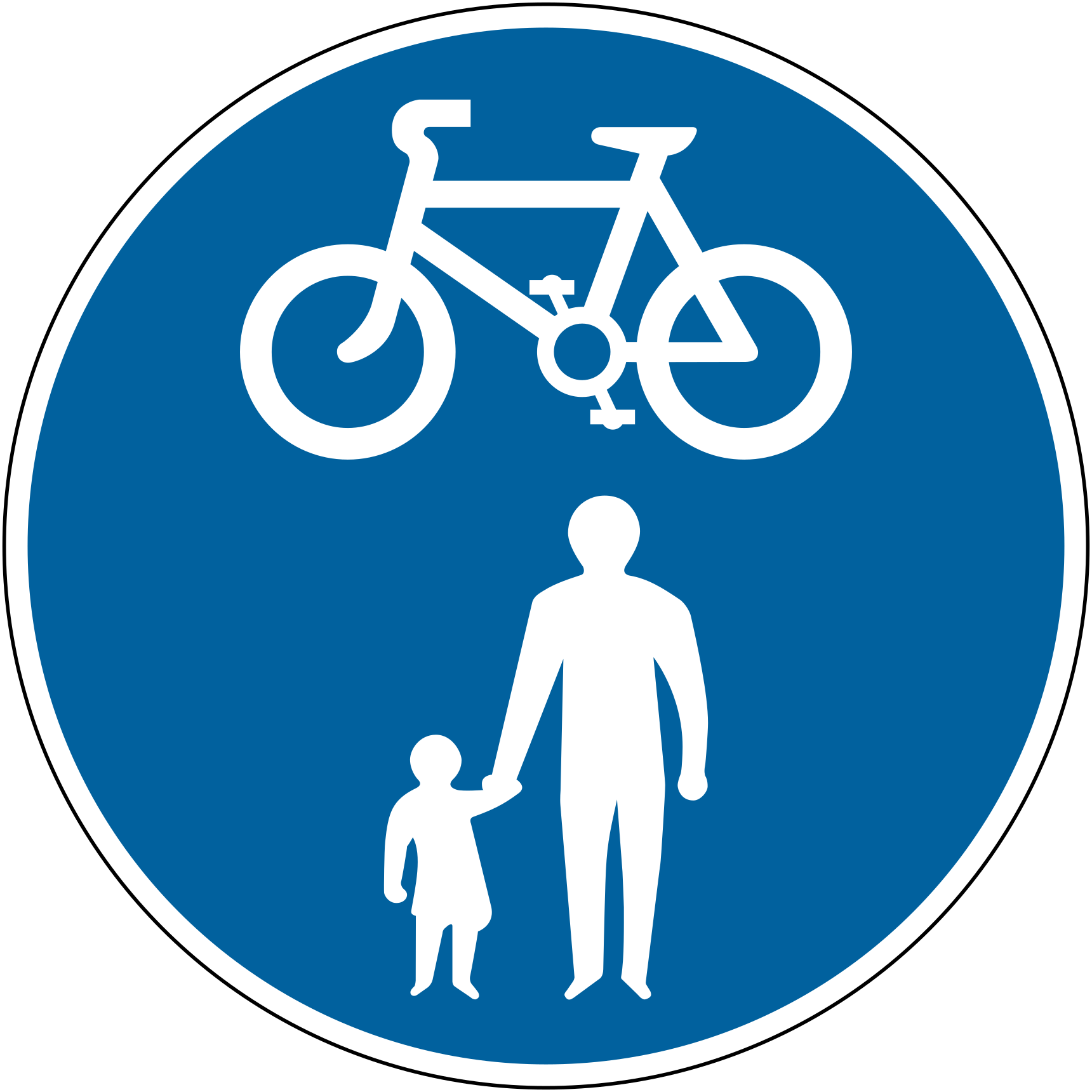
  • Blue circle with a white bicycle above a white adult walking with a child.Shared path for cycles and pedestrians

Warning signs: junctions, bends and the road ahead

Triangles with a red border warn you about something ahead. They don’t give an order, but they tell you to slow down and get ready. Many show the road from above, with the thicker line as the road with priority.
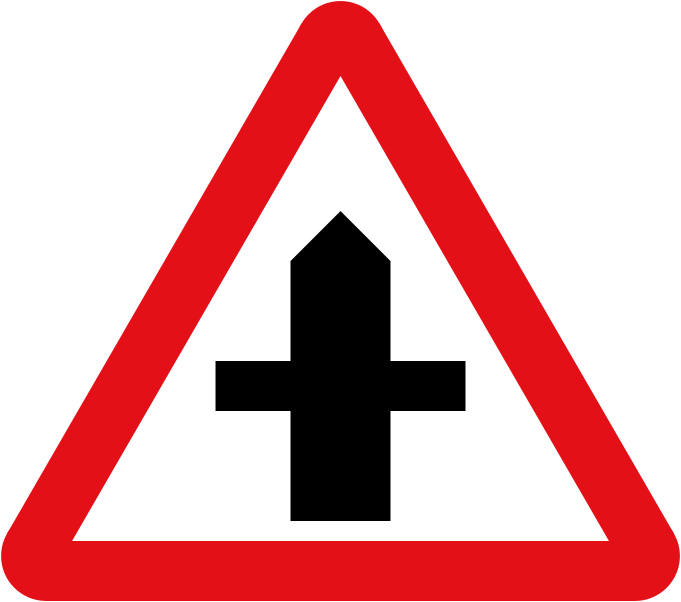
  • Red-bordered white triangle with a black cross, the upright line thicker than the crossing line.Crossroads
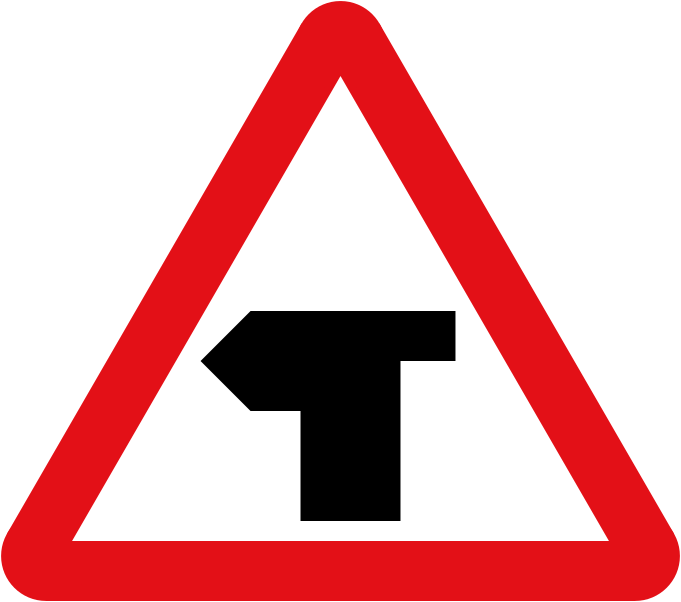
  • Red-bordered white triangle with a thick black T shape.T-junction
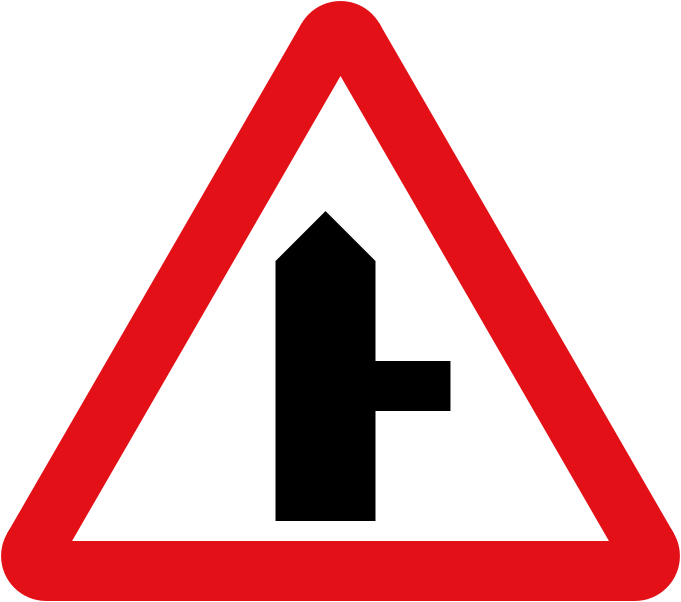
  • Red-bordered white triangle with a thick upright black line and a short branch to the right.Side road
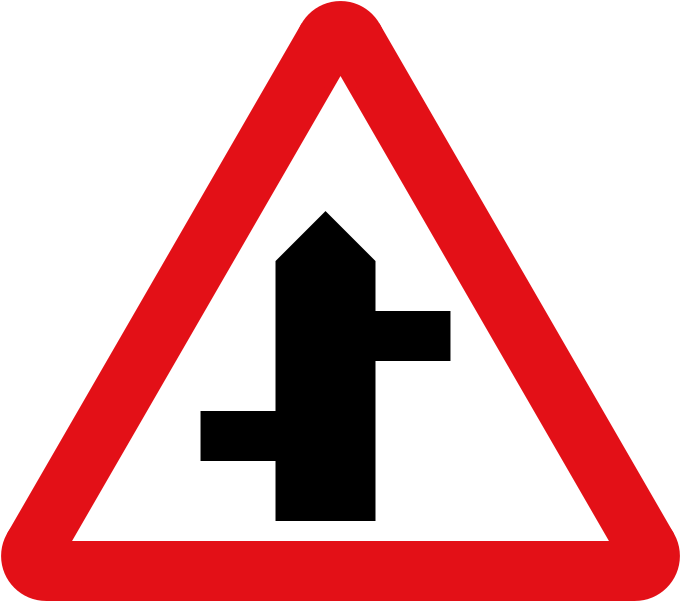
  • Red-bordered white triangle with a thick upright black line, a branch to the left and a branch to the right a little higher up.Staggered junction
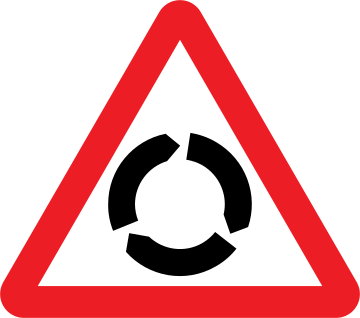
  • Red-bordered white triangle with three black curved arrows forming a circle.Roundabout ahead
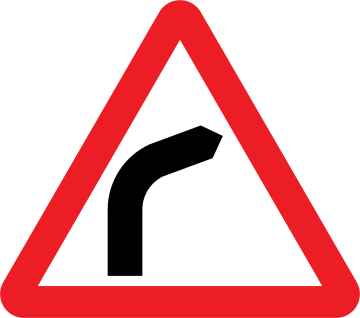
  • Red-bordered white triangle with a thick black line curving to the right.Bend to the right
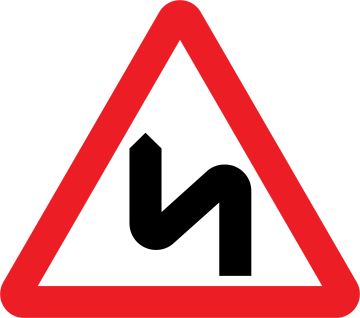
  • Red-bordered white triangle with a thick black line bending left and then right.Double bend, first to the left
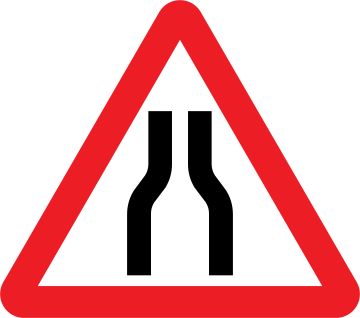
  • Red-bordered white triangle with two black lines that curve in towards each other.Road narrows on both sides
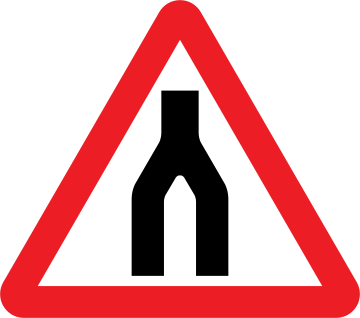
  • Red-bordered white triangle with two black lines joining into one.Dual carriageway ends
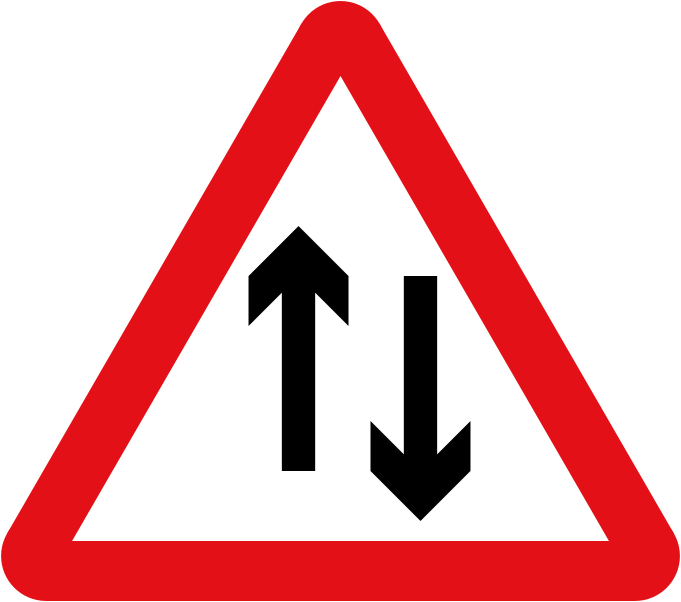
  • Red-bordered white triangle with a black arrow pointing up beside a black arrow pointing down.Two-way traffic ahead
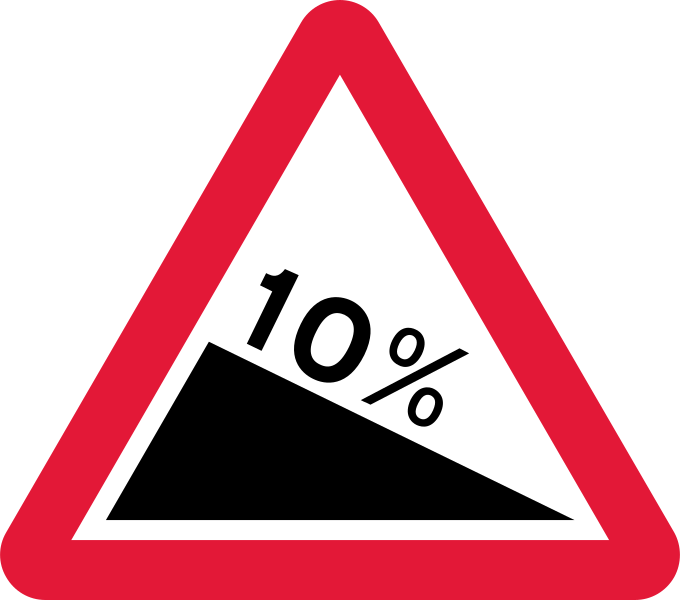
  • Red-bordered white triangle with a black slope falling to the right and 10% above it.Steep hill downwards
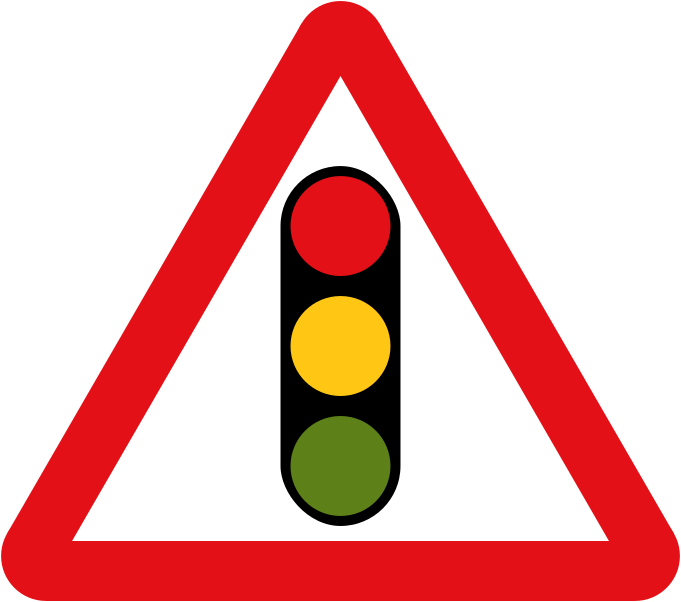
  • Red-bordered white triangle with a set of traffic lights showing red, amber and green.Traffic lights ahead
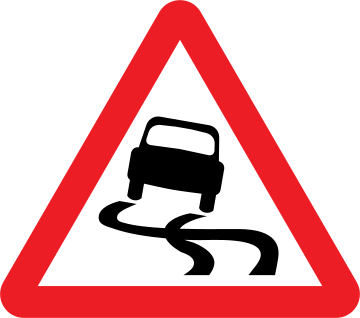
  • Red-bordered white triangle with a black car and two wavy skid marks behind it.Slippery road
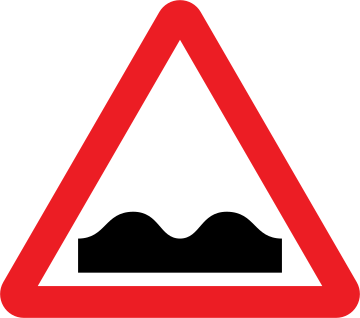
  • Red-bordered white triangle with a black line with two bumps along the bottom.Uneven road
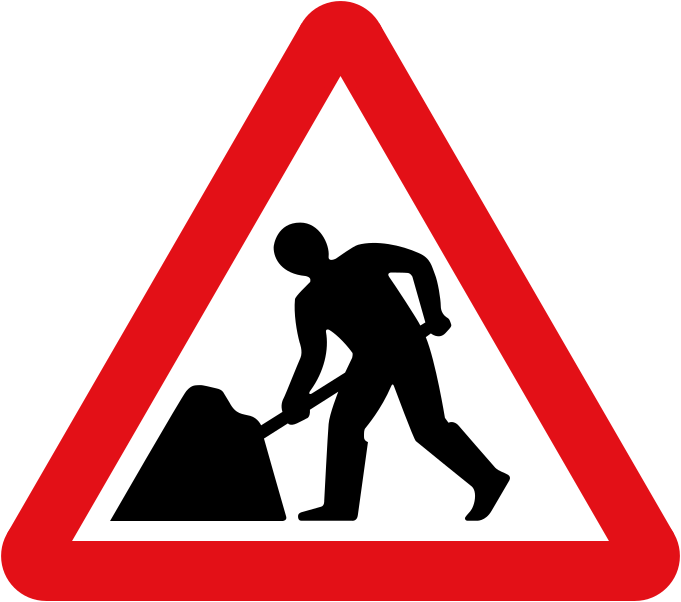
  • Red-bordered white triangle with a black figure digging next to a pile of earth.Road works

Warning signs: people, animals and crossings

These triangles tell you who or what might be in the road. Slow down early, as children, animals and trains won’t wait for you. At a level crossing, the sign tells you whether there are barriers, and that changes what you should do.
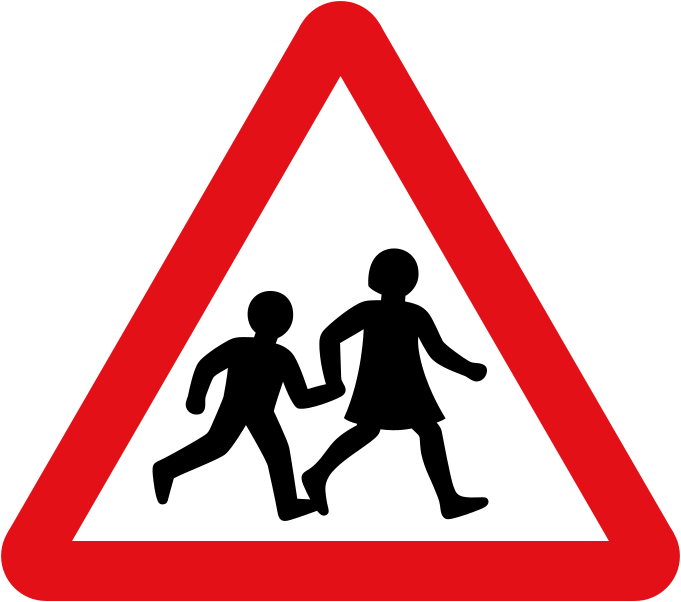
  • Red-bordered white triangle with two black children running side by side.Children going to or from school
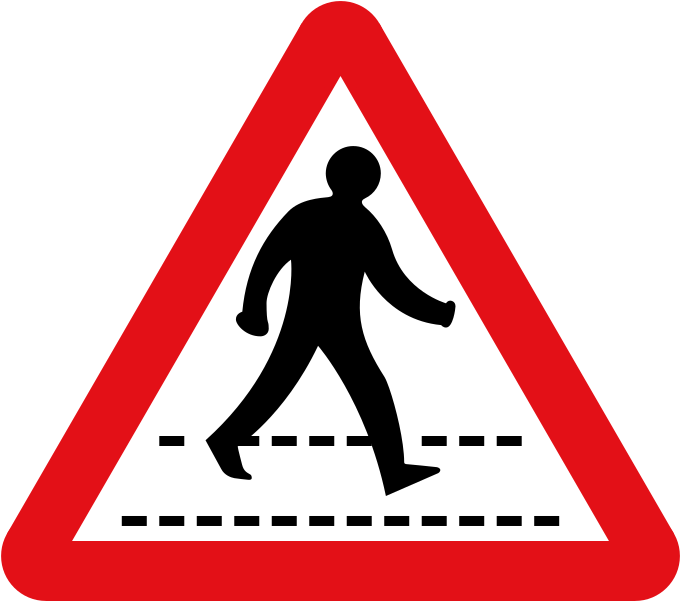
  • Red-bordered white triangle with a black figure walking across two broken lines.Zebra crossing ahead
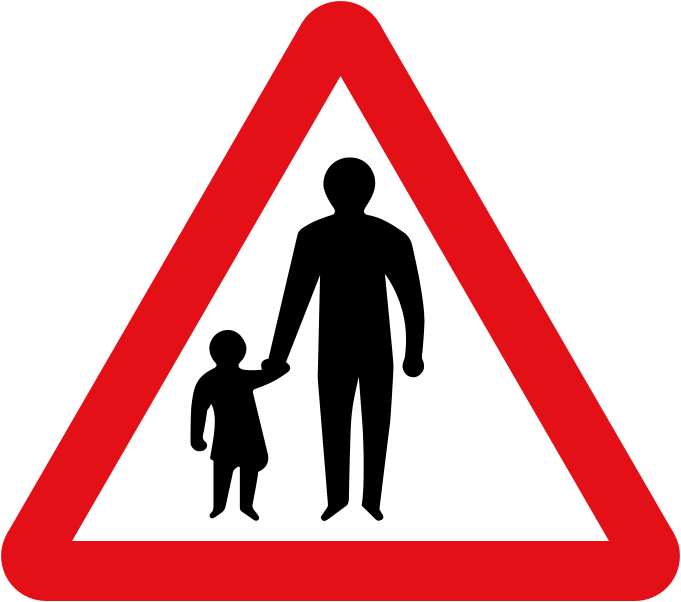
  • Red-bordered white triangle with a black adult walking and holding a child's hand.Pedestrians in the road ahead
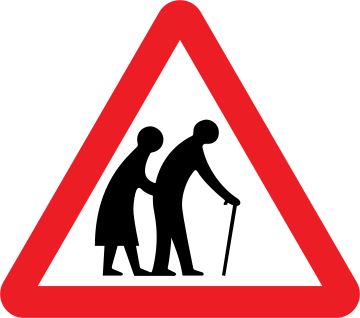
  • Red-bordered white triangle with two bent black figures, one using a walking stick.Frail or older pedestrians
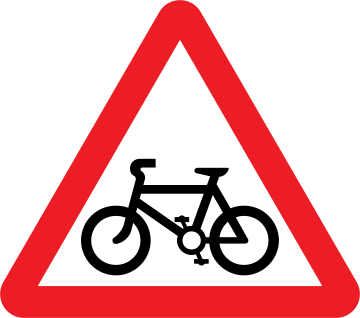
  • Red-bordered white triangle with a black bicycle.Cyclists likely
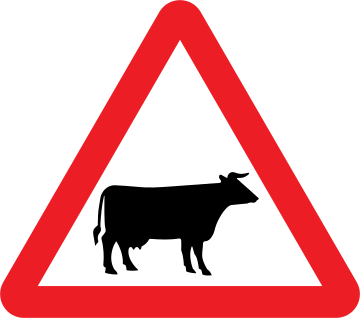
  • Red-bordered white triangle with a black cow.Cattle
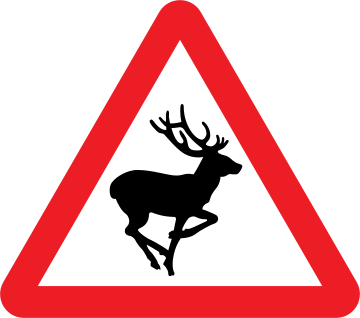
  • Red-bordered white triangle with a black leaping deer.Wild animals, often deer
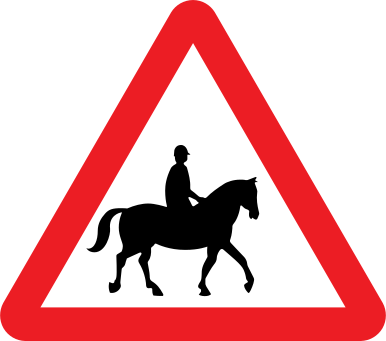
  • Red-bordered white triangle with a black horse and rider.Horse riders
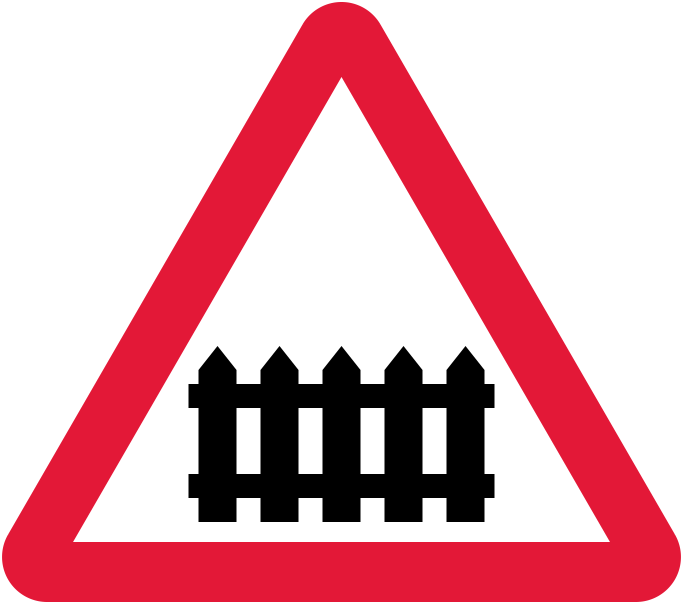
  • Red-bordered white triangle with a black fence or gate.Level crossing with a barrier or gate
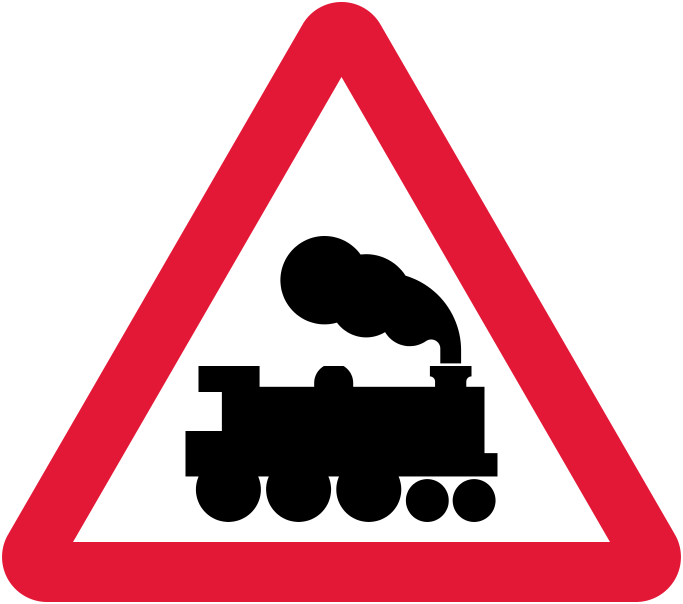
  • Red-bordered white triangle with a black steam train.Level crossing without a barrier or gate
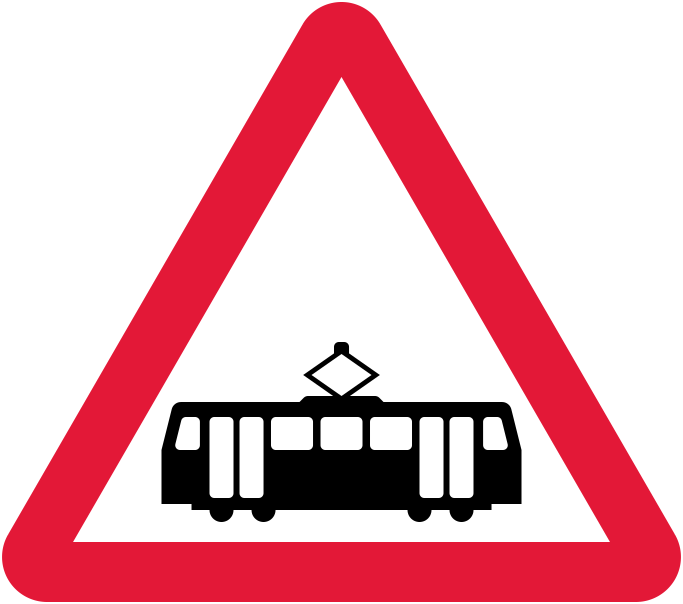
  • Red-bordered white triangle with a black tram with a pole to the overhead wire.Trams crossing ahead

Direction and information signs

Rectangles give information or directions, and the colour tells you the type of road. Blue is for motorways, green for primary routes (the main A roads), white for local routes and brown for tourist places. Blue squares and rectangles on ordinary roads give information, like parking or a dead end.
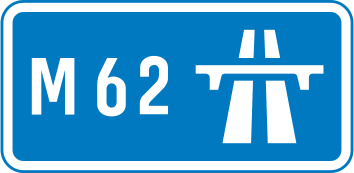
  • Blue rectangle with M62 in white and the white motorway symbol of a road passing under a bridge.Start of motorway: motorway rules apply
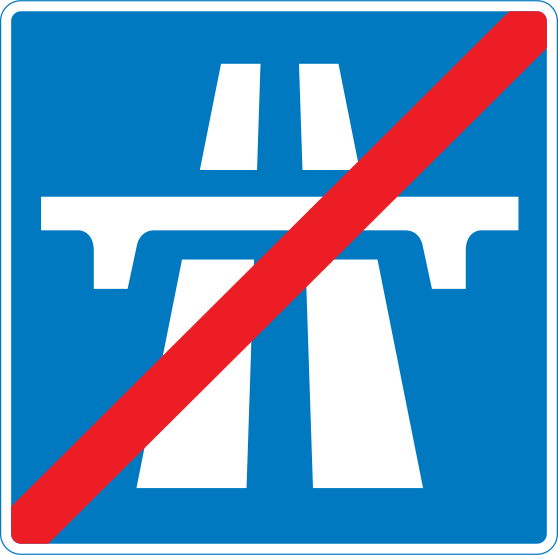
  • Blue square with the white motorway symbol crossed by a red diagonal line.End of motorway
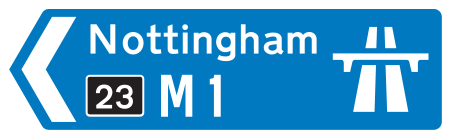
  • Blue sign pointing left with Nottingham, a junction number 23 in a black box, M1 and the motorway symbol in white.Direction to a motorway
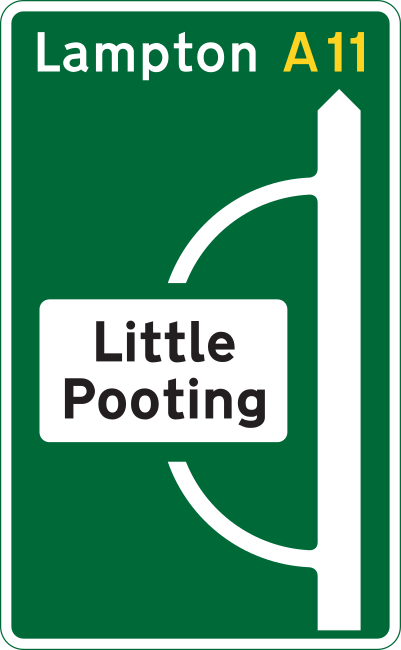
  • Green rectangle with Lampton and A11 at the top, a white junction layout below and a white panel saying Little Pooting on the side road.Primary route sign (green)
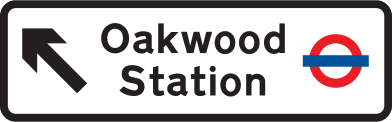
  • White sign with a black border pointing up and to the left, with the words Oakwood Station and a London Underground roundel.Local direction sign (white)
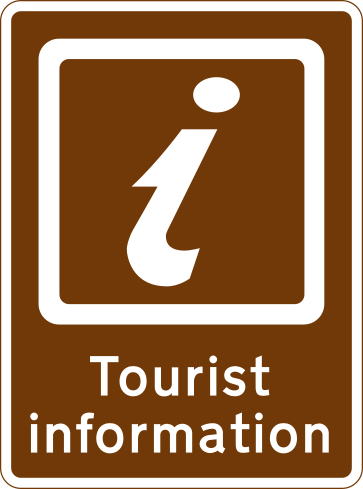
  • Brown rectangle with a white italic letter i in a box and the words Tourist information.Tourist information (brown)
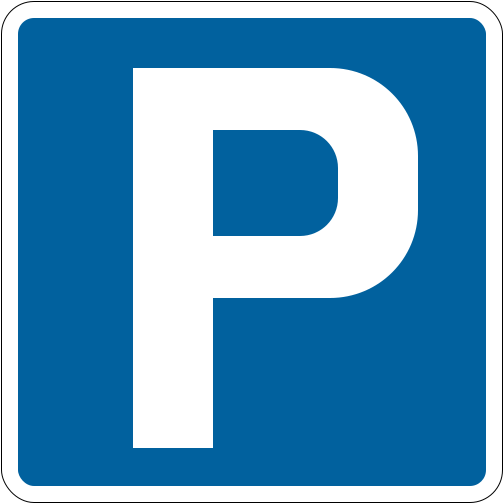
  • Blue square with a large white letter P.Parking
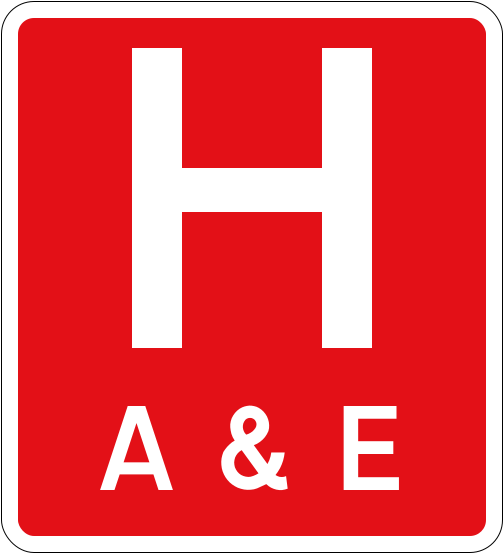
  • Red square with a large white letter H and A & E below it.Hospital with A&E
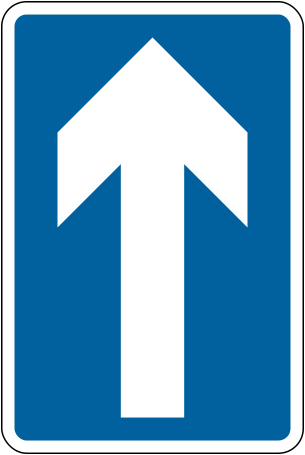
  • Blue upright rectangle with a large white arrow pointing up.One-way traffic
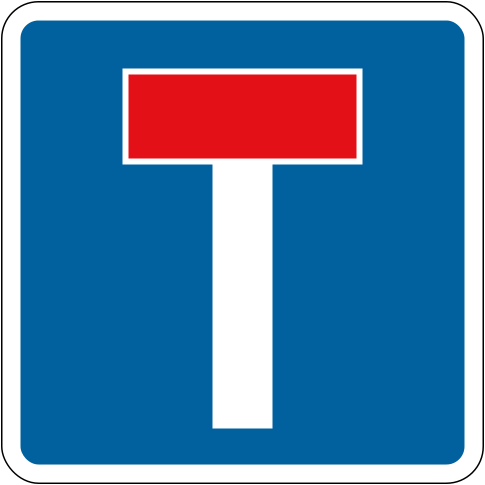
  • Blue square with a white upright bar topped by a red horizontal bar, like a T.No through road
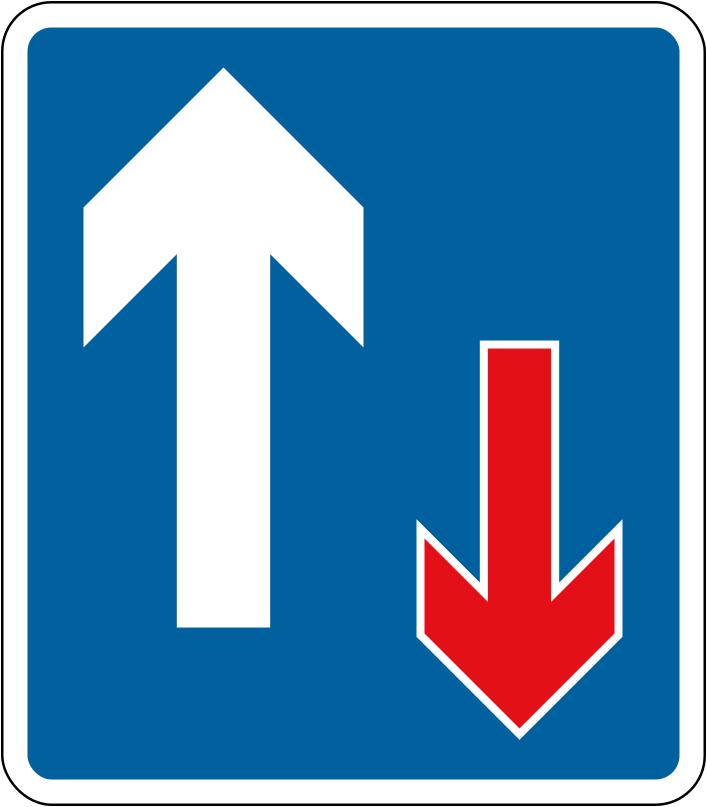
  • Blue square with a large white arrow pointing up and a smaller red arrow pointing down.Priority over oncoming traffic
  • White square with a black border and the words PASSING PLACE in black.Passing place on a single-track road

Do you need to know all the road signs for the theory test?

There isn’t a separate signs section in the car theory test. Sign questions are mixed in with the rest of the 50 multiple-choice questions, and Know Your Traffic Signs is one of the three books DVSA bases them on. So any sign in it can come up. DVSA also sells a set of 128 traffic sign flashcards if you like learning that way.

Sources: GOV.UK, The Highway Code and 2 more. Checked October 2026.

Rules and fees can change, so check the official site before your test.