Louisiana · Permit test

Louisiana permit test

You need 80% on a 40-question knowledge test, plus 20/40 vision, to get a learner’s permit in Louisiana. The state’s Office of Motor Vehicles (OMV) sets the Louisiana permit test, and its questions come from the Class D & E Driver’s Guide. It isn’t a walk-in test for everyone, though. First you get a Temporary Instructional Permit and start a driver education course, and you can hold the permit from age 15.

  • 40Multiple-choice questions on the knowledge test
  • 80%Score you need to pass
  • 15Youngest age for a learner’s permit
  • 20/40Vision you need, in one or both eyes

Key facts

At a glance

Who sets it
The Louisiana Office of Motor Vehicles (OMV), the state’s DMV
Where you take it
In person, with your driver education provider or at an OMV office
Before the test
A Temporary Instructional Permit (TIP) and a driver education or pre-licensing course
Youngest age
TIP at 14, learner’s permit at 15
Languages
English and 10 others on the OMV’s test computers, or a translator you bring

How it works

How the Louisiana permit test works: a TIP, a course, then 80% on the test

Knowledge test, 40 questions
80%
To pass you need at least 80%.
  1. Every question comes from the Class D & E Driver’s Guide, and covers traffic signs and signals, safe driving and Louisiana driving laws.
  2. Before you can sit it, you need a Temporary Instructional Permit (TIP) from the OMV, and you must be enrolled in a driver education or pre-licensing course.
  3. Your driver education provider gives the test, or you take it at an OMV office. In most offices it’s on a computer.
  4. You bring proper ID every time you take it.
  5. When you pass at a driving school, the school seals your test and course certificate in an envelope. Only OMV staff may open it.
  6. You also pass a vision test before the OMV issues the learner’s permit.

Topics

What’s on the test

01

Getting a Louisiana license, step by step

Chapter 1 of the Driver’s Guide sets out the license classes, the documents you need and the three stages of the graduated licensing program.

Key points (4)
  • A Class E license covers a single vehicle under 10,001 pounds. A Class D chauffeur’s license adds vehicles used in commerce from 10,001 to 26,000 pounds.
  • A learner’s permit needs age 15, 30 hours of classroom and 8 hours of behind-the-wheel instruction, and at least 80% on the knowledge test.
  • On a learner’s permit you drive only with a licensed adult 21 or older or a licensed sibling 18 or older.
  • The intermediate license needs age 16, 180 days on the permit, 50 supervised hours (15 at night) and a road skills test.
02

Signs, signals and pavement markings

Chapter 3 teaches signs by shape and color first, then signals, lane markings and special lanes.

Key points (4)
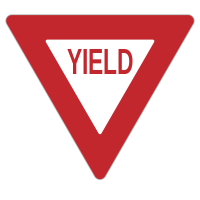
  • An octagon is only ever a stop sign, and a triangle pointing down is only ever a yield sign.
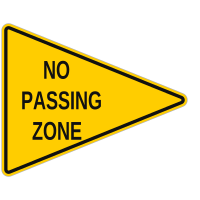
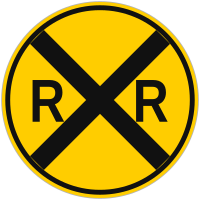
  • A pennant pointing sideways marks a no passing zone. A round yellow sign warns of a railroad crossing ahead.
  • Orange signs mean a construction zone. Fluorescent pink signs are for incidents such as a hurricane or a crash closure.
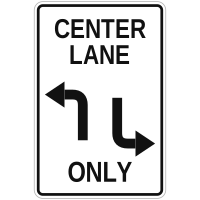
  • You may not drive more than 200 feet in a shared center lane when you turn left from it.
03

Following distance, passing and night driving

Chapter 5 covers the space you keep around your car, when passing is against the law and how to drive after dark.

Key points (4)
  • Keep at least 3 seconds behind the car ahead, and 4 seconds in bad weather or on wet pavement.
  • It’s against the law to pass within 100 feet of an intersection, a railroad crossing, a bridge or a tunnel.
  • Headlights must be on from sunset to sunrise, and whenever your windshield wipers are needed.
  • Dim your high beams within 500 feet of an oncoming car and within 200 feet of a car you’re following.
04

Traffic laws, school buses and railroad crossings

Chapter 6 lists the laws you’re tested on: turning, parking, school buses, railroad crossings and emergency vehicles.

Key points (4)
  • Signal continuously for at least 100 feet before you turn.
  • Don’t park within 15 feet of a fire hydrant, within 20 feet of a crosswalk at an intersection, or within 50 feet of a railroad crossing.
  • Stop at least 30 feet from a school bus that’s loading or unloading children.
  • When you must stop at a railroad crossing, stop within 50 feet but no closer than 15 feet from the nearest rail.
05

Sharing the road with bikes, motorcycles and trucks

The last part of Chapter 5 is about people who are harder to see or slower to stop than you.

Key points (3)
  • A motorcycle has a single headlight and tail light that can blend into other traffic, so dim your lights for it as you would for a car.
  • Behind a big truck in good conditions, the guide says to leave a gap of at least 4 to 5 seconds.
  • A loaded tractor-trailer with good brakes at 55 mph on a clear, dry road needs at least 290 feet to stop.
06

Distractions, bad weather and emergencies

Chapter 8 covers phones and other distractions, how to avoid a crash and what to do in floods, fog and breakdowns.

Key points (4)
  • Louisiana law bars any driver from writing, sending or reading a text, or using social media, while driving.
  • Drivers 17 and younger may not use a wireless device to make a call or text while driving.
  • Two feet of rushing water can carry away most vehicles.
  • In fog, slow down and use your low beams.
07

Alcohol, drugs and losing your license

Chapter 9 sets out the alcohol limits, the implied consent law and the offenses that can cost you your license.

Key points (4)
  • The legal limit is 0.08 at 21 or older, 0.02 under 21, and 0.04 in a commercial vehicle.
  • Refusing a chemical test brings a 365-day suspension on a first offense and 730 days for a second or later one.
  • Under 21, a test result of 0.02 or more brings a 180-day suspension.
  • Failing to stop for a school bus that’s loading or unloading children can cost you your license.

Road signs

Louisiana road signs: read the shape first

Chapter 3 of the Driver’s Guide starts with shapes, because you can read a sign’s shape long before its words. Two are easy to mix up: the pennant pointing sideways marks a no passing zone, and the round yellow sign warns of a railroad crossing ahead.

  • Red octagon with white border and the word STOP in whiteOctagon: only a stop sign has this shape
  • Downward-pointing red triangle with white center and the word YIELD in redTriangle, point down: yield
  • Yellow pennant pointing right reading NO PASSING ZONEPennant, point sideways: a no passing zone
  • Round yellow sign with a black X and two letters RRound yellow sign: a railroad crossing is ahead
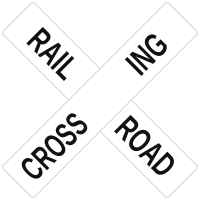
  • White X-shaped crossbuck reading RAILROAD CROSSINGCrossbuck: yield the right-of-way to a train
  • White sign reading CENTER LANE above two opposing left-turn arrows and the word ONLYShared center lane: left turns only, and no more than 200 feet in it
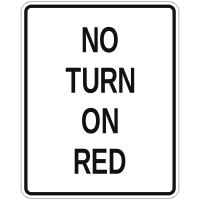
  • White sign reading NO TURN ON REDNo turn on red: wait for the green light to turn right
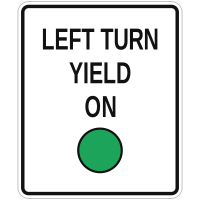
  • White sign reading LEFT TURN YIELD ON above a green circleLeft turn yield on green: you may turn, after oncoming traffic
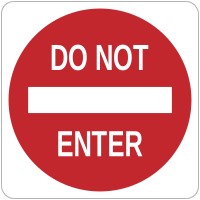
  • Red circle with a white horizontal bar on a white square, reading DO NOT ENTERDo not enter: you can’t go in this way
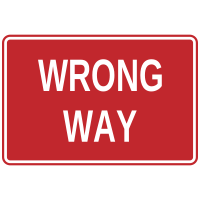
  • Red rectangle with white border reading WRONG WAYWrong way: you’re heading against traffic
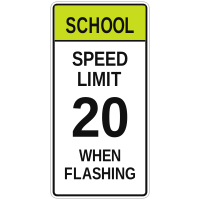
  • White sign: SCHOOL on fluorescent yellow-green, SPEED LIMIT 20, WHEN FLASHINGSchool speed limit: it applies only while the lights flash
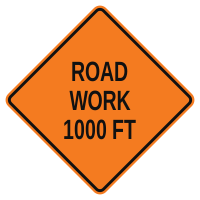
  • Orange diamond reading ROAD WORK 1000 FTOrange diamond: a construction zone is ahead

Test day

What to bring for your permit

  • Your Temporary Instructional Permit
  • Proof of identity, such as a certified birth certificate, and proof of your Social Security number
  • One original document with your name and Louisiana home address
  • Under 18: your custodial parent or legal guardian, with their own ID and any custody papers
  • The sealed envelope from your driving school, with your test and Certificate of Completion
  • Your glasses or contacts, if you wear them, for the vision test

Before you go

  1. Read the Class D & E Driver’s Guide, especially chapters 3, 5 and 6 on signs, safe driving and traffic laws.
  2. Pick a driving school licensed by the OMV and check its schedule. Under 18, the course is 30 hours in class and 8 behind the wheel.
  3. Get your TIP at an OMV office before the knowledge test or any driving lesson.
  4. Check your license status on Express Lane before you book, because flags on your record must be cleared first.
  5. Book an OMV appointment online. First-time license, ID, REAL ID and TIP issuance are all offered by appointment.
  6. Bring originals. The OMV doesn’t accept photocopies, even notarized ones.
Louisiana OMV: Book an appointmentAppointments are offered at OMV customer service centers and some Public Tag Agents. Walk-ins are taken as time permits.

Study options

Where to study

The Class D & E Driver’s Guide is free from the OMV, and every knowledge test question comes from it. The OMV doesn’t publish a practice test of its own, so apps and websites are where you’ll find practice questions. Driving schools teach the 30-hour course that every teen takes before the test.

OptionPriceFree to useLinks
Official and free
Class D & E Driver’s GuideOfficial · PDFThe OMV’s handbook for car and chauffeur licenses, and the source of every knowledge test question. Chapter 1 sets out the licensing steps, Chapter 3 covers signs and Chapter 10 is for the Class D chauffeur’s test. It has study tips but no sample questions.
FreeThe whole guide
Motorcycle Operator Manual and CDL ManualOfficial · PDFRiders adding a motorcycle endorsement study the Motorcycle Operator Manual. Commercial drivers study the CDL Manual, and each CDL knowledge test needs 80%.
FreeBoth manuals in full
The Parent’s Supervised Driving Program and RoadReadyGuide and app · linked by the OMVThe OMV’s driver education page links this program from the nonprofit Safe Roads Alliance. It gives parents a plan for supervised practice, and the free RoadReady app logs your day and night driving hours, which helps with the 50 hours a parent signs for before an intermediate license. It has 2.9 stars from about 19,000 App Store ratings and 4.3 from about 4,200 Google Play reviews.
FreeThe RoadReady app
Apps and websites
DMV-Permit-Test.comWeb · all statesHas numbered Louisiana car practice tests, a Spanish version, motorcycle tests and CDL tests by endorsement. It gives the real test as 40 questions with 32 to pass, the same 80% the OMV sets.
Free tests; a $15.99 one-time cheat sheetLouisiana car, motorcycle and CDL practice tests
ZutobiWeb and app · all statesSays it has 600+ Louisiana questions set out as short, game-style lessons, and that its course follows the Louisiana Driver’s Guide. The app has 4.7 stars from about 239,000 App Store ratings.
Free start, then Zutobi PLUS (App Store prices from $4.99)A free start on the Louisiana course
DMV GenieApp · all statesSays it has 500+ questions for each state, based on the state’s driver’s manual, with car, motorcycle and CDL tests in one app. Pick Louisiana when you start. It has 4.8 stars from about 184,000 App Store ratings.
Free to download, Premium in the app from $9.99 (App Store listing)Practice tests and quizzes; some content needs Premium
In person
OMV-licensed driving schoolsDriver educationEvery first-time driver takes driver ed here or at a high school. The OMV lists licensed schools by town, from Abbeville to Zwolle, and keeps a separate list of schools that teach in Spanish, French, German, Arabic or Vietnamese. Private schools also give the road skills test.
Set by each schoolNot listed

Prices and ratings checked October 2026.

FAQ

Common questions

How many questions are on the Louisiana permit test?

40 multiple-choice questions, and you need a score of at least 80%, which means 32 right. State law says each Class D or E knowledge test has at least 32 questions, with at least two on railroad crossing safety and two on the effects of littering.

Can I take the Louisiana permit test online?

No. The OMV lists no online version of the knowledge test, and your driving school or an OMV office gives it in person. You can book an OMV appointment online, and adults can take part of driver ed online (see Drivers ed classes in Louisiana).

What happens if I fail the knowledge test?

OMV policy lets you take it again once on the same day, if there’s time. If the test is stopped for cheating, you wait at least 30 days. The OMV doesn’t publish a wait for later retakes, so ask your school or OMV office.

Can I take the Louisiana permit test in Spanish?

Yes. The OMV’s automated test system gives the Class D, Class E and motorcycle knowledge tests in English, Arabic, Cantonese, Farsi, French, German, Italian, Korean, Portuguese, Spanish and Vietnamese. If you don’t read English well, you may also bring your own translator to any car or motorcycle knowledge test, and OMV policy says an oral test may be available on request. State law doesn’t require the OMV to provide an interpreter.

Is the Louisiana DMV the same as the OMV?

Yes. Louisiana’s licensing agency is the Office of Motor Vehicles, part of the Department of Public Safety and Corrections. Its website is Express Lane (expresslane.la.gov), where you renew licenses, check your license status and book appointments.

Do adults have to take driver’s ed in Louisiana?

Yes, for a first license. At 18 or older you can take a 14-hour pre-licensing course instead of the 38-hour teen course: 6 hours in class and 8 behind the wheel. You still get a TIP, pass the knowledge test and take a road skills test. You also need 50 hours of supervised driving, 15 at night, before a full license.

How old do you have to be to take the permit test in Louisiana?

You can get a TIP at 14 and a learner’s permit from 15. The age rules for each stage are on the Louisiana driving age page.

Sources: Louisiana OMV · Louisiana Legislature and 7 more. Checked October 2026.

Rules and fees can change, so check the official site before your test.